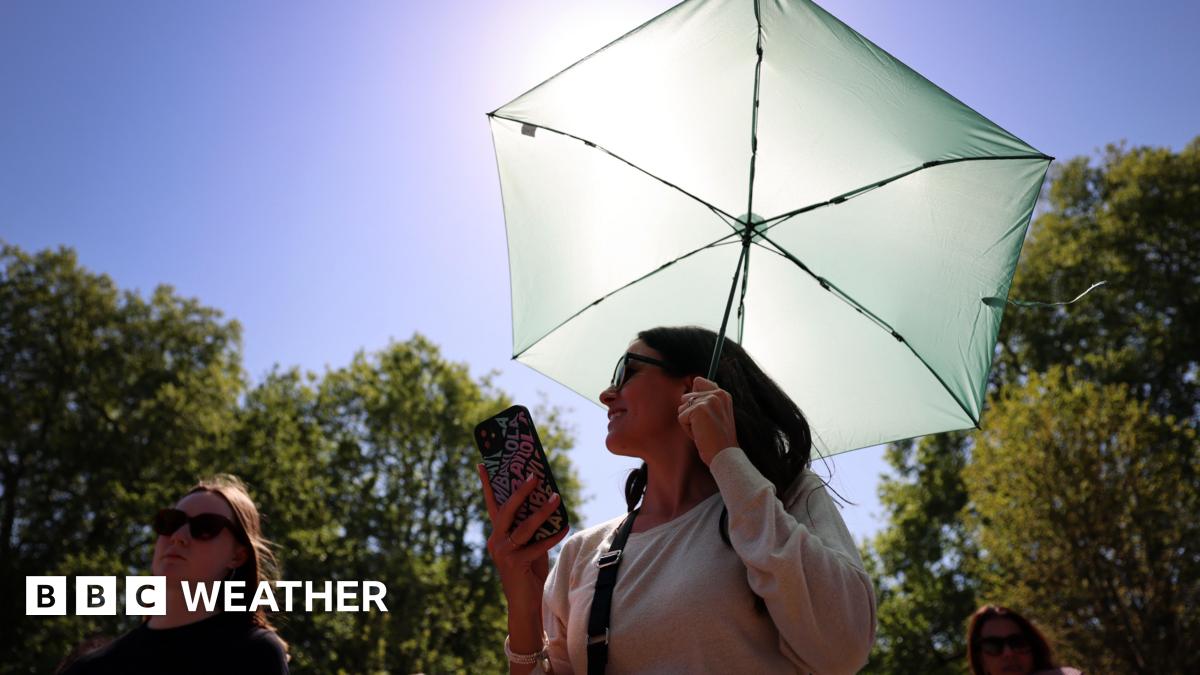
"Parts of the UK are preparing for a possible heatwave as temperatures are forecast to rise as high as 28C ahead of the bank holiday weekend. This comes after a period of unusually cold weather last week. For the next few days temperatures will be back up to nearer average before starting to climb further. Although it turns drier after midweek, rain remains in the forecast."
"By Wednesday temperatures will be up to 21C (70F). Most places will be dry on Thursday and Friday with temperatures reaching up to 28C (82F) in south-eastern parts of England. This will be the warmest weather of the year so far, exceeding the 26.6 Celsius (79.8F) recorded at Kew Gardens during an unusually warm early April."
"The main reason for the warmer weather is a change in the wind direction. It was so cold last week because the wind was blowing from the north. At the beginning of the week south-westerly winds blow in from the Atlantic, with areas of low pressure dominating the weather pattern. Later in the week the wind will be blowing from the south and that is when it really warms up."
"A heatwave in the UK is defined by the Met Office as at least three consecutive days with daily maximum temperatures exceeding a county-specific threshold, reflecting unusually hot weather for the time of year. The heatwave threshold temperature varies across the UK. In Greater London it is 28 Celsius whereas in Northern Ireland it is 25 Celsius. It is possible that a few places could meet the heatwave definition during Friday, Saturday and Sunday."
Parts of the UK are preparing for a possible heatwave as temperatures are forecast to rise up to 28C ahead of the bank holiday weekend. After unusually cold weather, temperatures return nearer average before climbing again. By Wednesday, temperatures may reach around 21C, and Thursday and Friday are expected to be mostly dry, with south-eastern England potentially reaching 28C. This would be the warmest weather of the year so far, surpassing an early April high at Kew Gardens. Warmer conditions are linked to a wind direction change: north winds brought cold, while south and south-westerly winds bring warmth. A heatwave requires at least three consecutive days above county-specific thresholds, with some areas possibly meeting the criteria depending on showers.
Read at www.bbc.com
Unable to calculate read time
Collection
[
|
...
]