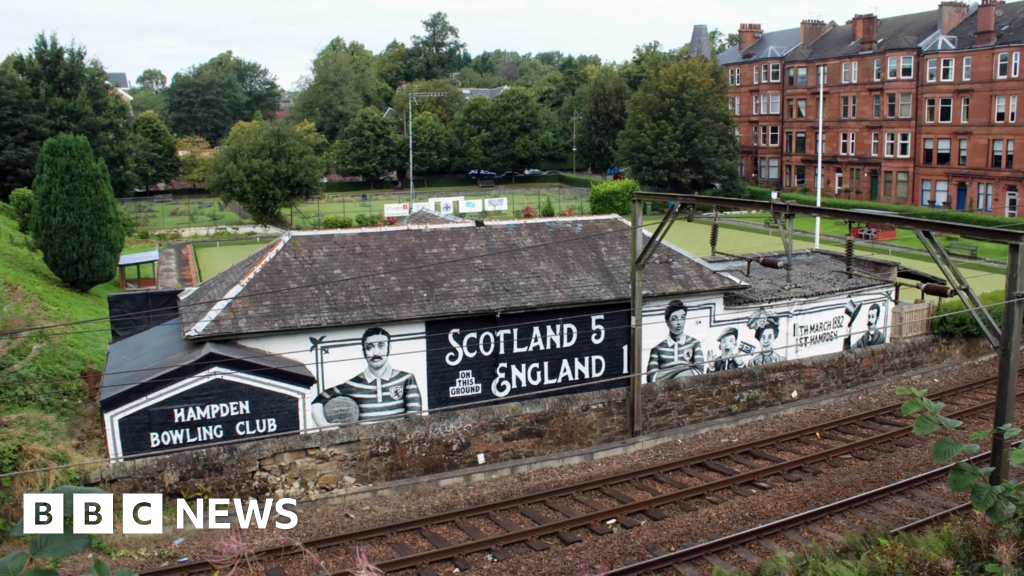
"The site of the original Hampden Park, considered to be the world's first international football stadium, has earned protected status from Historic Environment Scotland. Fears were raised last year that the grounds on Kingsley Avenue in Glasgow's southside could eventually be turned into flats because of the closure of the bowling club which was based on the land. This meant the area could become available for commercial use or redevelopment, to the dismay of campaigners."
"HES has now designated it a scheduled monument in recognition of its place in football history. The aim of a scheduled monument is to preserve significant sites in Scotland as much as possible in the form they have been passed down to people today. Remains of the original football stadium - where Scotland famously routed England 5-1 in 1882 - were discovered following an archaeological excavation at the site in 2021."
"When Queen's Park built the stadium, Scottish teams usually played on converted cricket pitches, such as the West of Scotland ground in Partick where Scotland and England played the world's first international in 1872. The Hampden ground has long been considered the first stadium where many of the aspects now common to a football stadium - such as grandstands, turnstiles and season tickets for entry - originated."
"Dara Parsons, head of designations at HES, said: "It feels timely to recognise the central role that Scotland played in the development of the sport, and the place of First Hampden within that story. "The remains of the pavilion at the first Hampden are a link to the earliest days of football in Scotland, and its importance to, and impact on, communities. It is a monument to our national game and to the origins of the modern football stadium.""
The original Hampden Park in Glasgow’s southside, regarded as the world’s first international football stadium, has received protected scheduled monument status from Historic Environment Scotland. Concerns had been raised that the Kingsley Avenue site could be redeveloped into flats after the closure of a bowling club on the land. The designation aims to preserve significant Scottish sites in the condition they were passed down. Archaeological excavation in 2021 uncovered remains of the original football stadium, including the pavilion. The ground hosted Scotland internationals and Scottish Cup finals from 1873 to 1883, including Scotland’s 5-1 win over England in 1882. It is also linked to the emergence of features common to modern football stadiums, such as grandstands and turnstiles.
Read at www.bbc.com
Unable to calculate read time
Collection
[
|
...
]