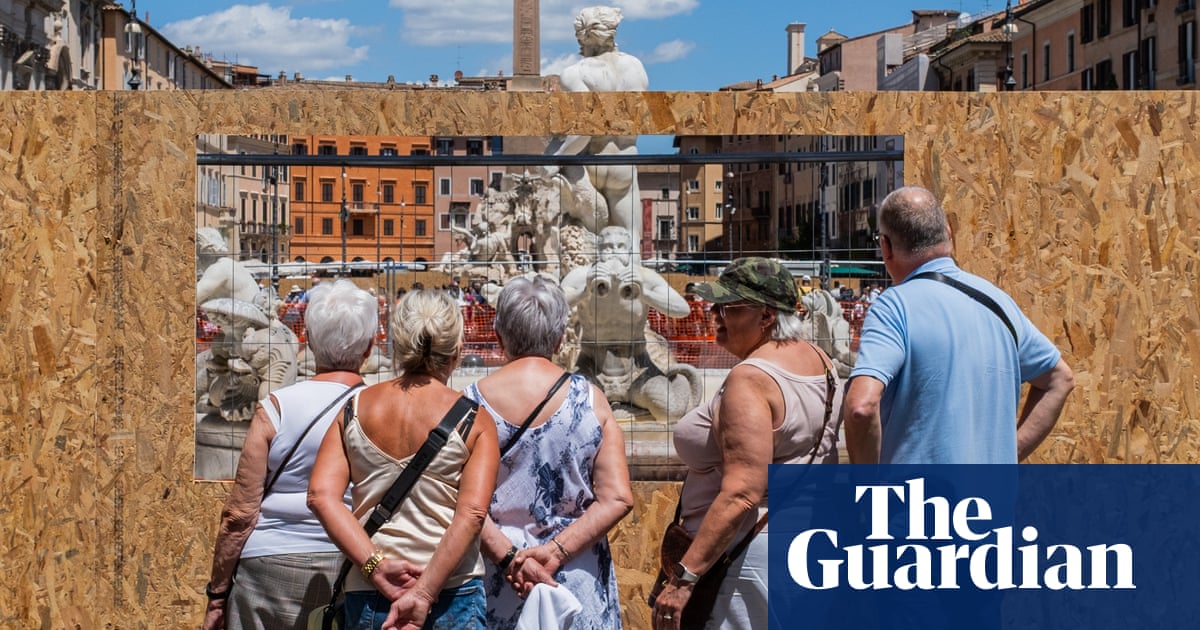
By mid-morning, areas around the Trevi fountain become difficult to cross as visitors stop for photographs and tour groups gather behind raised umbrellas. Security staff redirect pedestrian movement using temporary barriers around the monument, while nearby kiosks sell souvenirs and refreshments in summer heat. Rome has long relied on travelers moving through familiar routes, but the present scale of movement and the reorganization of the historic center feel different. During Jubilee years, the city often functions almost entirely around managing visitors, with barriers, portable toilets, and checkpoints guiding pilgrims who queue outside major sites. Public space becomes dominated by waiting, circulation, and continuous exposure, with repeated behaviors such as photographing landmarks and seeking shade.
"By mid-morning, the area around the Trevi fountain is already difficult to cross. Visitors stop suddenly to take photographs while tour groups gather behind raised umbrellas, and security staff redirect the flow of people through temporary barriers placed around the monument. Nearby, souvenir kiosks sell rosaries, plastic gladiator helmets, bottled water and magnets in the summer heat."
"Rome has always depended on the people passing through it. Pilgrims, tourists and travellers have crossed the city for centuries, following routes that were familiar long before they arrived. What feels different today is the scale of that movement, and the way the historic centre has gradually reorganised itself around it."
"During the Jubilee year, the city can often feel structured almost entirely around the management of visitors. Barriers redirect pedestrian flows around monuments. Portable toilets sit beside churches and Renaissance walls. Pilgrims queue in the heat outside St Peter's Square and Castel Sant'Angelo while crowds continue moving through temporary routes and checkpoints."
"Around Rome's most visited landmarks, the same gestures repeat themselves throughout the day. Visitors photograph monuments through their phones before looking at them directly. Crowds raise smartphones towards Michelangelo's Pieta inside St Peter's Basilica. Tourists sit exhausted around fountains and church steps looking for shade."
Read at www.theguardian.com
Unable to calculate read time
Collection
[
|
...
]