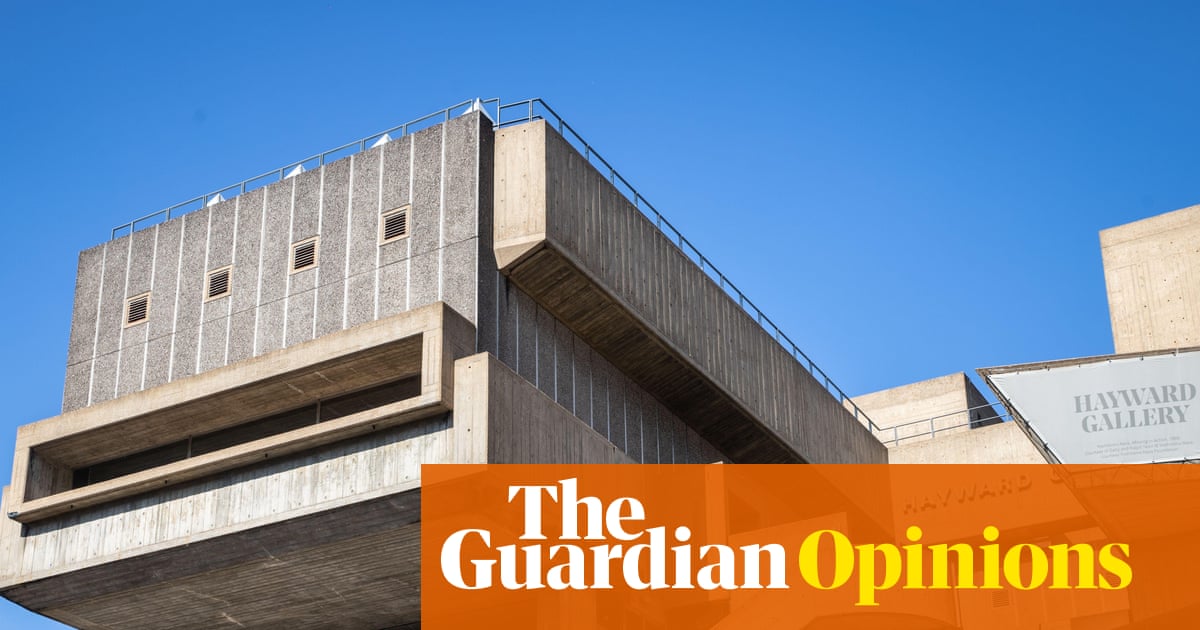
"Seventy-five years ago, the 1951 Festival of Britain transformed the South Bank. Of its buildings, only the Royal Festival Hall remains. From its postwar beginnings, the South Bank has grown into a cultural landmark recognised far beyond London. The section of the Thames Path taking in the Southbank Centre, BFI cinemas, Royal National Theatre, Tate Modern and Shakespeare's Globe is the flourishing successor to the Victorian precinct of the Kensington museums and the Royal Albert Hall."
"In architectural terms, the listing closes a decades-long argument about postwar Britain and what it chose to build. Previous recommendations to list the centre, which was completed in 1968, were rejected. Sir Denys Lasdun's Royal National Theatre, built from similar concrete nearby, was listed more than 30 years ago. Unlike Lasdun's theatre, the Southbank Centre conceived by a London county council team led by Norman Engleback divided opinion from the beginning."
The Southbank Centre's Queen Elizabeth Hall, Hayward Gallery and Purcell Room have received Grade II-listed status, securing protection for the 1960s brutalist complex. The decision aligns with the 75th anniversary of the 1951 Festival of Britain, which reshaped the South Bank and left the Royal Festival Hall as the surviving festival building. The South Bank expanded from postwar origins into a major cultural corridor linking cinemas, theatres, galleries and Shakespeare's Globe, replacing earlier Victorian cultural precincts. The listing settles a long debate about postwar architecture and follows the earlier listing of the Royal National Theatre. Public opinion has remained split over the centre's stark concrete forms and walkways.
Read at www.theguardian.com
Unable to calculate read time
Collection
[
|
...
]