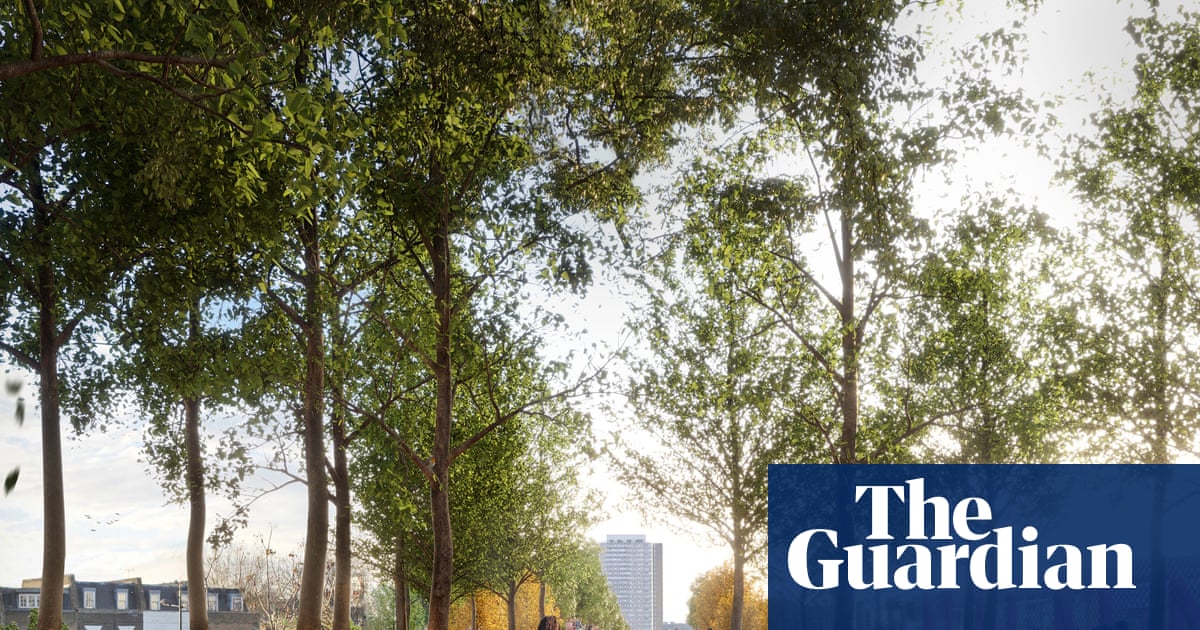
"The team was built around the ambition to transform a disused railway viaduct into a new local park, garden walk and wildlife corridor. However, over the last five years, the UK has experienced a series of sustained economic shocks, with construction costs in particular rising well above general inflation. Until now, these pressures have been factored into the project's modelling, but the emerging 2026 energy shock represents a further step change. The statement said the project would be pausing with immediate effect."
"The Camden Highline was intended to run almost a mile of elevated rail track from Camden to King's Cross, with landscaping to encourage walking and cycling and planting to attract butterflies, bees and birds. The route would have passed Camden Road overground station and finished at York Way in King's Cross."
"Since opening in 2009, the High Line has become a tourist attraction in its own right and inspired a movement to reclaim abandoned infrastructure in other cities. Oliver O'Brien, a geography researcher at University College London, put forward a London version and the idea was promoted by the Kentishtowner newspaper and the Camden Town Unlimited business association."
"It was supported by the local business association and 1,200 donors. Photograph: Handout One stretch of the Highline has be"
The Camden Highline aimed to convert a disused elevated rail viaduct into a local park, garden walk, and wildlife corridor. The planned route would run nearly a mile from Camden to King’s Cross, linking Camden Road overground station to York Way, with landscaping for walking and cycling and planting to attract butterflies, bees, and birds. The concept was inspired by New York’s High Line, which revitalized postindustrial neighborhoods, and by Paris’s Coulee Verte. The proposal gained support from local organizations and 1,200 donors. Organizers said sustained economic shocks raised construction costs beyond inflation and that an emerging 2026 energy shock created a further step change, leading to an immediate pause.
#urban-regeneration #cycling-and-walking-infrastructure #public-parks-and-green-spaces #wildlife-habitat #economic-shocks-and-energy-costs
Read at www.theguardian.com
Unable to calculate read time
Collection
[
|
...
]