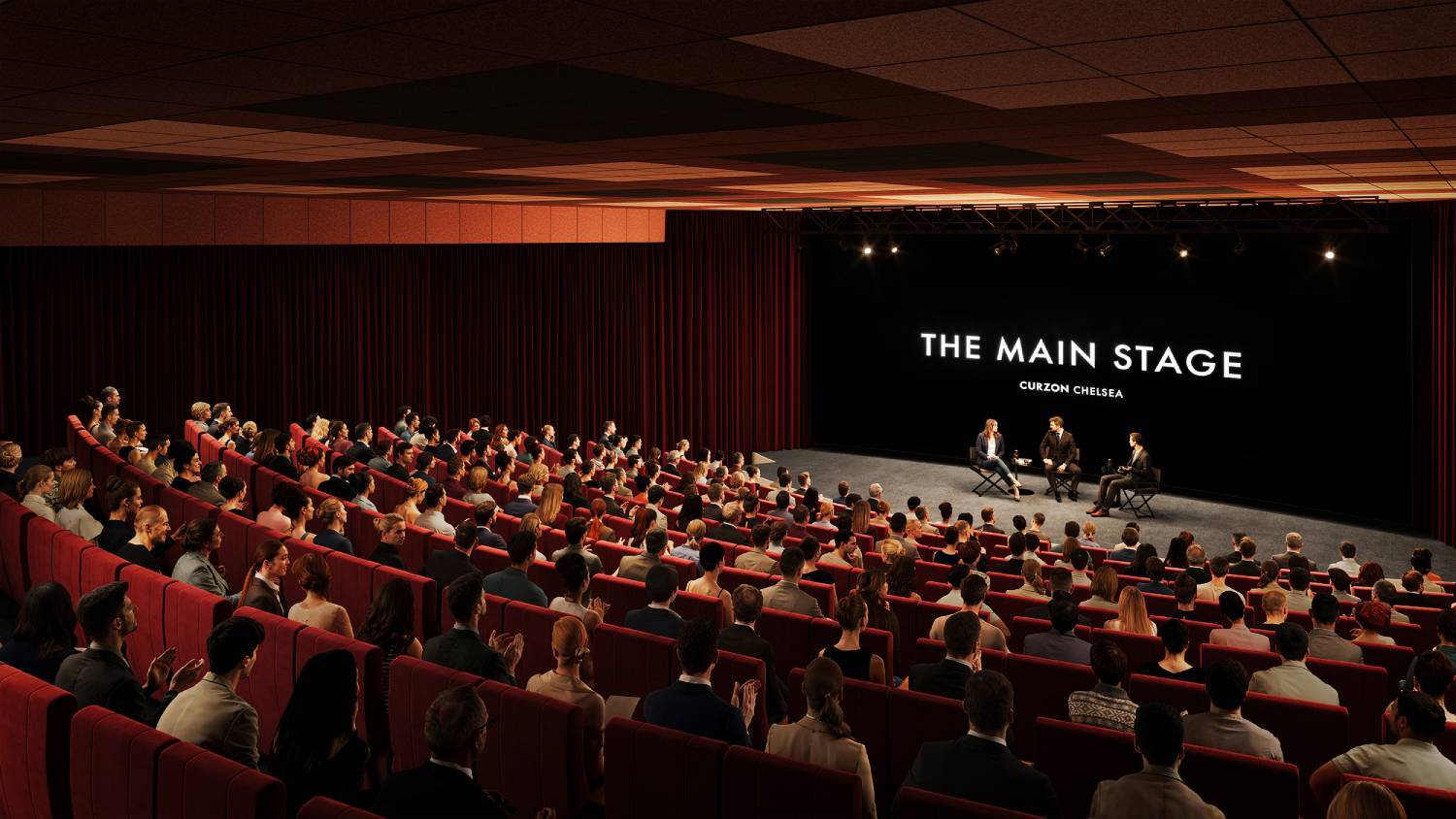
"The three-screen cinema is part of a redevelopment that has left the Art Deco façade intact but reimagined the 20,000 sq ft cinema beneath it as 'a multi-purpose environment for the wider creative community'. Alongside the 300-seat main auditorium, the cinema will boast a space for big gatherings and live programming, two studio spaces for podcasts, writers' rooms and 'experimental screenings', a video and audio recording studio, and a bar, café and creative special space."
"Curzon CEO Philip Knatchbull says the new venue will be a place ' where audiences can move fluidly between formats - film, audio and live events - for a truly immersive experience.' He adds that Curzon Chelsea is designed 'to support a generation of creatives whose work spans platforms, from film to audio, digital content and live formats'."
"'We're excited to return to such an historic location with a new flagship that will actively promote the creation and exhibition of the very best of British and international art and culture.' Curzon Chelsea is designed by Takero Shimazaki Architects, the designers of Curzon Bloomsbury and Curzon Camden."
"The new-look Curzon is part of The Gaumont, a development designed 'to celebrate Chelsea's cultural heritage and enhance its thriving creative scene'. Look out for more news of an opening date later in the summer."
Curzon Chelsea is reopening this autumn at a redeveloped King's Road site that preserves the Art Deco façade while reimagining the 20,000 sq ft cinema interior. The venue includes a 300-seat main auditorium plus spaces for big gatherings and live programming. It also provides two studio spaces for podcasts, writers’ rooms, and experimental screenings, along with a video and audio recording studio. Additional amenities include a bar, café, and creative special space. The original Curzon Chelsea opened in 1934, closed in 2018, and was demolished in 2019. The new concept supports audiences moving between film, audio, and live formats and supports creatives working across multiple platforms.
Read at Time Out London
Unable to calculate read time
Collection
[
|
...
]