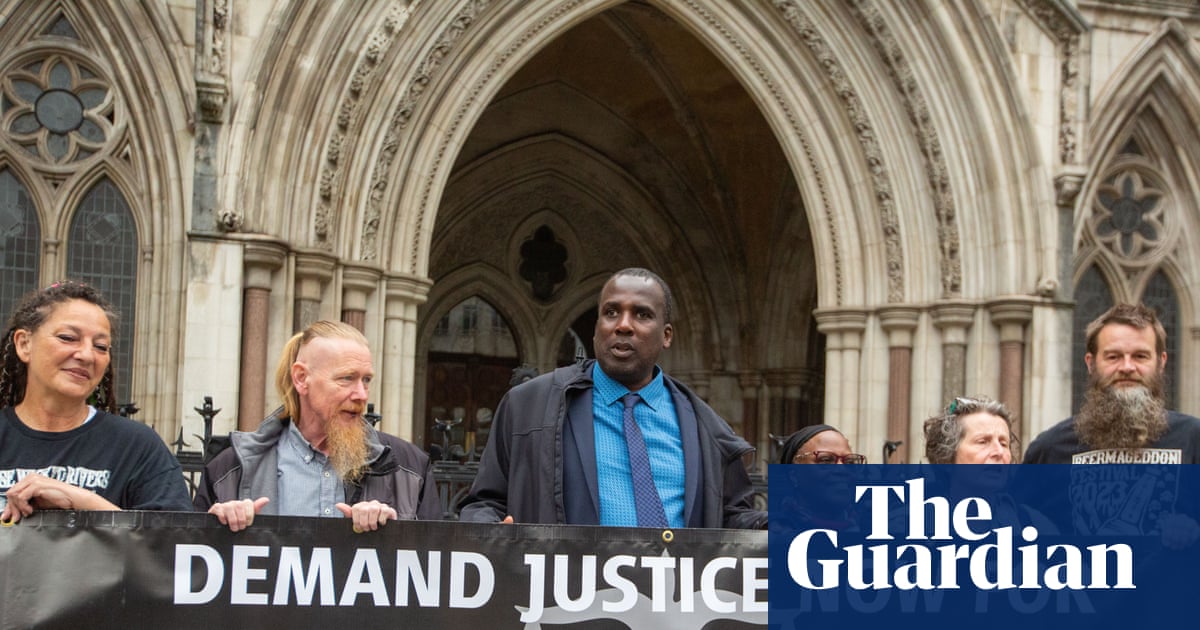
"Three men who have never been compensated for spending between 11 and 38 years in prison for crimes they did not commit, have joined calls for a change in the law in England and Wales. Even after being cleared, people who spend years behind bars owing to a wrongful conviction have to prove their innocence beyond reasonable doubt to qualify for compensation. The result is that claims from many high-profile miscarriage of justice survivors have been rejected."
""It's ridiculous. I've been through a minefield once. Now, on release, I'm thinking oh plain sailing, I should be all right' but no, no, no, said Plummer, who was released last year. I do really need it [compensation]. I've got mental health problems through this wrongful conviction so I don't want compensation for mad housing, mad holidays, I want it so I can get treatment."
"His lawyer, Katy Thorne KC, said it was absurd that people were required to prove their innocence beyond reasonable doubt, even after having been exonerated by the court of appeal. How on earth can you do that? she asked. You haven't got the resources of the police to go and investigate the crime that took place in 1997 and find the culprit."
Three men who were never compensated for spending between 11 and 38 years in prison for crimes they did not commit have called for changes to the law in England and Wales. People acquitted or exonerated still must prove their innocence beyond reasonable doubt to qualify for compensation after wrongful convictions. Many high-profile miscarriage of justice survivors have had compensation claims rejected under this standard. Justin Plummer, released last year after 28 years, said he needs compensation for mental health treatment. Lawyers argued it is absurd to require proof beyond reasonable doubt after court of appeal exonerations, noting lack of police resources to reinvestigate.
Read at www.theguardian.com
Unable to calculate read time
Collection
[
|
...
]