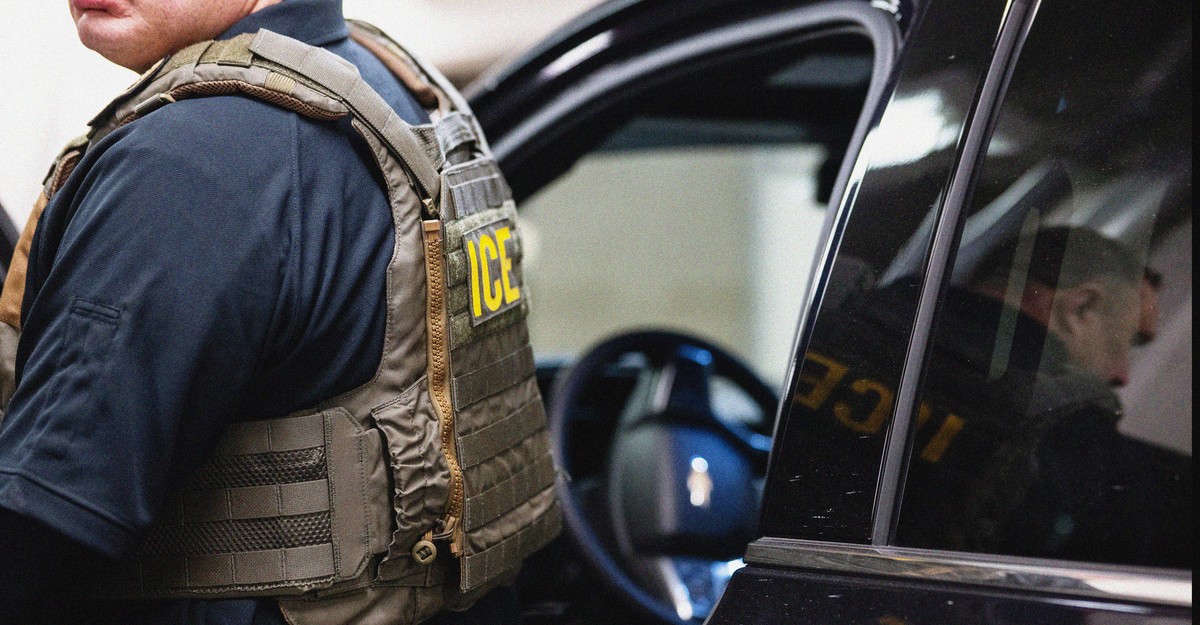
Whren established an objective-intent rule allowing officers to stop motorists for traffic violations even when the stop is pretextual. The decision held that temporary detention based on probable cause for a traffic violation does not violate the Fourth Amendment regardless of officers' subjective motives. The ruling rested on assumptions that police discretion would primarily target actual criminals and that misuse would be rare and controllable through court oversight. Those assumptions failed in practice. Discretion has frequently been applied disproportionately against minority communities and has become a cover for abusive immigration enforcement practices by agencies such as ICE.
"In 1996, the Supreme Court decided Whren v. United States, which came about when plainclothes vice officers patrolling in the District of Columbia passed a truck in a "high drug" area and "their suspicions were aroused." They had a hunch that the truck was involved in a drug operation. They chose to wait until it had violated a traffic ordinance (turning without a signal) and then used that violation as an excuse to stop the truck. In the course of searching the truck, they found crack cocaine."
"The Supreme Court said that the temporary detention of a motorist "upon probable cause to believe that he has violated the traffic laws" did not violate the Fourth Amendment's prohibition against unreasonable seizures, even if the officer would not have stopped the motorist absent some additional law-enforcement purpose. The Court developed a rule of objective intent. Under this theory, if the officers had a valid reason for acting-an objectively reasonable intention, in the Court's terminology-then their true motive and subjective intent was of no constitutional consequence. A pretextual traffic stop to search for drugs was just fine with the Court."
#whren-v-united-states #pretextual-traffic-stops #fourth-amendment #racial-profiling #ice-enforcement
Read at The Atlantic
Unable to calculate read time
Collection
[
|
...
]