"EBS argued this delay was ultra vires agency action, but the court found § 314(d) bars any challenge that functionally seeks to "de-institute" an IPR proceeding. On the merits, the court rejected EBS's argument that the claims require an anti-knock agent other than gasoline, finding the specification's disclosure of a "gasoline only" embodiment precludes adding that implicit limitation into the claims."
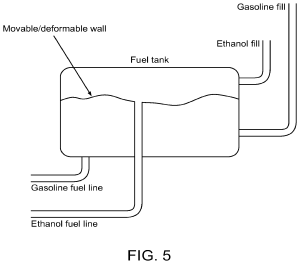
"Reading this case and the patents brought me back to my Princeton Mechanical Engineering course titled "mobile power plants." The technical subject matter here involves work by three MIT researchers attempting to address engine knock for ethanol boosted gasoline engines. Engine knock involves unburned air/fuel mixture in a cylinder that spontaneously autoignites before the spark-initiated flame front reaches it. This premature detonation creates damaging pressure waves and limits engine performance."
The Federal Circuit affirmed three PTAB final written decisions holding MIT-owned patents on dual-injection fuel management systems unpatentable as obvious under 35 U.S.C. § 103. Judge Chen wrote for a panel including Judges Clevenger and Hughes. The patents claim dual-injection engine architectures that suppress engine knock via evaporative cooling from direct fuel injection. The Board initially denied institution based on a district court claim construction, then granted a rehearing petition after the Federal Circuit vacated part of that construction. The court held § 314(d) bars challenges that would effectively de-institute an IPR. On the merits, the court rejected importing a non-gasoline anti-knock limitation because the specification discloses a gasoline-only embodiment.
#inter-partes-review-ipr #35-usc--103-obviousness #engine-knock--dual-injection-fuel-systems #314d-institution-bar
Read at Patently-O
Unable to calculate read time
Collection
[
|
...
]