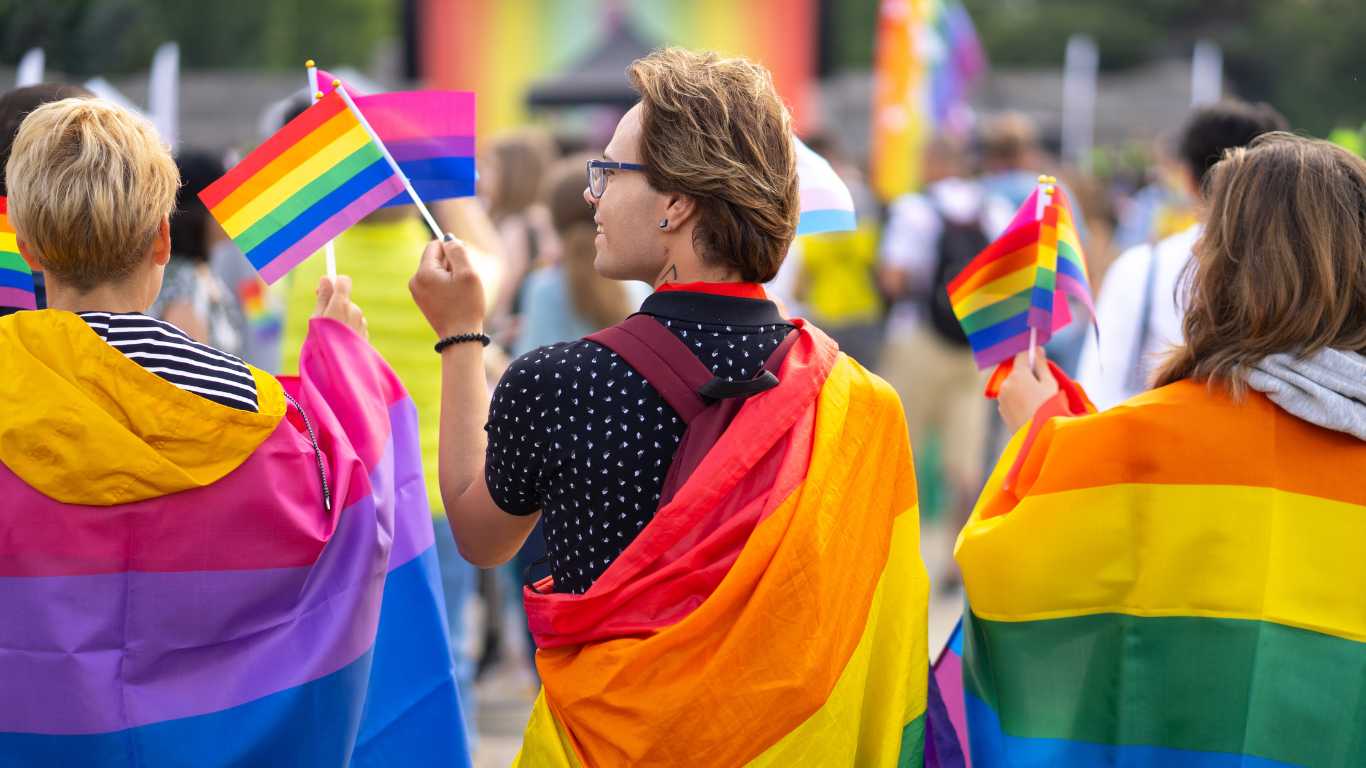
"Last year LGBTQ+ identification remained steady at nine per cent in the US, according to a survey. Data from 2025 telephone interviews conducted by Gallup with more than 13,000 US adults revealed that around nine per cent of US adults identify within the LGBTQ+ community. The percentage remains unchanged from the year before, but remains more than double of 2012, the first year Gallup measured the LGBTQ+ population. Between 2021 and 2023, Gallup recorded readings of roughly seven per cent."
"A majority of 86 per cent said they are heterosexual, while nine per cent said they identified with one of the LGBTQ+ identities. Five per cent gave no response. The largest share of LGBTQ+ adults said they are bisexual, representing about five per cent of the entire US adult population. Meanwhile, 17 per cent of LGBTQ+ adults identify as gay, 16 per cent as lesbian and 12 per cent as transgender, each representing between one and two per cent of all US adults."
"Since Gallup began measuring LGBTQ+ identities as separate categories in 2020, it has found the bisexual identity to have consistently been the most common, and even growing. In 2020, just over three per cent of US adults said they were bisexual, compared with the current number of just over five per cent. But it isn't just bisexual identities that have increased - all others have as well."
Gallup telephone interviews in 2025 with more than 13,000 US adults found about nine per cent identify as LGBTQ+, unchanged from the prior year but more than double 2012. Eighty-six per cent reported heterosexual identity while five per cent gave no response. Bisexual adults represent the largest share of LGBTQ+ adults, about five per cent of all US adults. Seventeen per cent of LGBTQ+ adults identify as gay, 16 per cent as lesbian and 12 per cent as transgender. Bisexual identification rose from just over three per cent in 2020 to just over five per cent. Increases in LGBTQ+ identification are concentrated among adults under 30, are higher among women, and are more common among Democrats than Republicans. A Hinge report noted greater sexual openness among Gen Z compared with millennials.
Read at PinkNews | Latest lesbian, gay, bi and trans news | LGBTQ+ news
Unable to calculate read time
Collection
[
|
...
]