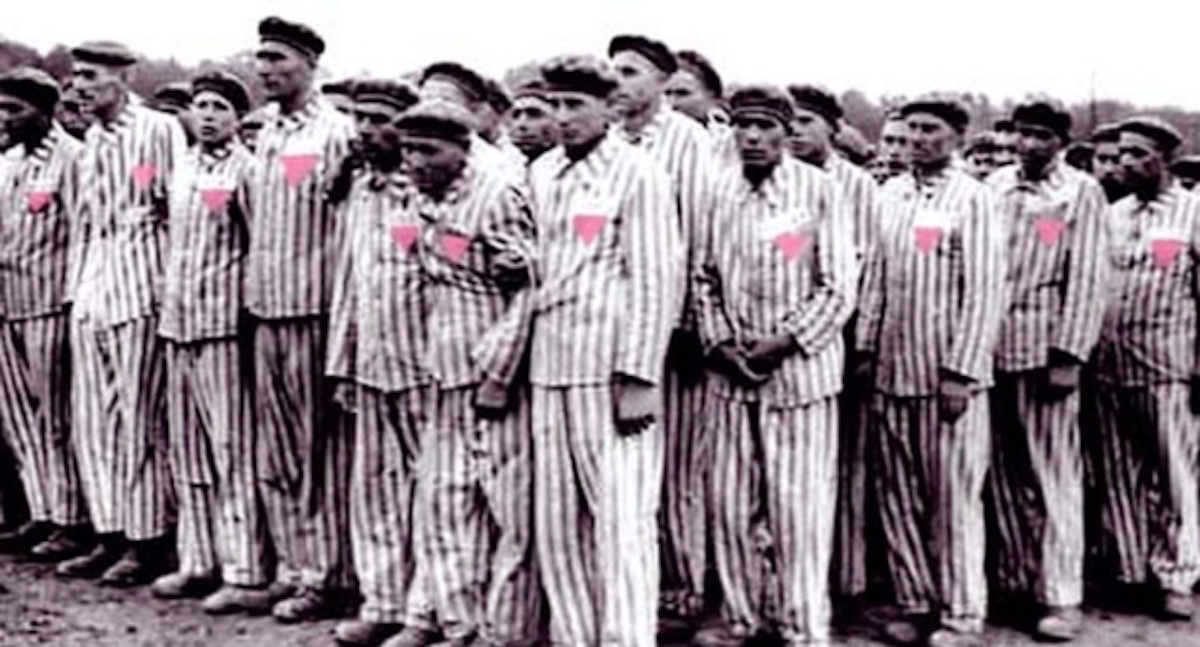
"On Holocaust Memorial Day 2026, the 81st anniversary of the liberation of Auschwitz, PinkNews takes a look at the significance of the pink triangle, the symbol that was used to identify queer men in the Holocaust. On 27 January, 1945, Soviet forces liberated Auschwitz, the Nazis' biggest concentration camp. Each year, Holocaust Memorial Day allows the world to come together in mourning for the millions of people who lost their lives at the hands of the Nazis."
"Each year, Holocaust Memorial Day allows the world to come together in mourning for the millions of people who lost their lives at the hands of the Nazis. It's also a vital, timely reminder of just how easily hatred can warp a society. When Adolf Hitler and his Nazi Party seized power in Germany in July 1933, the dictatorship moved to persecute and murder minority groups, including Jews, LGBTQ+ people, the Romani people and political prisoners."
"This persecution continued following the outbreak of World War II in 1939 and, between 1941 and 1945, the Nazi Party systematically murdered six million European Jews - as part of a plan known as "The Final Solution to the Jewish Problem" - in extermination camps and mass shootings. This genocide is referred to as the Holocaust, or the Shoah in Hebrew. In total, up to 17 million people were systematically killed at the hands of the Nazis, including thousands of gay and bisexual men."
Holocaust Memorial Day on 27 January marks the liberation of Auschwitz in 1945 and commemorates millions murdered by the Nazis. The Nazi regime persecuted Jews, LGBTQ+ people, the Romani and political prisoners after seizing power in 1933. A network of concentration camps detained groups labeled "undesirable", including gay men. Between 1941 and 1945 six million European Jews were murdered under the Final Solution, and up to 17 million people died overall. Thousands of gay and bisexual men were killed, and more than 50,000 gay men were imprisoned, with an estimated 5,000–15,000 sent to concentration camps. Lesbian women also faced persecution.
Read at PinkNews | Latest lesbian, gay, bi and trans news | LGBTQ+ news
Unable to calculate read time
Collection
[
|
...
]