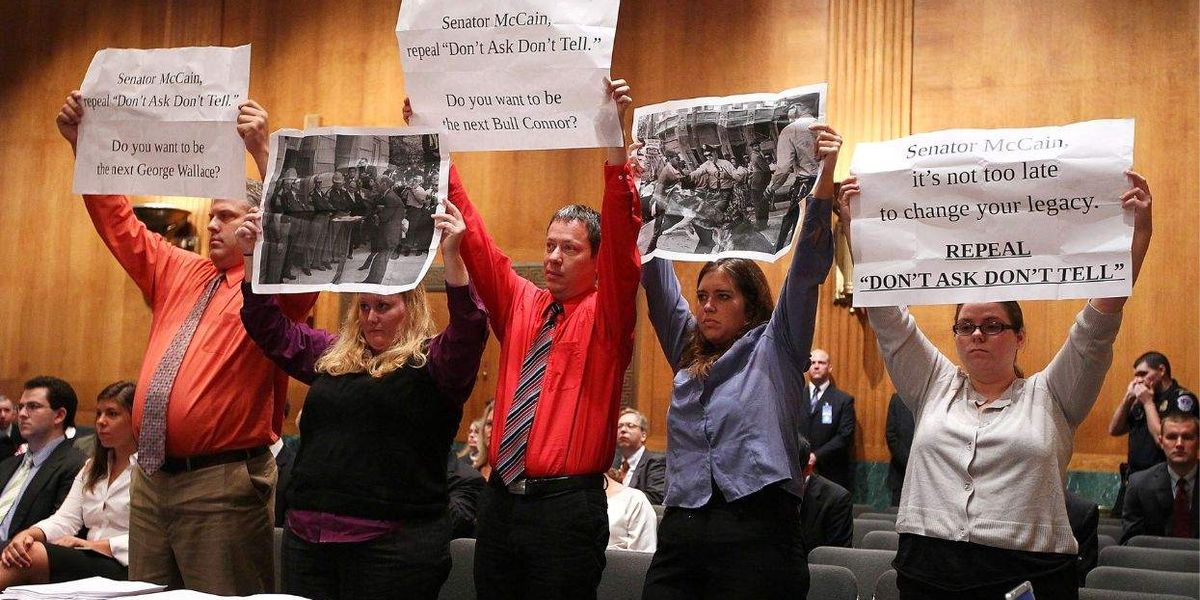
"In 2026, the words "don't ask, don't tell" live in infamy, reminders of a discriminatory policy that has rightly been consigned to the dustbin of history. But when the policy was enacted, it was actually supposed to make life better for lesbian, gay, and bisexual people serving in the military. Here's how the policy came to be, how it affected service members, and how it was repealed."
"Since the nation's founding, the U.S. military had a variety of policies designed to keep LGB people out. When "sodomy," generally defined as any nonprocreative sex, was a crime, it was a reason to discharge military members. The first one known to be kicked out for sodomy was one of George Washington's soldiers in the American Revolution, Lt. Gotthold Frederick Enslin, in 1778, according to the U.S. Naval Institute."
A presidential promise to lift the ban on LGB military service led to policy changes that aimed to reduce harm but ultimately institutionalized discrimination. U.S. military regulations historically excluded LGB people through sodomy laws, disqualification standards and targeted operations dating back to the 18th and early 20th centuries. Enforcement varied, with many serving in secret when manpower needs arose. High-profile challenges, such as a decorated Air Force sergeant publicly coming out in 1975, confronted exclusionary policies. Over time political and social pressures produced reforms culminating in the repeal of the discriminatory policy.
Read at Advocate.com
Unable to calculate read time
Collection
[
|
...
]