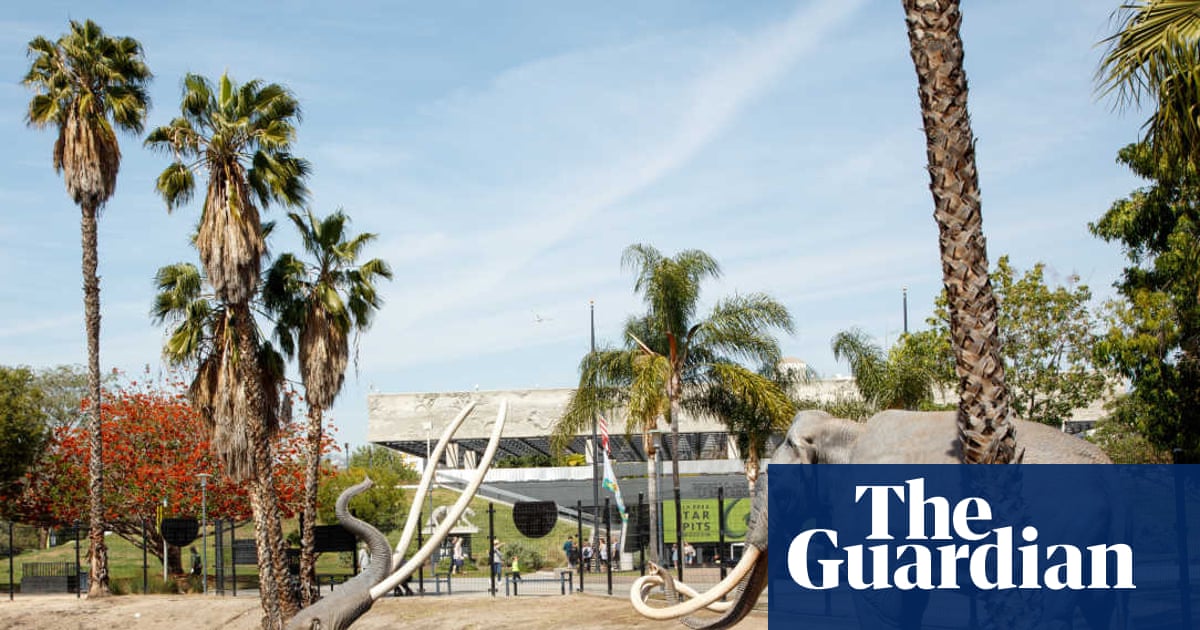
La Brea Tar Pits and Museum in Los Angeles preserves more than two million Ice Age plant and animal remains, including mastodons and saber-toothed cats, trapped in oily pools that still bubble. The site includes a dark Lake Pit and a public park, along with a paleontology-themed museum and a research center. It is described as the only urban, active Ice Age excavation site in the world, with exceptional variety, quantity, and preservation quality. The museum has operated since 1977 and attracts tourists and school-age visitors. In July, it will close for a two-year, $240 million renovation that will update interior exhibition, research, and learning spaces and add new walkways, bridges, and landscape features.
"Los Angeles is known for famous museum such as the Getty and the Lacma, but perhaps fewer people are aware that in the heart of the city lies a museum that contains one of the world's most remarkable fossil sites. The La Brea Tar Pits and Museum is home to the remains of more than 2 million ice age flora and fauna, including mastodons and saber-toothed cats, that became trapped in oily pools that still bubble up today."
"The research center, paleontology-themed museum and 5.2-hectare (13-acre) public park are the only urban, active ice age excavation sites in the world. There's almost no other fossil site in the world that has this variety and number of fossils, with this quality of preservation, said Emily Lindsey, the museum's associate curator and excavation site director."
"It's incredible; it's like Pompeii, but in the middle of a massive city which we've been able to excavate and study on a vast scale for more than a century. Chester Stock, an American paleontologist, looks at bones at the museum. Photograph: Courtesy of NHMLAC Now, for the first time in its almost 50-year history, big changes are afoot."
"The museum is preparing to close in July for a big, two-year $240m renovation project that will transform the space and the surrounding park. The museum's current structure, hidden within grassy knolls, will remain largely the same, but the interior exhibition, research and learning spaces will be updated and reimagined. Dramatic walkways, bridges and other new landscape features will create a dynamic and fresh experience for park visitors."
Read at www.theguardian.com
Unable to calculate read time
Collection
[
|
...
]