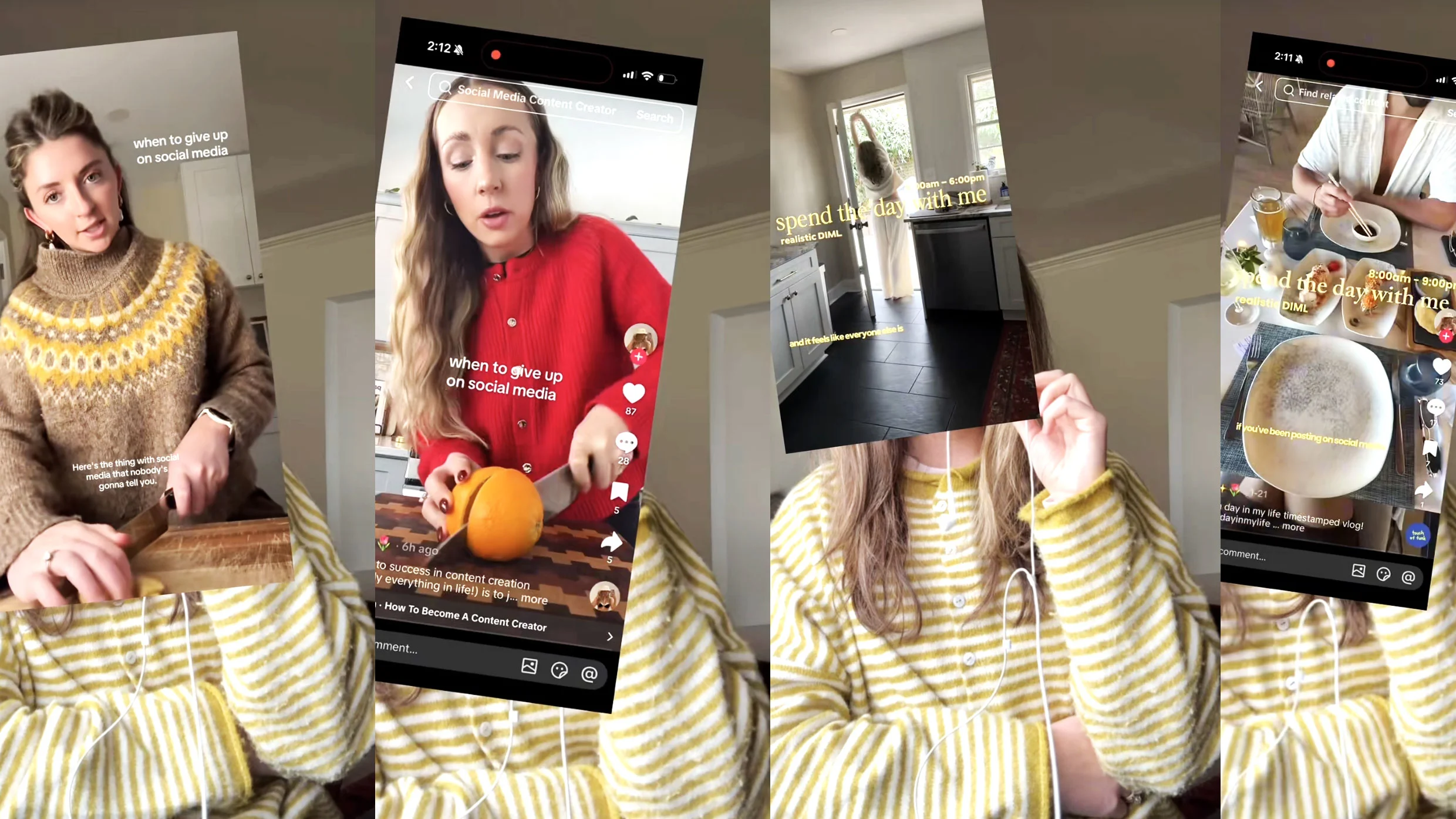
"Ellie Frazier first started posting content three years ago, sharing day-in-the-life vlogs and content tips for fellow creators. As her following grew, she began noticing other creators posting videos with uncannily similar scripts to her own. The clips felt the same. The editing style, identical. In one example, Frazier stretched in front of a window; another creator stretched in front of a window."
"Frazier chopped vegetables; the other creator chopped an orange. On its own, that might not seem especially striking. But the voiceover script used by the other creator was also almost verbatim Frazier's words. "There's a very stark difference between taking inspiration from everybody and giving credit, versus stealing somebody's voiceover script word for word multiple times in a row," says Frazier in a recent post. "Taking credit in the comments for it being their own work.""
"Plagiarism-presenting another person's ideas, words, images, or work as your own without credit-while often difficult to litigate, is a cardinal sin in most industries. And yet social media largely operates as a law unto itself. TikTok will remove content that "violates or infringes someone else's intellectual property rights, including copyright and trademark." However, many posts on the platform do not clearly meet the legal threshold for copyrightable intellectual property, meaning enforcement is often left to creators themselves."
Ellie Frazier began posting video content three years ago, focusing on day-in-the-life vlogs and tips for creators. As her audience grew, she observed other creators producing videos with strikingly similar scripts, scenes, and editing. Specific instances included duplicated stretching and chopping shots accompanied by nearly verbatim voiceovers that were claimed as original by the imitators. Plagiarism—presenting another person's words or work as one's own without credit—remains widespread on social platforms. Platform policies like TikTok's target intellectual property infringements, but many posts fall short of copyright thresholds, leaving detection and enforcement largely to creators themselves.
Read at Fast Company
Unable to calculate read time
Collection
[
|
...
]