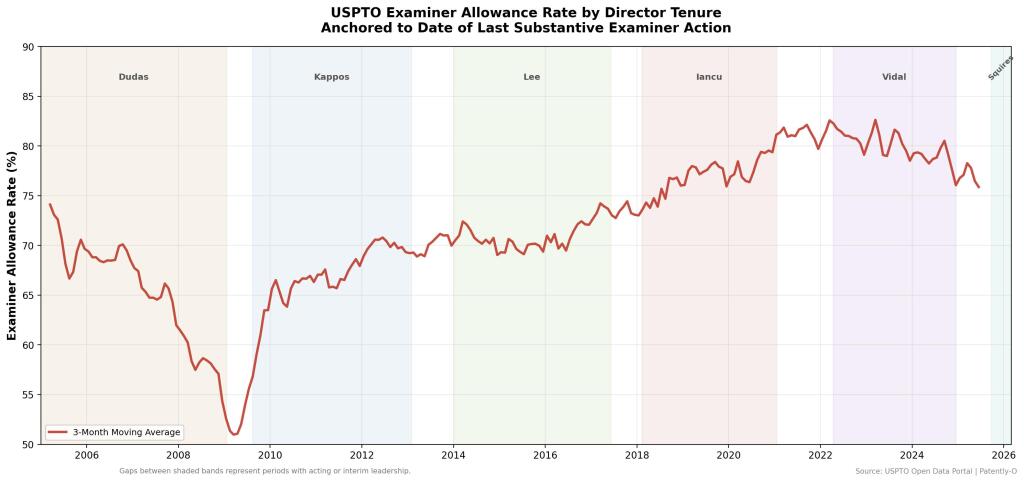
"This third approach asks a different question: when did the examiner actually make the call? For each disposed application, I anchor the outcome to the date of the examiner's last substantive action: the mailing of the Notice of Allowance for applications that received one, and the mailing of the last office action rejection for applications that were abandoned after rejection. This strips away the administrative lag inherent in my prior two charts."
"Of the three approaches, this one offers the most direct window into USPTO policy. We are measuring the moment the agency acts, the last examiner decision that set the legal outcome in motion."
This analysis represents the third approach to measuring USPTO allowance rates, focusing on when examiners actually make their decisions rather than when applications are filed or when applicants take final action. The methodology anchors each disposed application's outcome to the examiner's last substantive action: the Notice of Allowance mailing date for allowed applications or the final office action rejection mailing date for abandoned applications. This approach eliminates administrative delays present in previous filing-cohort and applicant-focused methods, providing a more precise real-time measure of examination policy. The analysis covers published utility patent applications only, with the caveat that applications are treated individually rather than tracking family-level outcomes, as most applications are part of related application families including continuations and divisionals.
#uspto-allowance-rates #patent-examination-policy #examiner-decisions #utility-patent-applications #patent-prosecution-analysis
Read at Patently-O
Unable to calculate read time
Collection
[
|
...
]