"That approach answer backward-looking question: of all the applications filed in a given month, what share ultimately became patents. It is the right metric for understanding how the patent system treats a generation of filings, but it carries an inherent delay. An application filed in 2020 does not resolve for two to four years, meaning the cohort data tells us about examination culture circa 2022-2024, not about what the agency is doing right now."
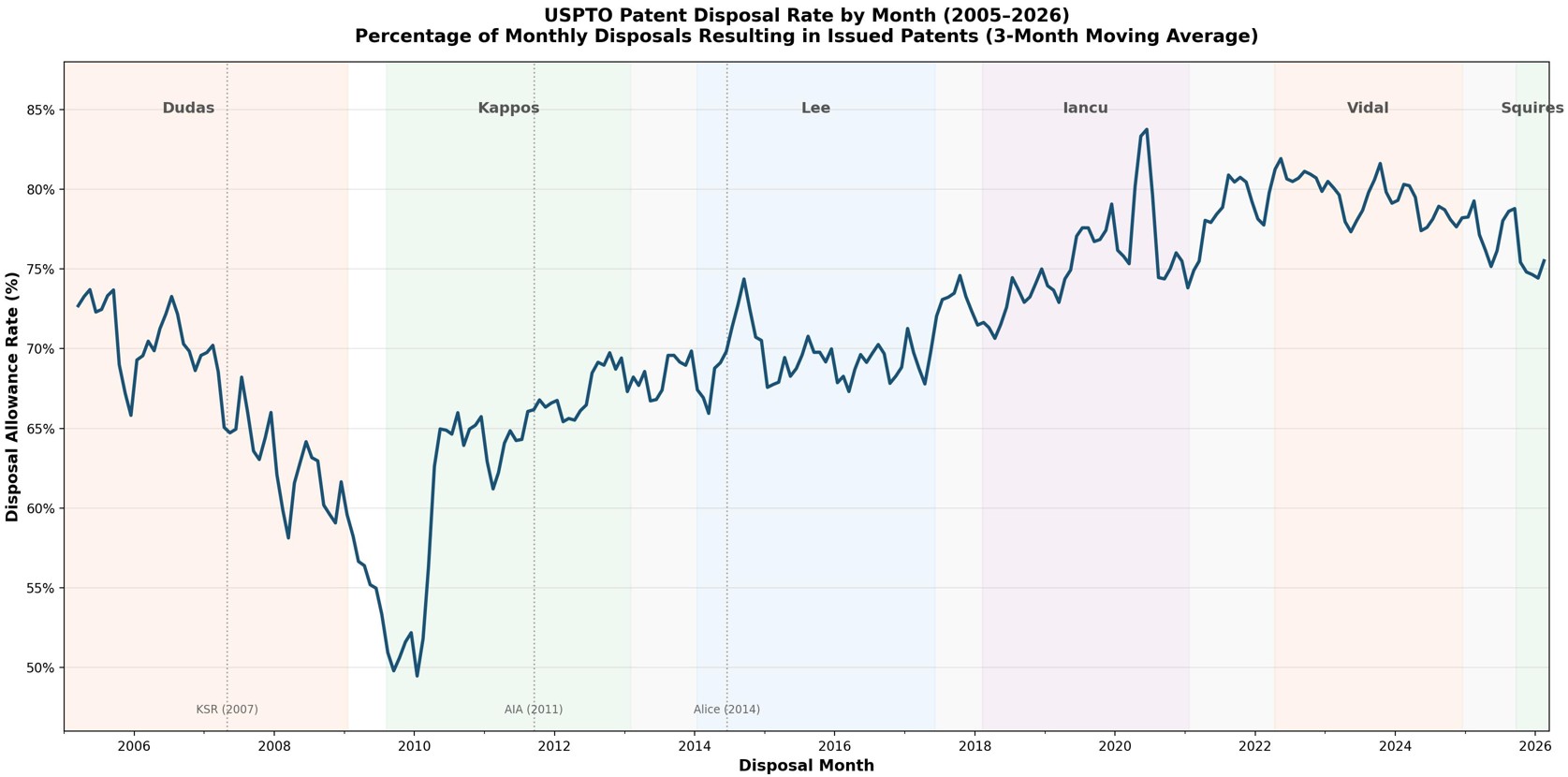
"Instead of grouping applications by when they were filed, the chart below groups them by when they were resolved. Each data point represents the percentage of applications disposed of in a given month (either issued as patents or abandoned) that resulted in issued patents. I call this the "disposal allowance rate," and it functions as a more immediate signal of the agency's examination posture."
A February 2026 study tracked patent allowance rates by filing-date cohort, following applications from filing to final resolution. This backward-looking metric reveals how the patent system treats a generation of filings but carries inherent delay, as applications filed in 2020 take two to four years to resolve. A complementary approach groups applications by resolution date rather than filing date. The disposal allowance rate measures the percentage of applications disposed in a given month that resulted in issued patents, functioning as an immediate signal of current USPTO examination posture and practices.
#patent-allowance-rates #uspto-examination-practices #disposal-allowance-rate #patent-filing-metrics
Read at Patently-O
Unable to calculate read time
Collection
[
|
...
]