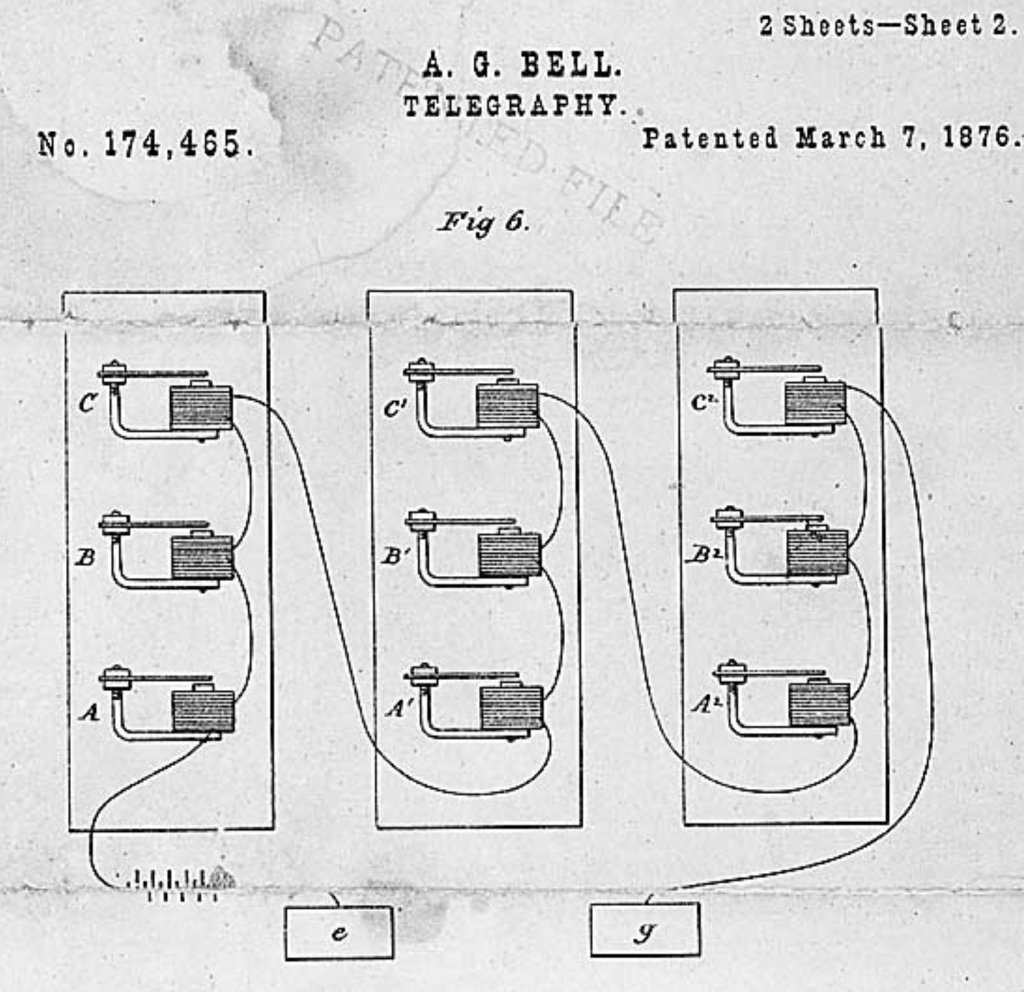
"The strategy worked, at least initially: the Patent Office examiner "did not understand the application to lay claim to the art of transmitting speech" and so "did not make an inquiry as to the state of that art or the patents or the printed publications concerning it." No search for the work of Reis, Meucci, or even the caveat filed that same day by Elisha Gray. Bell got his patent on March 7, 1876, three weeks after filing."
"Nearly 150 years later, patent attorneys are still doing the same thing, though the tools are better and the practice now has a name: targeted drafting. The basic idea is to frame an application so the USPTO routes it to a favorable art unit, where the examiner corps is more likely to allow claims. The mechanism is different from Bell's era, but the impulse is identical. A good negotiator picks a willing counterpart. A good patent prosecutor picks an art unit where the odds favor allowance."
Alexander Graham Bell titled his 1876 patent application "Improvement in Telegraphy" rather than "Telephone" or explicit language about transmitting speech. The United States later alleged Bell purposely used ambiguous, general terms to avoid declaring any relation to transmitting speech by electricity. The Patent Office examiner did not recognize a claim to speech transmission and therefore did not search relevant prior work, and Bell obtained the patent three weeks after filing. The practice of crafting applications to obtain favorable examination persists today as targeted drafting. Vendors sell analytics to predict art‑unit assignment and suggest language changes to influence routing and allowance odds.
Read at Patently-O
Unable to calculate read time
Collection
[
|
...
]