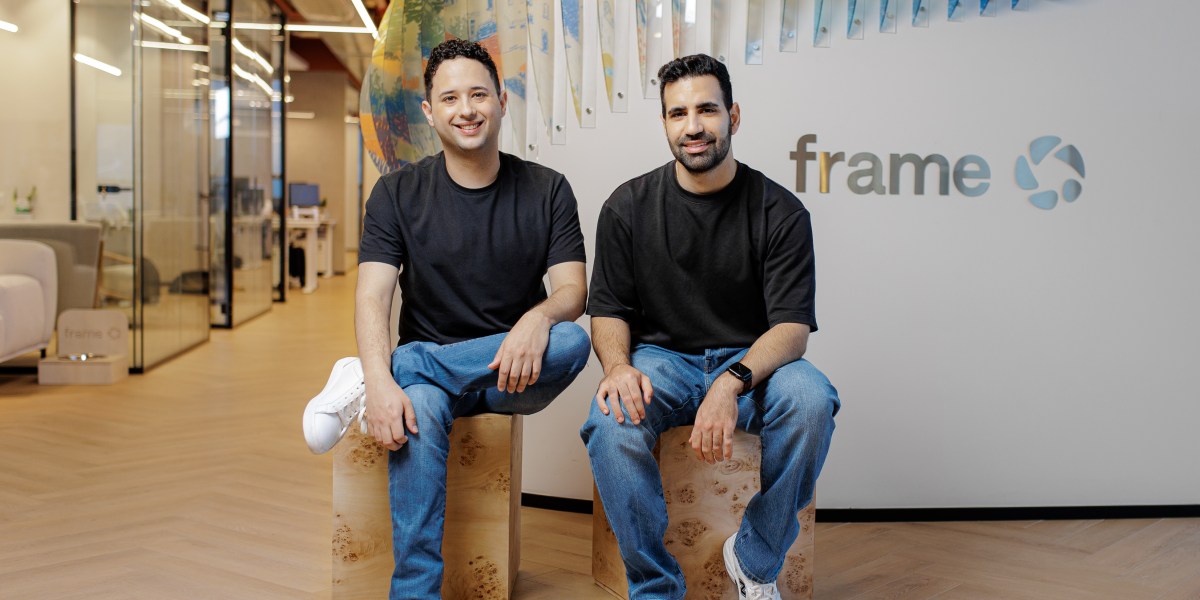
"Frame is trying to make "security awareness training" sound less like a mandatory HR video, and more like a real cybersecurity category that the company calls "human risk security." Translation: Employees are still the easiest way into a company, and AI has made tricking them cheaper, faster-and much more convincing."
"Frame's platform lets companies create AI-generated simulations and training based on how employees actually work. That can mean, Shlomo said, a voice-cloned call coming from the CEO, a video, or an attack mentioning open positions, or something recently event-related at the company. These simulated attacks are meant to be equally as convincing as the real ones."
""The world of poorly written phishing emails is pretty much gone," CEO Tal Shlomo told Fortune. "Attackers and adversaries now know your company very well and in detail.""
""We think as one and operate as two," Shlomo said. Frame's pitch is resonating, Shlomo says, because companies are tired of generic training. "It treats every company as every other"
A cybersecurity startup called Frame Security launched with $50 million in funding to improve security awareness training. The company positions its work as “human risk security,” aiming to make training feel like a real cybersecurity category rather than a generic HR video. AI enables attackers to craft cheaper, faster, and more convincing social engineering, including voice-cloned calls from executives and messages referencing current company events or open roles. Frame’s platform generates simulations based on how employees actually work, producing realistic scenarios intended to match real attacks. The founders bring Israeli intelligence and cybersecurity experience, including prior roles connected to major security firms and ventures. Demand is driven by companies’ frustration with generic training that treats all organizations the same.
Read at Fortune
Unable to calculate read time
Collection
[
|
...
]