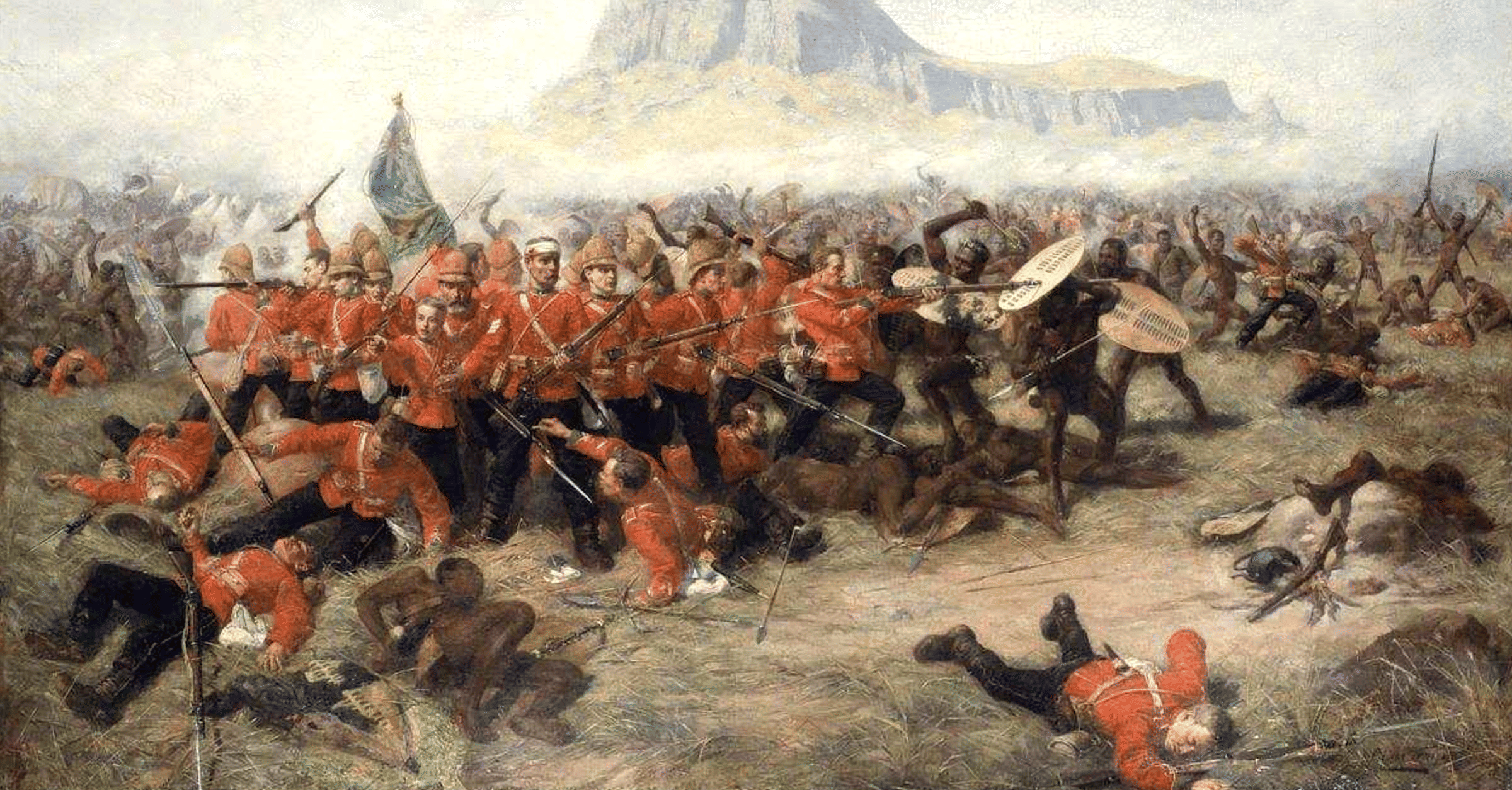
"Over 25,000 Zulu warriors attacked and destroyed a British-led force of 1,700 men camped at the foot of the Isandlwana mountain in Southern Africa. The British did recover, won the war in July that year, and ultimately achieved their purpose of expanding and securing total control of Southern Africa."
"Britain controlled the Cape Colony in Southern Africa, which was strategically important because the Cape of Good Hope was a stopping point for ships that connected India and the Far East to Europe. Through the 1830s, when the British outlawed slavery and population growth applied too much pressure to land and resources, around 14,000 Boers migrated northwards."
"This rather poor corner of the British Empire suddenly became one of the richest when diamonds were discovered in Griqualand in the late 1860s. The British, particularly the new Colonial Secretary Sir Michael Hicks Beach, were keen to unify the British colonies with the two Boer republics into some sort of federation, but the latter were suspicious of what that would mean for their own independence."
Britain controlled the Cape Colony in Southern Africa, a strategically vital location for ships traveling between India and Europe. When Britain outlawed slavery in the 1830s, approximately 14,000 Boers migrated northward and established two independent republics, Transvaal and Orange Free State, after conflicts with indigenous peoples. Britain recognized these republics in 1854 while maintaining theoretical sovereignty. The discovery of diamonds in Griqualand during the late 1860s transformed the region into a wealthy area, prompting Britain to pursue unification of European colonies and Boer republics into a federation. African groups, including the Zulu, mounted resistance against colonial expansion during this period of territorial consolidation.
Read at World History Encyclopedia
Unable to calculate read time
Collection
[
|
...
]