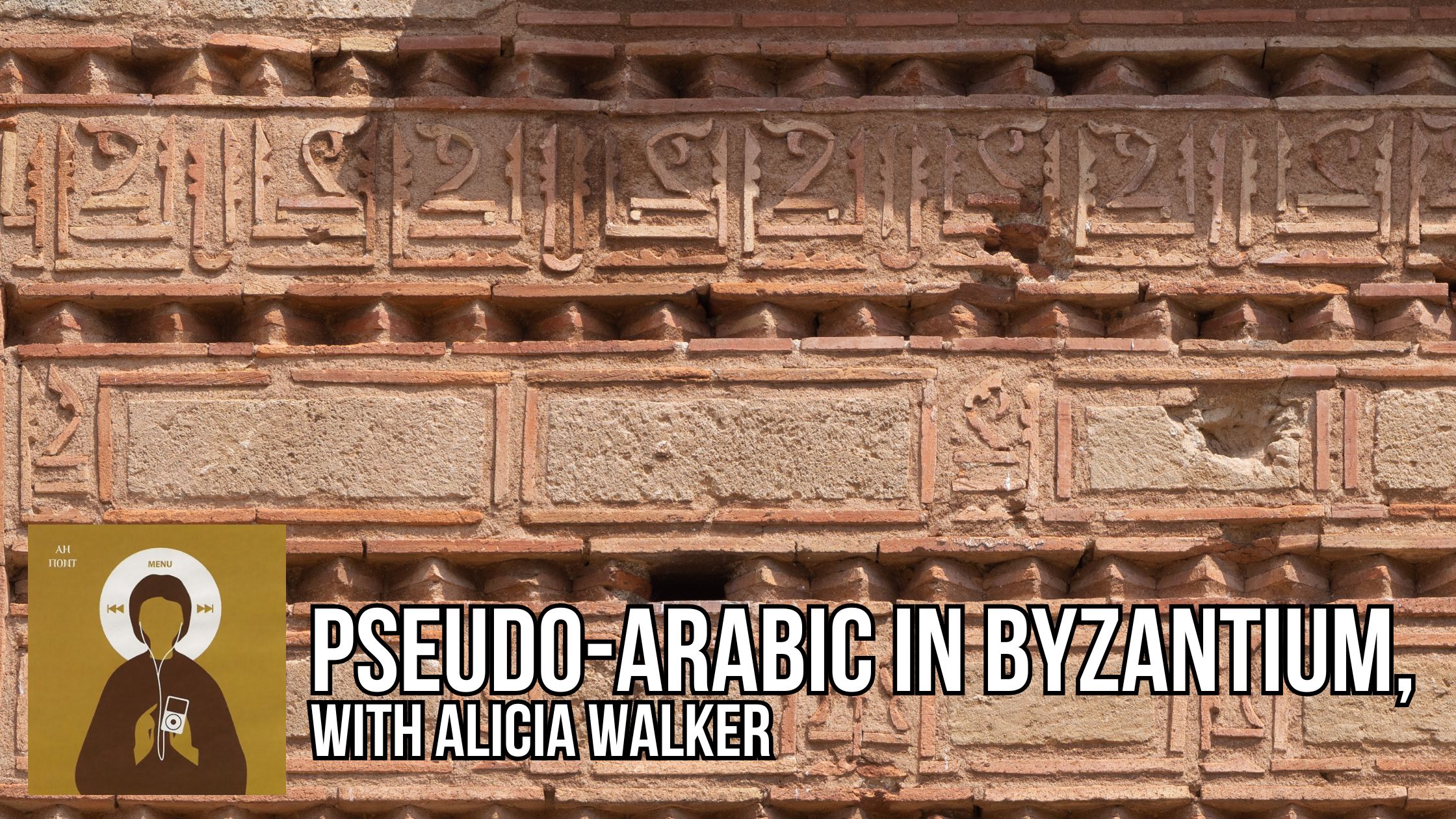
"A conversation with Alicia Walker on the pseudo-Arabic inscriptions (or pseudo-kufic) that appear on a number of tenth- and eleventh-century churches in Greece, most notably at the monastery of Hosios Loukas. What did the Arabic script signify in Orthodox culture at the time if not tension with Islam? Alicia Walker is Professor of History of Art at Bryn Mawr College."
"The conversation is based on Alicia's essay 'Letters from the Edge: Mapping Pseudo-Arabic between Byzantium and the Near East,' in E. Bolman et al., eds., Worlds of Byzantium: Religion, Culture, and Empire in the Medieval Near East (Cambridge University Press 2024). Byzantium & Friends is hosted by Anthony Kaldellis, a Professor at the University of Chicago. You can follow him on his personal website."
Pseudo-Kufic inscriptions appear on tenth- and eleventh-century Greek churches, most notably at Hosios Loukas. Arabic-looking script often functions as a decorative motif on architecture and liturgical objects. The presence of pseudo-Arabic indicates active visual and material exchange between Byzantium and the Near East. The script operated as a marker of exotic prestige, cosmopolitanism, and artisanical borrowing rather than straightforward religious antagonism. Byzantine patrons and craftsmen repurposed Arabic forms for aesthetic, symbolic, or protective associations within Orthodox contexts. Interpretations of these inscriptions should emphasize cross-cultural contact, layered meanings, and the flexibility of visual languages in medieval Mediterranean societies.
Read at Medievalists.net
Unable to calculate read time
Collection
[
|
...
]