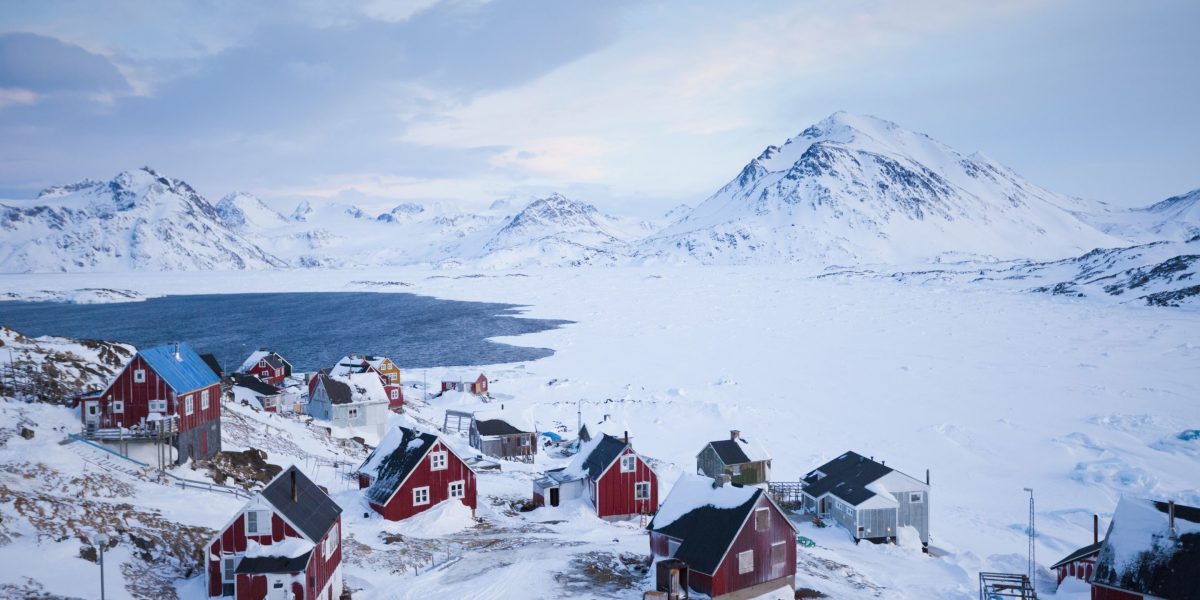
"On April 9, 1940, Nazi tanks stormed into Denmark. A month later, they blitzed into Belgium, Holland and France. As Americans grew increasingly rattled by the spreading threat, a surprising place became crucial to U.S. national security: the vast, ice-capped island of Greenland. The island, a colony of Denmark's at the time, was rich in mineral resources. The Nazi invasions left it and several other European colonies as international orphans."
"Greenland was essential for air bases as U.S. planes flew to Europe, and also for strategic minerals. Greenland's Ivittuut (formerly Ivigtut) mine contained the world's only reliable supply of the most important material you've probably never heard of: cryolite, a frosty white mineral that the U.S. and Canadian industries relied upon to refine bauxite into aluminum, and thus essential to assembling a modern air force."
In April–May 1940 Nazi forces overran Denmark, Belgium, the Netherlands and France, alarming U.S. policymakers. Greenland, then a Danish colony, became strategically vital for air bases and for mineral resources. The Ivittuut mine held the world's only reliable supply of cryolite, necessary to refine bauxite into aluminum used in aircraft production. A month after Denmark fell, five U.S. Coast Guard cutters sailed to Greenland in part to protect the mine. World War II involved intense competition for strategic materials beyond oil and uranium. Foreign resource access raised questions of sovereignty and required balancing diplomacy and force. Interest in Greenland resurged as critical-mineral demand rose.
Read at Fortune
Unable to calculate read time
Collection
[
|
...
]