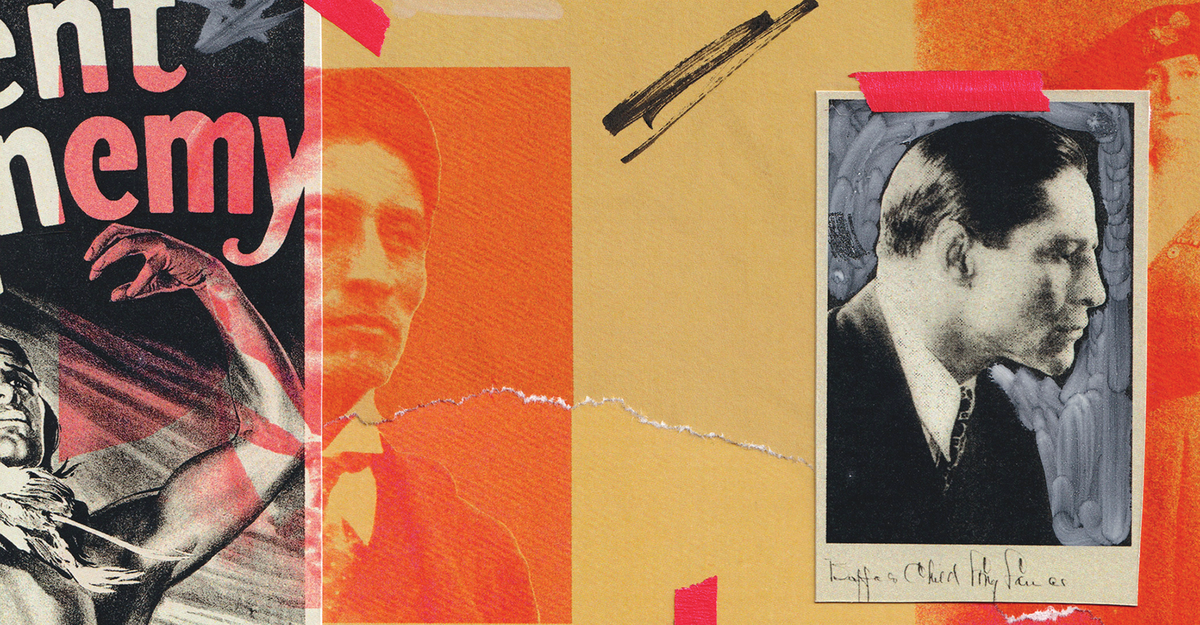
"Barely a year old, he was riding in a moss baby carrier on his mother's back, surrounded by women and horses. His mother's hand was bleeding, and she was crying. Long Lance wrote that when he'd recounted this memory to his aunt years later, he'd been told that he was remembering the "exciting aftermath of an Indian fight" in which his uncle Iron Blanket had just been killed by the Blackfeet Tribe's traditional enemies, the Crow."
""From this incident on," he wrote, "I remember things distinctly. I remember moving about over the prairies from camp to camp." Born to a Blackfeet warrior in the late 19th century, during the final days of the "free" Blackfeet in northern Montana and southern Alberta, Long Lance wrote that his father's generation was facing "the mystery of the future in relation to the coming of the White Man.""
Chief Buffalo Child Long Lance recounted an early trauma in which his mother bled after amputating a finger in mourning for a slain uncle killed by the Crow. He remembered falling from a horse at age four and then moving across prairies from camp to camp. He was born to a Blackfeet warrior in the late 19th century as the free Blackfeet confronted the arrival of the White Man. He attended Carlisle, received a West Point appointment, enlisted with the Canadian Expeditionary Force in 1916, fought at Vimy Ridge, was twice wounded, rose to captain, and received the Croix de Guerre before entering New York high society where he mingled with notable figures.
Read at The Atlantic
Unable to calculate read time
Collection
[
|
...
]