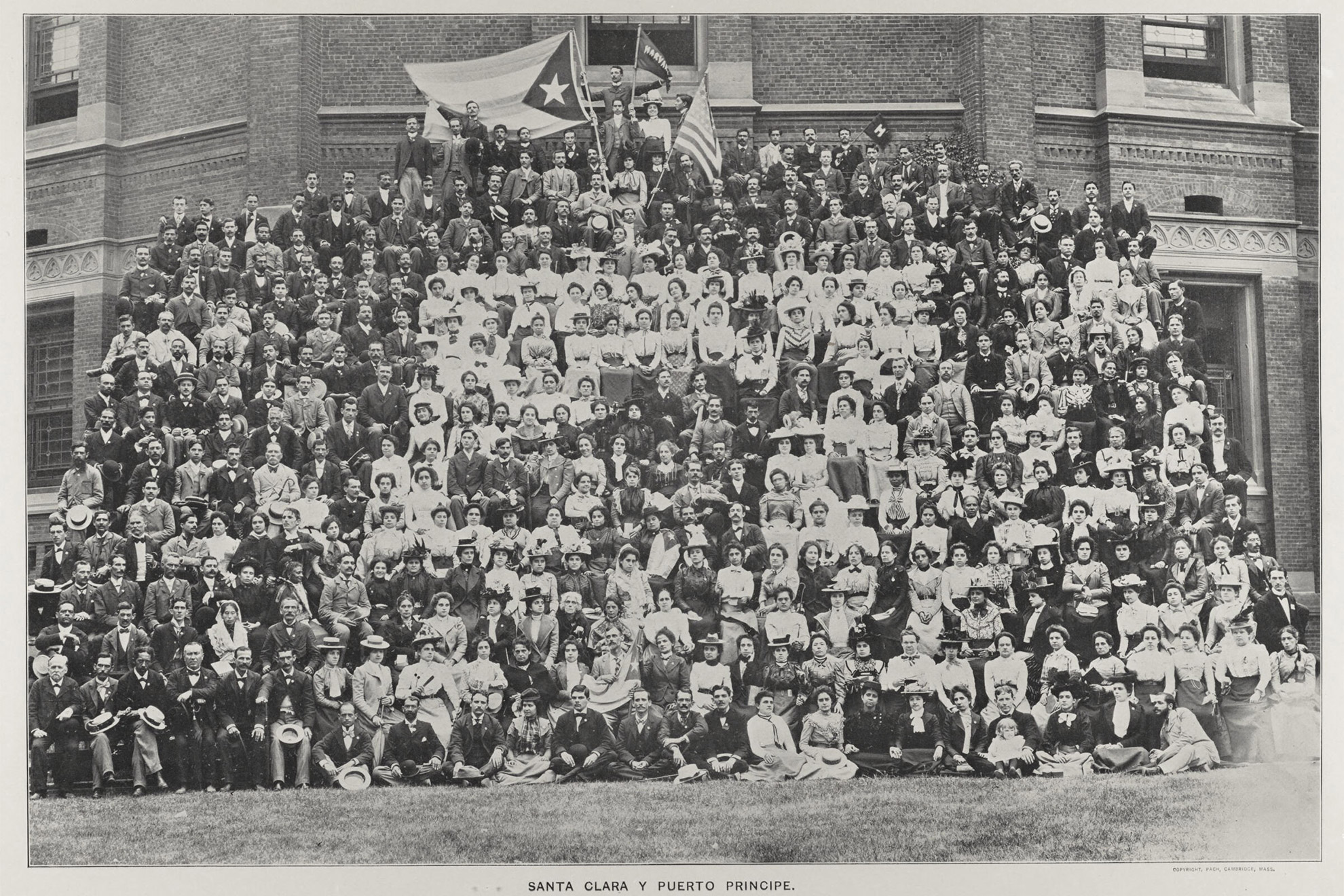
In summer 1900 more than 1,200 Cuban teachers, ages 16 to 60, attended a six-week summer school at Harvard. The teachers traveled to Massachusetts via U.S. Army warship and posed for a group photograph before Memorial Hall. The program aimed to introduce American educational practices and cultural values to an island under U.S. occupation after the Spanish–American War. An exhibition at Pusey Library displayed photographs, letters, and archival materials through Jan. 15. The expedition challenged prevailing assumptions on both sides about race, gender, and national pride and functioned as an early form of cultural soft-power exchange.
"Everywhere there were scores of strange faces - men chatting in groups and smoking black, tobacco-covered cigarettes; women walking to and fro from their recitations, conversing rapidly in Spanish, and innumerable Cubans drinking at the college pump,"
"'So many were here,' he continued in his essay for a campus publication, 'that one of the teachers themselves said: 'Cambridge es Cuba chiquita.' Cambridge is a tiny Cuba.'"
"'Today we could call this a soft-power initiative - a term that didn't exist back then,' said moderator Erin Goodman, executive director of the Weatherhead Center for International Affairs, co-sponsor of the panel."
Read at Harvard Gazette
Unable to calculate read time
Collection
[
|
...
]