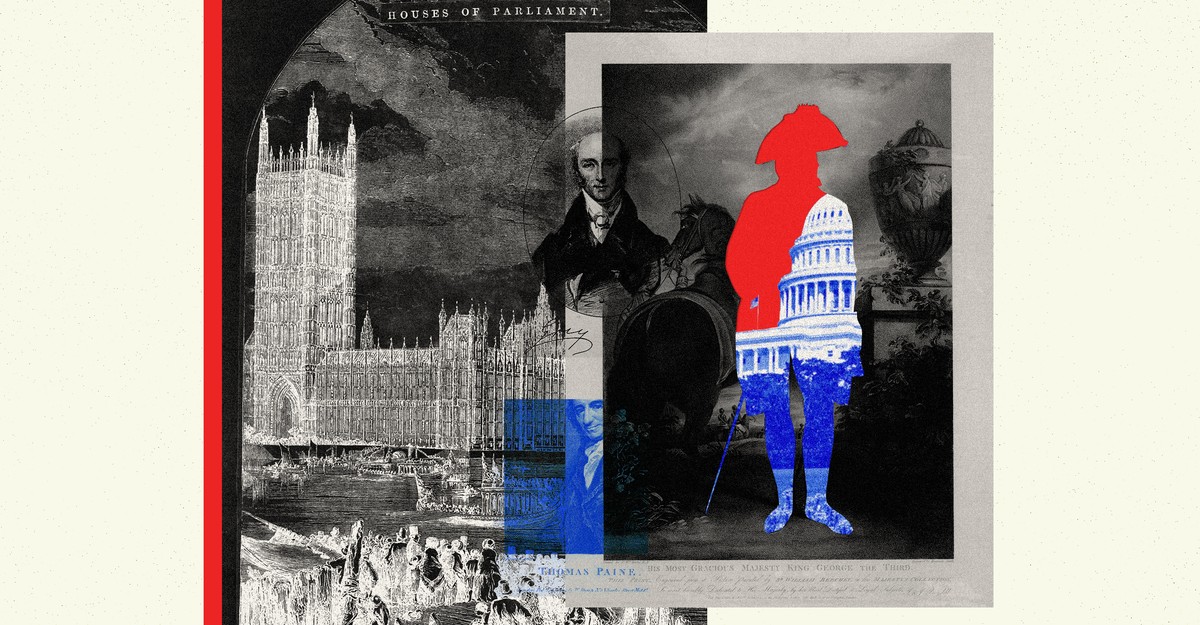
Unilateral executive authority, a legislature unable to restrain it, and gerrymandered districts that create safe seats leave many voters without meaningful representation. Long wars with unclear endpoints and poorly tallied costs add to democratic strain. Similar conditions existed in Britain in the 1770s, when the constitution was out of balance and the executive accumulated powers and patronage at Parliament’s expense. Representation had degraded into “rotten boroughs,” where sparsely populated areas dominated seats while fast-growing industrial cities were largely unrepresented. The King used the Civil List to distribute stipends, pensions, jobs, sinecures, and influence, reinforcing patronage networks.
"We have a president whose unilateral powers—over war making, over administration, over emergency authorities—would have astonished the founding generation; a legislature that has proved unable or unwilling to constrain the executive; and gerrymandered congressional districts that produce safe seats by the hundreds, and leave far too many voters without a meaningful voice. We've had two decades of wars whose ends remain elusive and whose costs are rarely tallied."
"The diagnostic checklist that an attentive observer might have drawn up in Britain in the 1770s seems very familiar. The constitution was out of balance, and the executive—at this time still the King—was accumulating powers and patronage at the expense of Parliament. The system of representation had degenerated into the absurdity of "rotten boroughs"—sparsely inhabited areas that returned members of Parliament chosen by local magnates and their political masters while whole swaths of the country, such as the rapidly growing industrial cities, went almost entirely unrepresented."
"The King had at his disposal something called the Civil List, which disbursed stipends, pensions, and other emoluments at the monarch's discretion, sometimes in the form of specific jobs (for instance, Lord of the Bedchamber), sometimes to provide sinecures (Rousseau was offered one just for being Rousseau), and sometimes to spread favor and influence."
Read at The Atlantic
Unable to calculate read time
Collection
[
|
...
]