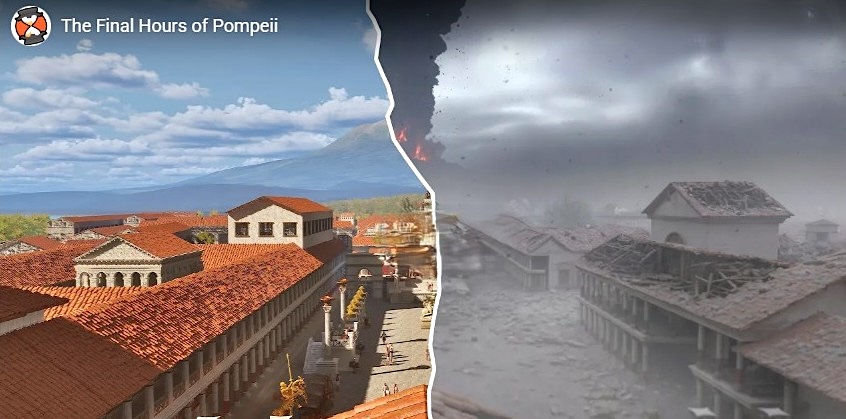
"How­ev­er cel­e­brat­ed by his­to­ri­ans, scru­ti­nized by archae­ol­o­gists, and descend­ed-upon by tourists it may be, Pom­peii is not excep­tion­al - not even in the fate of hav­ing been buried in ash by Mount Vesu­vius in the year 76, which also hap­pened to the near­by town of Her­cu­la­neum. Rather, it is the sheer ordi­nar­i­ness of that medi­um-sized provin­cial Roman city that we most val­ue today, inad­ver­tent­ly pre­served as it was by that vol­canic dis­as­ter. The new Lost in Time video above recon­structs"
"Unsur­pris­ing­ly, the Amphithe­atre of Pom­peii is much small­er than the Colos­se­um. But it was actu­al­ly built 140 years ear­li­er, at a time when local lead­ers across the empire were already start­ing to feel that any self-respect­ing Roman town ought to have its own venue for spec­ta­cles involv­ing one-on-one com­bat, feats of ath­leti­cism, exot­ic ani­mals, and even pub­lic exe­cu­tions. The same ulti­mate­ly went for all the types"
Pompeii was a medium-sized provincial Roman city preserved by volcanic ash, whose ordinary streets, homes, and public buildings survive with exceptional detail. The preserved urban fabric includes homes, aqueducts, a forum, a basilica, and production facilities for wine and perfume, alongside baths, snack bars, and dining rooms. The amphitheatre predates the Colosseum by 140 years and hosted combat, athletic displays, exotic animals, and public executions. The entombed public and private spaces together reveal a full civic life with typical Roman amenities despite lacking the political opportunities available in Rome.
Read at Open Culture
Unable to calculate read time
Collection
[
|
...
]