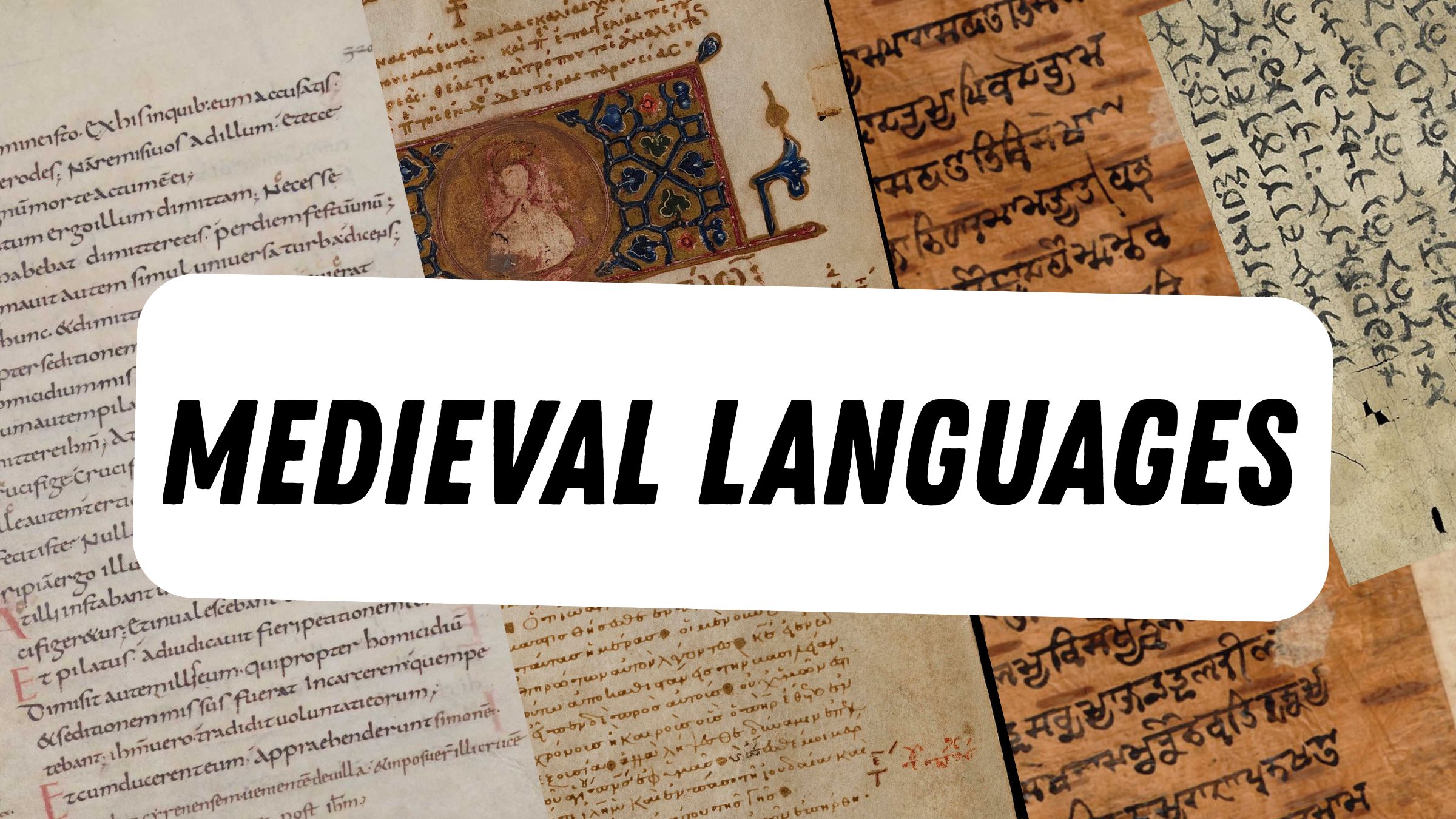
"At the beginning of the Middle Ages, Latin remained the dominant language of writing in western Europe and the closest thing the region had to a shared international tongue. Even after the Western Roman Empire collapsed, Latin continued to connect rulers, bishops, monasteries, and scholars across long distances, so it stayed the default choice for texts meant to circulate beyond a single community-whether that meant a royal charter, a bishop's letter, or a manuscript copied in a monastery."
"Crucially, by this point Latin was more a written language than an everyday spoken one. Full literacy was limited, and Classical Latin-the polished language of ancient authors-was usually accessible only to people with formal schooling, especially clerics and some members of the elite. For most others, Latin was something they encountered through the Church, public documents, or the educated few who could read and write it."
The medieval world contained many languages, but a small number of major tongues carried communication across regions. Latin served as the dominant written lingua franca in western Europe after Rome's fall, linking rulers, bishops, monasteries, and scholars despite limited general literacy. Latin functioned chiefly as a written rather than spoken medium, accessible mainly to clerics and elites, and it evolved with new Christian vocabulary and simpler styles. Across the Middle East, North Africa, Central Asia, India, and East Asia, major languages rose, spread, overlapped, and coexisted alongside numerous local vernaculars used in everyday life.
#medieval-multilingualism #latin-written-lingua-franca #vernaculars-and-language-change #cross-regional-linguistic-exchange
Read at Medievalists.net
Unable to calculate read time
Collection
[
|
...
]