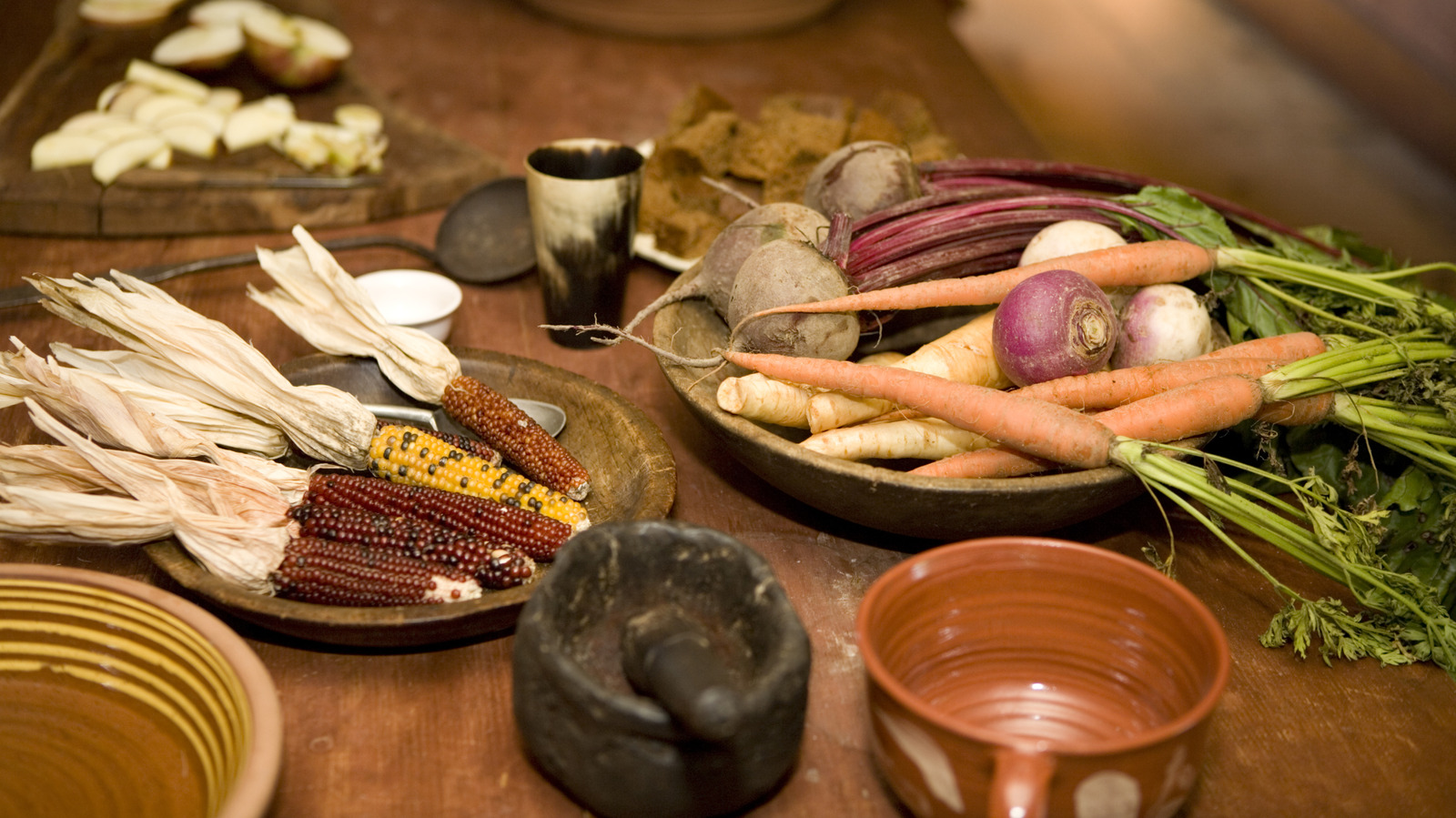
"We spoke to several food historians to understand what colonists were eating around the time the Continental Congress signed the Declaration of Independence, changing American history forever. KC Hysmith, Ph.D., is a writer, editor, food scholar, and recipe developer. Meanwhile, Keith Stavely and Kathleen Fitzgerald have written three books together about the evolution of American cuisine, with a special emphasis on regionality and early cookbooks. Their insights shed light on how staples like Great Cake and tea were closely linked to British cuisine, while dishes like Johnny cakes and hasty pudding starred Indigenous ingredients."
"Furthermore, socioeconomic disparities, geographical region, trade blockades, and political affiliation (for instance, whether one considered themself a Loyalist or a Patriot) all affected one's diet. Feeling adventurous? You can try many of these dishes yourself, aided by the convenience of modern cookware. Most of them feature simple, readily available ingredients, and you can add extra spices if desired."
"Johnny cakes, which were one of George Washington's favorite breakfast foods, bore a strong resemblance to pancakes, explains KC Hysmith. However, instead of being made with all-purpose flour like pancakes are today, they were typically made with cornmeal or a mix of cornmeal and wheat flour. It's just one example of how cornmeal (or "Indian corn") made its way into the colonial diet."
"Indeed, Johnny cakes weren't enjoyed in Great Britain, and Benjamin Franklin once proudly wrote that "johny or hoecake, hot from the fire, is better than a Yorkshire muffin.""
Life changed dramatically from the American Revolution to later eras, and kitchen foods provide a clear view of that evolution. Food historians connect colonial staples to British cuisine, while other dishes relied on Indigenous ingredients. Diets differed across socioeconomic status, geography, trade blockades, and political affiliation, including Loyalist versus Patriot identities. Johnny cakes resembled pancakes but were commonly made with cornmeal or a cornmeal-and-wheat mix rather than all-purpose flour. Cornmeal, also called “Indian corn,” became a notable part of the colonial diet. Johnny cakes were not enjoyed in Great Britain, and Benjamin Franklin praised them over a British muffin.
#colonial-american-food #johnny-cakes #cornmealindian-corn #british-influence #indigenous-ingredients
Read at Tasting Table
Unable to calculate read time
Collection
[
|
...
]