"We know more or less every­thing we could pos­si­bly know about ancient Egypt­ian civ­i­liza­tion. That owes in large part to the advanced state of record-keep­ing it achieved, and how many of its writ­ings have sur­vived, up to and includ­ing - as pre­vi­ous­ly fea­tured here on Open Cul­ture - a home­work assign­ment and a list of excus­es giv­en by builders who missed work."
"The case of a Kore­an inde­pen­dent researcher called Huni Choi proved to be dif­fer­ent, for rea­sons Lee uses the video to lay out. Con­ven­tion­al assump­tions about how the pyra­mids were built hold that work­ers would have had to drag the stones up one or more ramps, though the dimen­sions of the struc­tures dic­tate that the project would neces­si­tate huge, com­plex, or huge and com­plex ramp sys­tems - whose own con­struc­tion has some­how left behind not a trace of evi­dence."
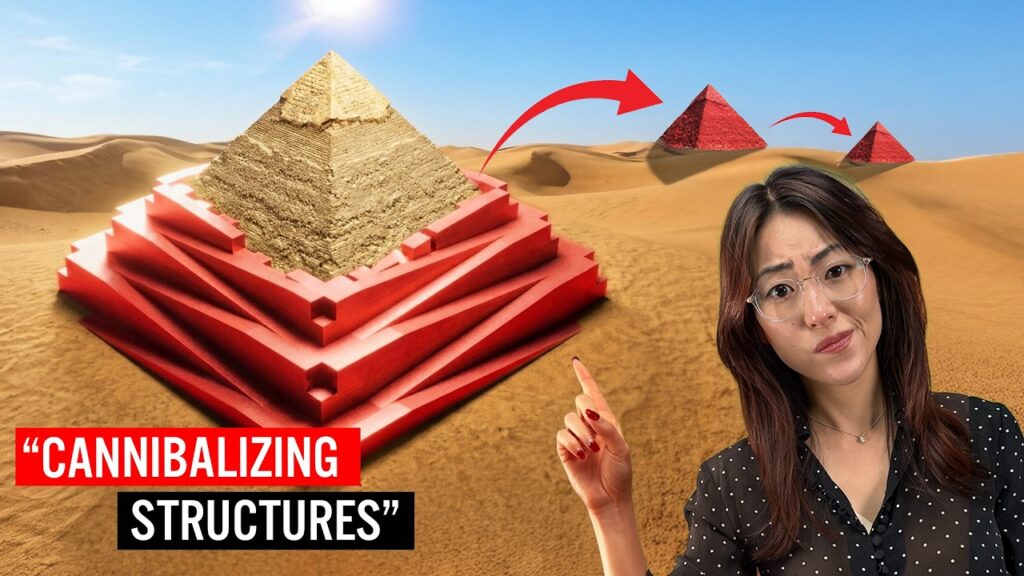
Precise methods used to construct the Giza pyramids remain unresolved despite extensive surviving Egyptian records. Conventional ramp hypotheses require enormous, complex ramp networks whose construction would likely leave archaeological traces that are largely absent. A Korean independent researcher, Huni Choi, proposes an alternate method in which the Great Pyramid originated as part of a sequence of sacrificial, cannibalized, overbuilt trapezoidal masses, with later stages built by reusing and reshaping earlier structures. Many unsolicited claims of secret methods have appeared, but the alternative structural proposal aims to eliminate the need for massive external ramps.
Read at Open Culture
Unable to calculate read time
Collection
[
|
...
]