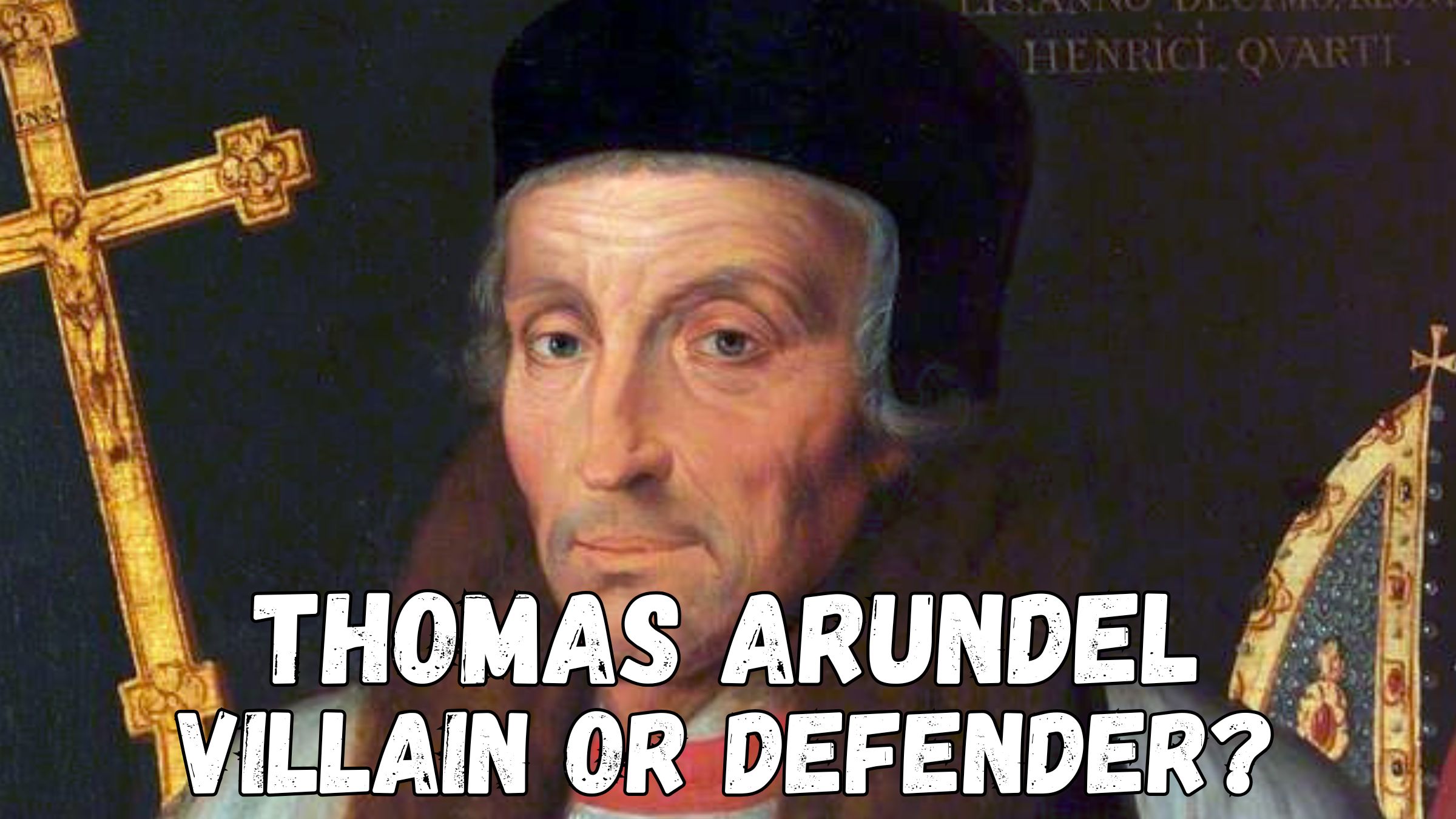
"Several of the names that emerged as 'winners' are unsurprising: for the twentieth century, Oswald Mosley; for the nineteenth, Jack the Ripper; for the thirteenth, King John. Also included were two archbishops of Canterbury: for the twelfth century, St Thomas Becket, who 'divided England in a way that even many churchmen who shared some of his views thought unnecessary and self-indulgent'; and for the fifteenth century, Thomas Arundel, who 'used his authority to persecute the Lollards, a group promoting lay priesthood and translations of the Bible.'"
"England's early Protestants such as Cranmer, John Foxe and John Bale loathed Arundel. They believed that he had introduced to England the practice of burning heretics. In fact, heretics had been burned in England before, in the twelfth and thirteenth centuries, and it had long been regarded by both clerics and the laity as the 'correct' way to punish those who refused to recant."
"Unlike many European countries, however, England had experienced very little heresy before the late fourteenth century. From the 1380s, with the rise of Lollardy, 'the English heresy' began to challenge the established church."
Thomas Arundel, a controversial figure in late medieval England, is often viewed as a ruthless persecutor of the Lollards, who advocated for lay priesthood and Bible translations. His actions led to his inclusion in a BBC poll of infamous British villains. Early Protestants, including Thomas Cranmer, condemned Arundel for introducing heretic burnings in England, despite such practices existing prior. The rise of Lollardy in the 1380s marked a significant increase in heretical movements in England, challenging the established church.
Read at Medievalists.net
Unable to calculate read time
Collection
[
|
...
]