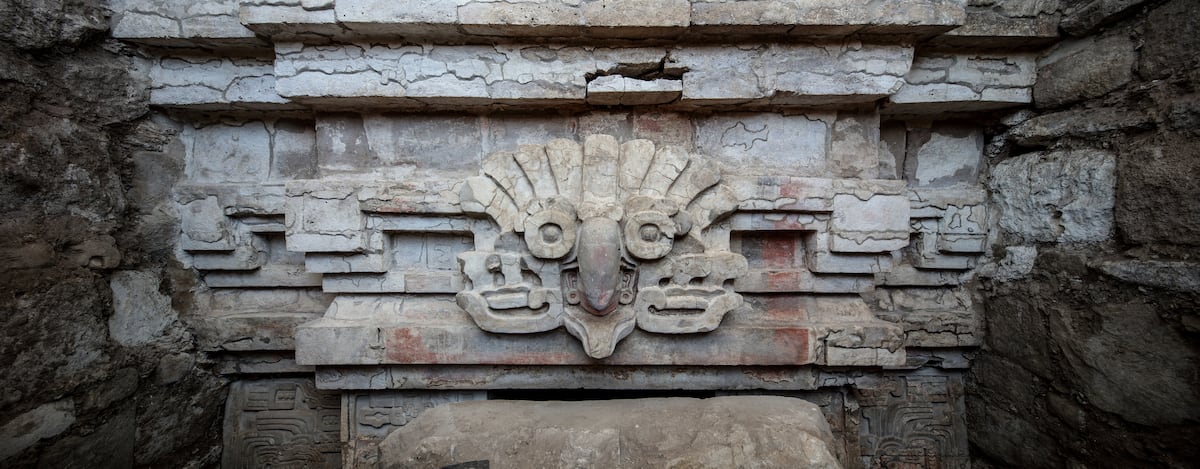
"It was 2019. On the hills of La Cantera, in the central valleys of Oaxaca, in southern Mexico, lay a massive stone and stucco tomb, hidden underground. It had stood there for hundreds of years, untouched by progress, the world and its vicissitudes It coexisted with roots and insects, especially with tiny winged ants that gnawed through the soft stone, explains the archaeologist Cira Martinez of the National Institute of Anthropology and History (INAH)."
"Until one day, looters showed up. They made a hole at the top, pierced the roof, and went inside, Martinez recounts. Ironically, this was the beginning of the discovery of the Zapotec Tomb of the Owl, one of the most important archaeological findings in Mexico in the last 10 years. A copal tree marked the spot, but experts only learned that later, when they finally found it: it took them six years to locate the tomb, a journey interrupted by the Covid-19 pandemic."
"Cerro de la Cantera and its sister hill, Cerro de la Campana, were part of one of the many archaeological zones in the central valleys of Oaxaca, home, a millennium and a half ago, to the great Zapotec civilization, one of the oldest in Mesoamerica, predating the Aztecs and contemporary with some Mayan cities. Since the late 20th century, the INAH had been excavating the acropolis of the old city that once stood there, as Martinez explains, the temples,"
In 2019 looters pierced the roof of a massive stone and stucco tomb on the hills of La Cantera in Oaxaca, exposing an underground burial. The tomb had stood untouched for centuries, coexisting with roots and insects, including winged ants that gnawed soft stone. Looting initiated discovery of the Zapotec Tomb of the Owl, a major archaeological find in Mexico. A copal tree later marked the site, but locating the tomb took six years and was interrupted by the Covid-19 pandemic. Cerro de la Cantera and Cerro de la Campana formed part of an ancient Zapotec city covering about six square kilometers, where excavations had focused on the acropolis, temples, and ball court while much remained unexplored.
Read at english.elpais.com
Unable to calculate read time
Collection
[
|
...
]