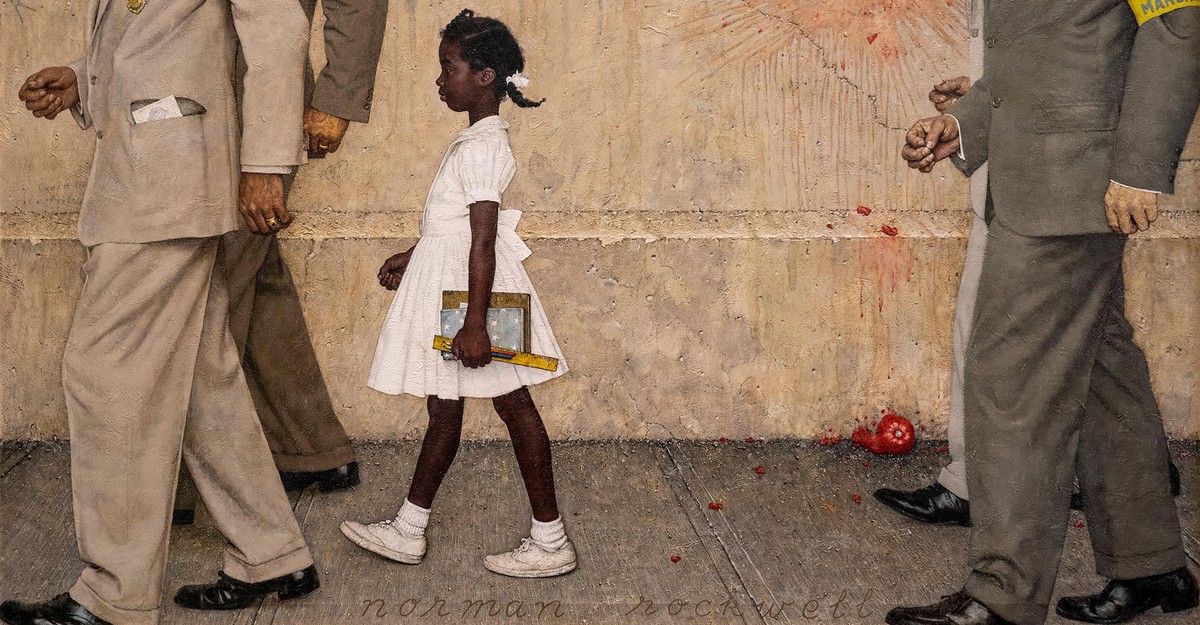
"She remembers walking with her big brothers down a sidewalk fractured by the roots of old oak trees while children played hopscotch on the playground. She remembers going outside and clapping erasers together so that plumes of chalk dust rose above her head. And she remembers being told that she was attending a school that many white parents had taken their children out of just a few years earlier because they didn't want them sitting in class with Negroes."
"I wanted my children to understand that Black history is not just something that exists in books, or that involves only the major figures they learn about in school: Martin Luther King Jr., Frederick Douglass, Harriet Tubman. Black history is something that involved the people they know and love. Their grandmother, after all, had been among the first wave of Black children to integrate her elementary school."
T. J. Semmes Elementary School in New Orleans's Lower Ninth Ward, built in 1900 and demolished in 2019, holds significant personal and historical meaning. The author's mother attended the school in 1965 as a six-year-old student, during the early stages of school integration. She recalls vivid memories of her school experience, including walking past oak trees, playing on the playground, and learning that white families had withdrawn their children from the school to avoid integration. The author brought his children to visit the now-empty lot where the school once stood, emphasizing that Black history encompasses personal family narratives and the experiences of ordinary people, not just prominent historical figures.
Read at The Atlantic
Unable to calculate read time
Collection
[
|
...
]