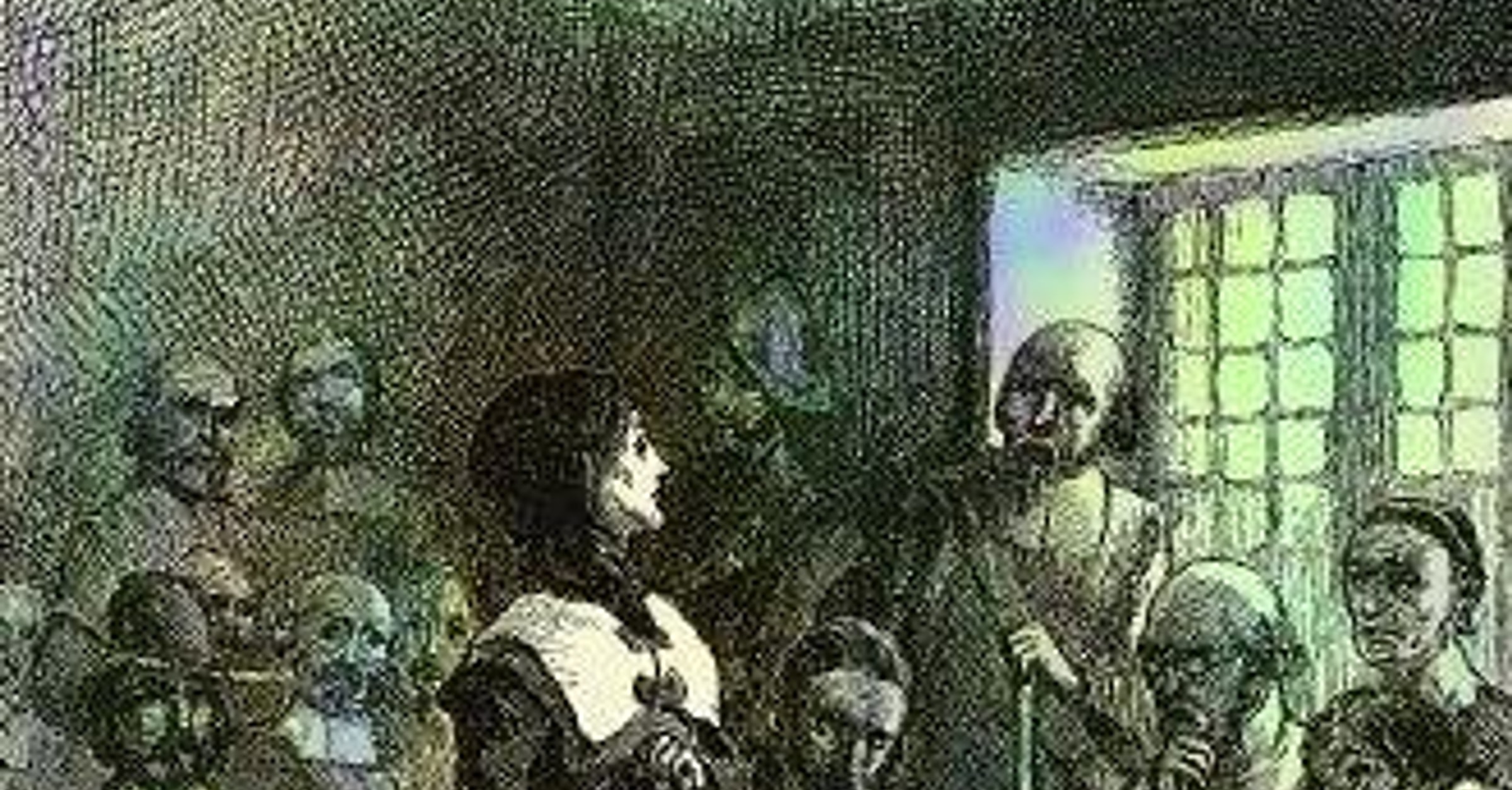
"Anne Hutchinson (1591-1643) was a religious dissident who was brought to trial by John Winthrop (1588-1649) and the other magistrates of the Massachusetts Bay Colony in 1637 for spreading "erroneous opinions" regarding religious belief and practice. She is known as the central figure in the Antinomian Controversy. The Antinomian Controversy ( antinomian from the Greek for "against the law") challenged the authority of the colony's magistrates,"
"Winthrop, while recognizing the supremacy of grace, believed that one established oneself as a Christian through one's works. Faith, without works, Winthrop argued, was without merit, a view he supported from the biblical book of James. Williams and Wheelwright were banished for refusing to conform to Winthrop's interpretation of Puritan theology, and Hutchinson was as well, but, in her case, three separate charges were brought:"
Anne Hutchinson emerged as a religious dissident in Massachusetts Bay, put on trial in 1637 for promoting beliefs deemed erroneous by the colony's magistrates. The Antinomian Controversy, rooted in debate over grace versus works, challenged the magistrates' authority and the colony's requirement of strict Puritan conformity. Roger Williams and John Wheelwright faced banishment or expulsion for emphasizing divine grace over human works. John Winthrop accepted grace but insisted that genuine Christian status required observable works, citing James. Hutchinson defended her piety and biblical references, yet faced conviction and banishment amid charges tied to gender and doctrine.
Read at World History Encyclopedia
Unable to calculate read time
Collection
[
|
...
]