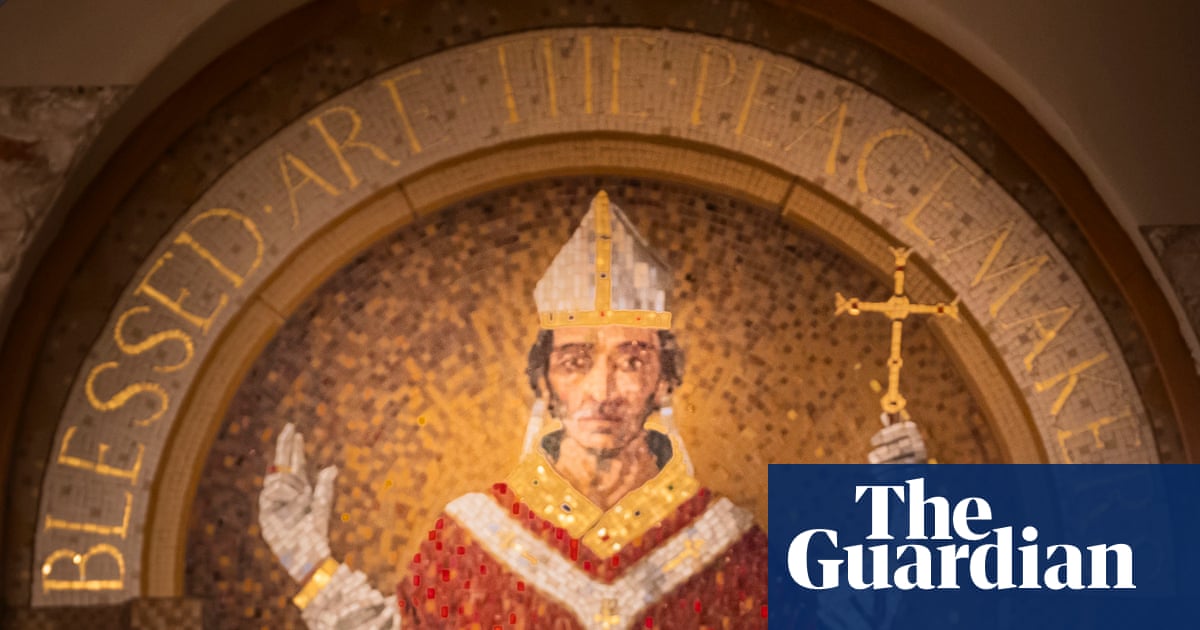
"The slab, found in a York drain in the 19th century, has gone on display at a new exhibition marking the 800th anniversary of Saint William a forgotten, once adored martyr said to be responsible for that miracle and others. At the centre of the exhibition is a cutting-edge, digital recreation of an imposing shrine to William that once stood in York Minster's nave but was broken up and buried to protect it from the ravages of Henry VIII's reformation."
"William Fitzherbert was archbishop of York twice, from 1141 to 1147 when Cistercian monks thought him unsuitable and, after the deaths of enemies, from 1153 to 1154. He was clearly a popular figure and such was the joy when he returned to York from Rome in 1154 that large crowds gathered to greet him. So many people were on the wooden bridge over the River Ouse that it collapsed. William, it is said, called on God and no one drowned."
A 13th-century stone slab bears the inscription Qui ceci dit svp er caput rogeri de Ripvn, translated as 'Which fell on the head of Roger of Ripon.' The slab was discovered in a York drain in the 19th century and is now on display as part of an event marking the 800th anniversary of Saint William. A cutting-edge digital recreation reconstructs the imposing shrine that once stood in York Minster's nave; the original shrine was broken up and buried to protect it from Henry VIII's reformation. William Fitzherbert served twice as archbishop of York and was widely venerated after reported miracles such as the Ouse Bridge salvation and posthumous healings, leading to canonisation by Pope Honorius III in 1226. His death after becoming violently ill during mass remains suspicious, and Saint William is now largely forgotten despite being patron saint of York.
Read at www.theguardian.com
Unable to calculate read time
Collection
[
|
...
]