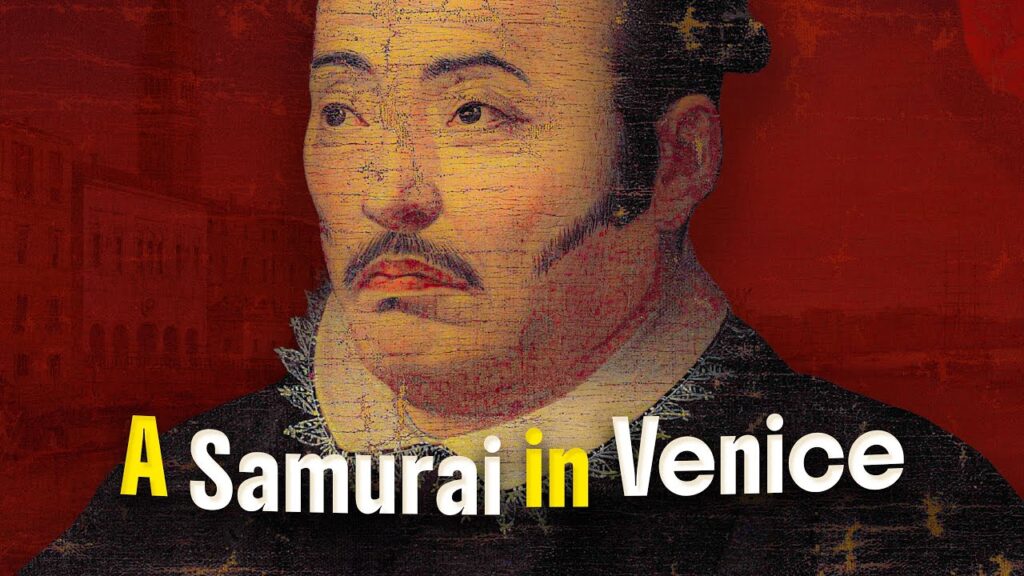
"It would­n't sur­prise us to come across a Japan­ese per­son in Venice. Indeed, giv­en the glob­al touris­tic appeal of the place, we could hard­ly imag­ine a day there with­out a vis­i­tor from the Land of the Ris­ing Sun. But things were dif­fer­ent in 1873, just five years after the end of the sakoku pol­i­cy that all but closed Japan to the world for two and a half cen­turies."
"So who could this undoc­u­mented Japan­ese trav­el­er in the fif­teen-tens have been? That ques­tion lies at the heart of the sto­ry told by Evan "Nerd­writer" Puschak in his new video above. The let­ter's sig­na­ture of Haseku­ra Roke­mon would've con­sti­tu­ted a major clue, but the name seems not to have rung a bell with any­one at the time. "In 1873, there was like­ly no one on plan­et Earth who knew why Haseku­ra Roke­mon was in Venice in 1615," says Puschak."
A Japanese delegation in Venice in 1873 discovered two Latin letters dated 1615 and 1616 written by a countryman. The letters indicated an emissary of Ōtomo Sōrin, a feudal lord who converted to Christianity and previously sent four teenagers to meet the Pope in Rome in 1586. The letters bore the signature Hasekura Rokemon, a name that produced no recognition in 1873. The historical context includes the arrival of Jesuit missionaries in 1549 and increasing hostility from leaders like Toyotomi Hideyoshi, who ordered missionaries expelled in 1587 and later persecuted Catholics.
Read at Open Culture
Unable to calculate read time
Collection
[
|
...
]