"I was born in the year 1784 in J_____, County of King George, Virginia, in a land boasting its freedom and under a government whose motto is Liberty and Equality. I was yet born a slave. This opening statement encapsulates the central irony of Grimes's narrative—the contradiction between America's founding principles and the reality of slavery within its borders."
"What he published was more than a memoir—it was an indictment of the contradictions that had been central to the American experiment since the Revolution itself. Grimes's narrative served as a powerful moral and political statement, challenging the nation's fundamental hypocrisy regarding freedom and equality."
"In all the Slave States, the children follow the condition of their mother. Though his father, Benjamin Grymes Jr., was a wealthy white Virginia planter, William remained enslaved like his mother—legally the property of a man he calls Dr. Stuart, Grymes's neighbor. This legal reality demonstrates how slavery's systems superseded familial bonds and paternity."
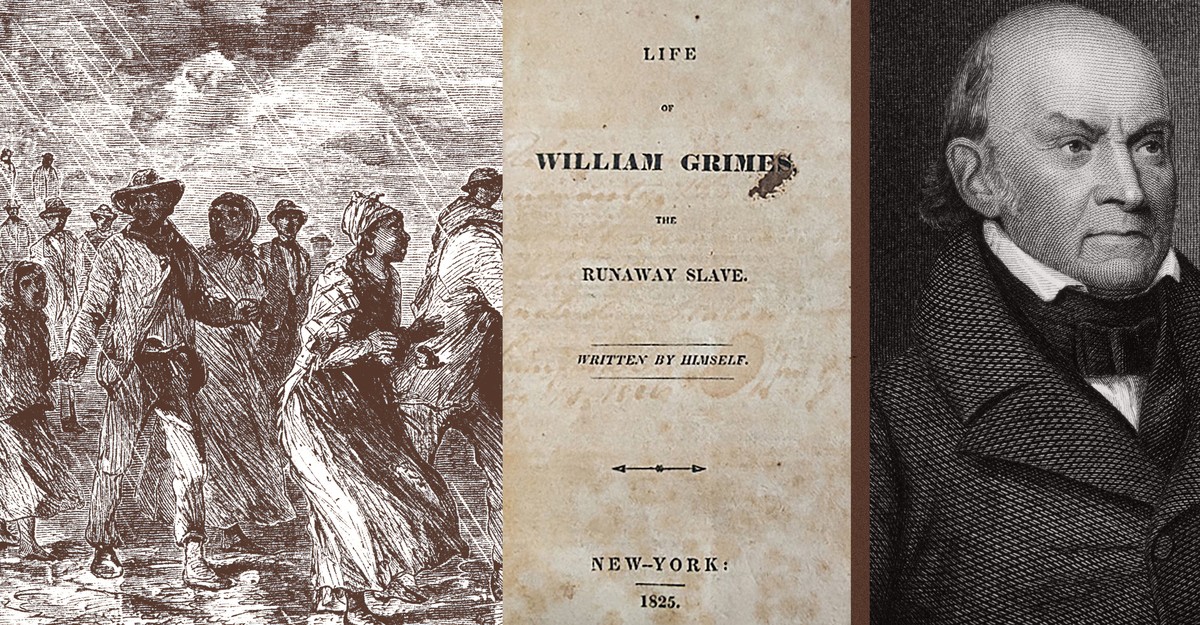
William Grimes published the first known fugitive-slave narrative in American history in 1825, predating the major antislavery movement of the 1830s-1860s. His autobiography presented a distinctly American voice shaped by Southern enslavement and Northern precarity, functioning as both memoir and indictment of American contradictions since the Revolution. Born in 1784 to a wealthy white planter father and enslaved mother in Virginia, Grimes remained enslaved under another man's ownership. A researcher discovered a copy of his book at the Boston Athenaeum addressed to President John Quincy Adams, suggesting Grimes sought to reach the nation's leadership with his narrative of bondage and freedom.
#fugitive-slave-narratives #american-slavery #antislavery-movement #william-grimes-autobiography #american-founding-contradictions
Read at The Atlantic
Unable to calculate read time
Collection
[
|
...
]