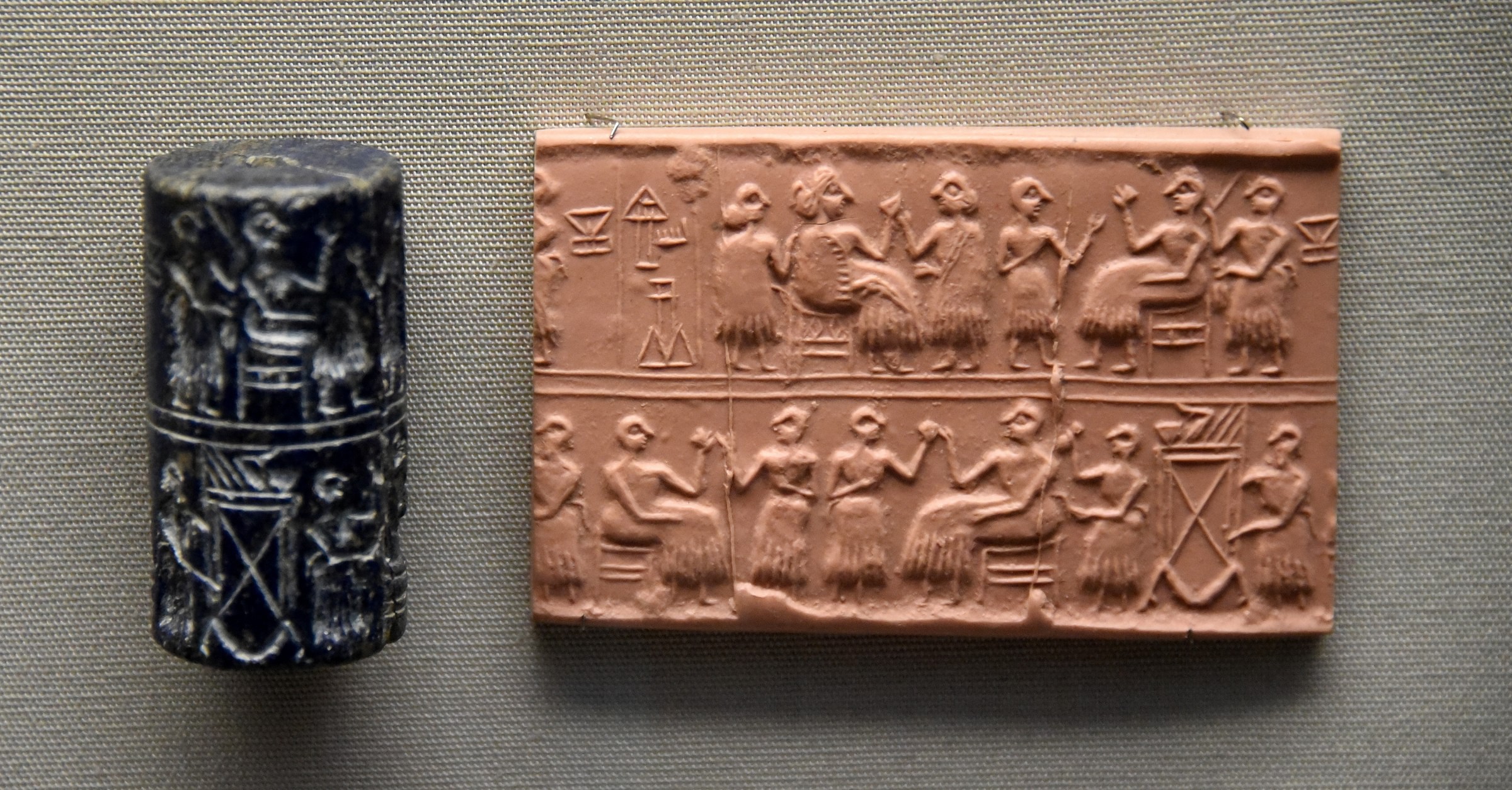
"The Mesopotamian family unit is described by modern-day scholars as the oikos model from the Greek oikonomia ("management of a household"), from which the English word " economy" is derived (Leick, 65). Scholar Stephen Bertman notes that "the ancient Mesopotamians believed that the family was of central importance to the stability of society" (275). The head of the family was the senior male who was primarily responsible for providing for his family."
"In extended families, the grandfather was a dependent, and the father was the head of the household. This same paradigm applied to kingship if an elder monarch abdicated in favor of his son (as in the case of Hammurabi of Babylon). In the temple, the god was "head of the household," and the clergy the dependents. Slaves were regarded as dependents and, contingent on the role a slave played in the family, were given greater or lesser liberties."
Family provided the essential social unit that ensured present social stability, preserved past traditions, and secured continuity of customs and stability for the future. The family formed the basis for palace and temple hierarchies. The household followed an oikos model derived from Greek oikonomia, connecting household management to broader economic concepts. The senior male served as household head and primary provider, with landowning males leading upper-class households and tenant heads providing in lower classes. Extended families placed the grandfather as dependent and the father as head. Temple households named the deity as head and clergy as dependents. Marriages were strictly arranged and legally formalized; cohabiting unions lacked legal protection.
Read at World History Encyclopedia
Unable to calculate read time
Collection
[
|
...
]