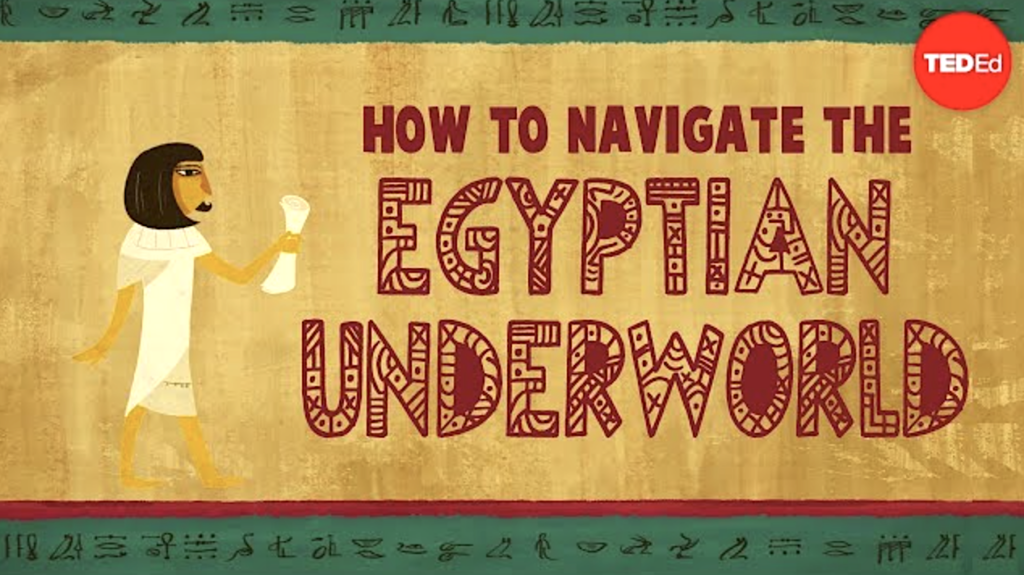
"One of the most wide­ly known qual­i­ties of that civ­i­li­za­tion's upper crust, after all, is that its mem­bers spared no expense try­ing to do just that. The most com­pelling evi­dence includes the tombs of the pharaohs, lav­ish­ly stocked as they were with every­thing from dai­ly neces­si­ties to reli­gious arti­facts to ser­vants (in effi­gy or oth­er­wise)."
""Com­piled and refined over mil­len­ni­ums since about 1550 B.C.," the text "pro­vid­ed a sort of visu­al map that allowed the new­ly dis­em­bod­ied soul to nav­i­gate the duat, a maze-like nether­world of cav­erns, hills and burn­ing lakes." Each of its "spells" addressed a par­tic­u­lar sit­u­a­tion the deceased might encounter on that jour­ney: a snake attack, decap­i­ta­tion, a turn­ing upside down that "would reverse your diges­tive func­tions and cause you to con­sume your own waste.""
Ancient Egyptian elites invested heavily in burial practices, providing tombs with daily necessities, religious artifacts, and servants to accompany the dead. The Book of the Dead functioned as a compendium of roughly 200 ritual spells and prayers with instructions for the deceased's spirit to recite in the hereafter. Compiled and refined over millennia since about 1550 B.C., the text served as a visual map to navigate the duat, a maze-like netherworld. Individual spells addressed specific dangers on the journey, including physical attacks, decapitation, and disorienting reversals that could impair bodily functions.
Read at Open Culture
Unable to calculate read time
Collection
[
|
...
]