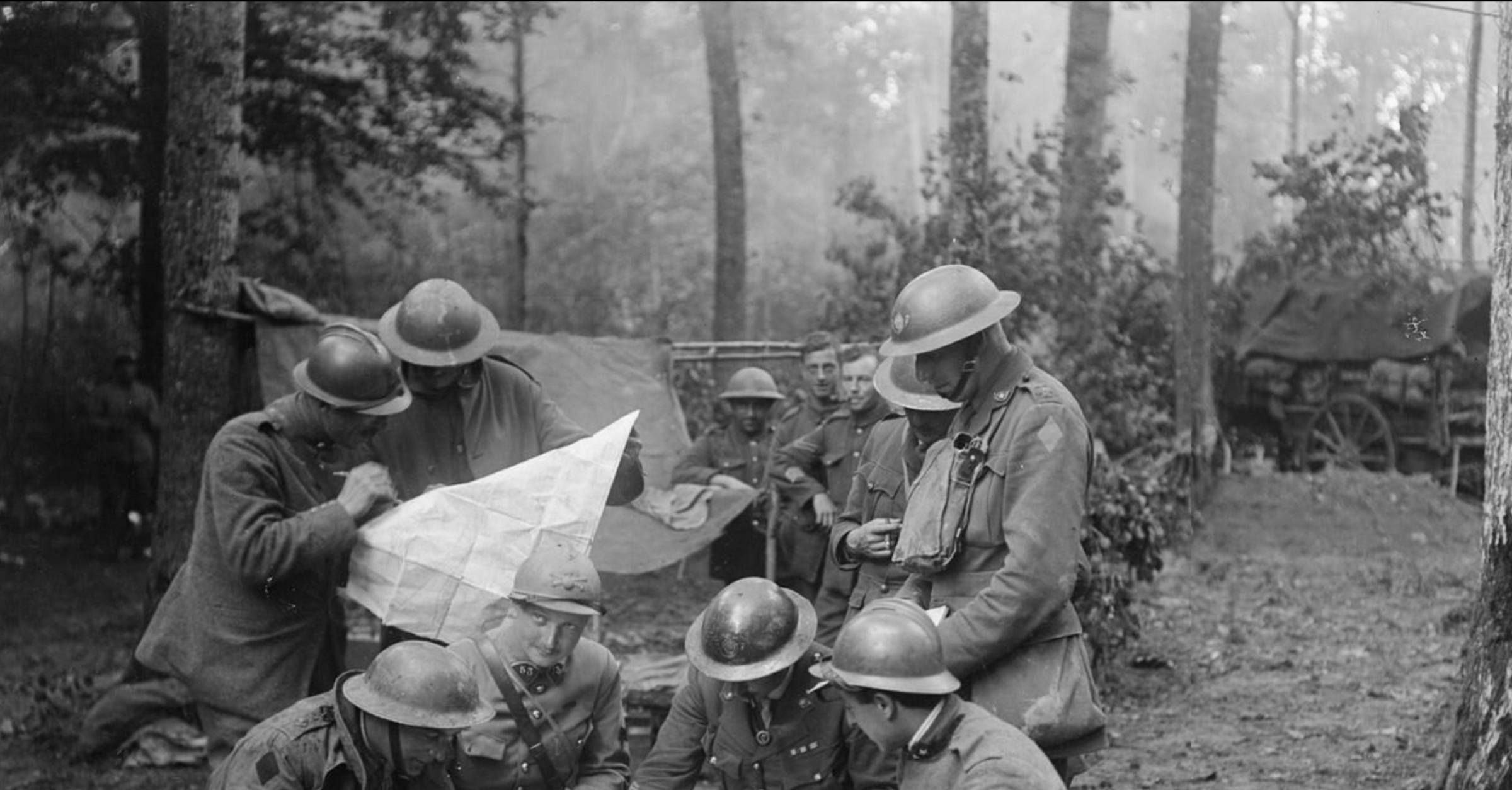
"The Second Battle of the Marne took place in July and August 1918 and saw Germany's last advance of the Spring Offensive rebuffed by a strong Allied counterattack. With hundreds of thousands of US troops landing in Europe each month and with hundreds of new tanks at their disposal, the Allied divisions - including French, British, US, Italian, Canadian, and Australian troops - pushed the German Army into what became a permanent retreat."
"The German Army had thoroughly exhausted itself in five campaigns on the Western Front from April to June 1918, a series of attacks collectively known as the German Spring Offensive. The German commander-in-chief, General Erich von Ludendorff (1865-1937), had wanted to break out of the static situation of trench warfare before the Allies were significantly boosted by the arrival of new US divisions."
The Second Battle of the Marne in July and August 1918 reversed Germany's last Spring Offensive and forced a sustained German retreat. Hundreds of thousands of US troops arrived monthly and new tanks augmented Allied strength. French, British, US, Italian, Canadian, and Australian divisions mounted a coordinated counterattack that pushed the German Army back. Germany had exhausted itself in five campaigns from April to June 1918. General Erich von Ludendorff had aimed to break trench stalemate before American reinforcements arrived, launching the Marne Offensive toward Reims and the River Marne. A deep German bridgehead formed but progress halted on 17 July. German leadership met on 3 July and pursued greater wartime economic mobilization despite frontline realities and blockade-induced shortages.
Read at World History Encyclopedia
Unable to calculate read time
Collection
[
|
...
]