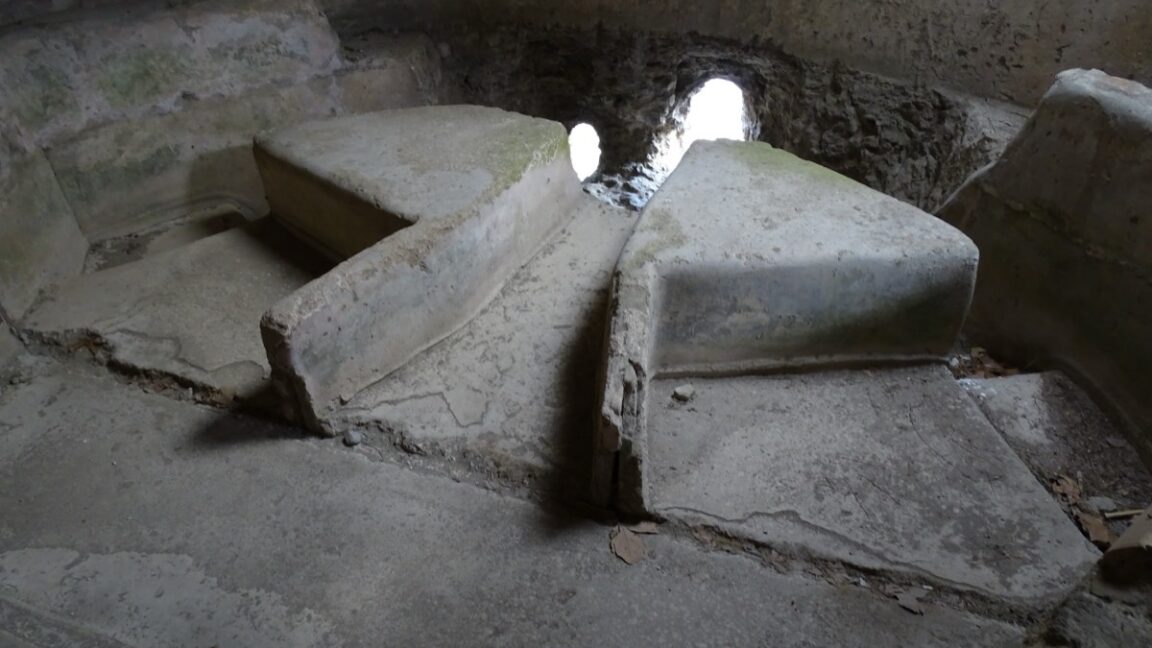
Specific sites in Pompeii studied included the Stabian baths, Republican baths, Forum baths, and the aqueduct with 14 water towers. Chemical variations in carbonate deposits indicate replacement of boilers and renewal of water pipes, especially during modifications to the Republican baths. Heated pools in the Republican baths show contamination from human waste—sweat, sebum, urine, or bathing oil—suggesting infrequent water changes due to water-lifting machines that could refresh water only about once daily. Enlargement of the well shaft produced thinner carbonate deposits, reflecting reduced sloshing and technological improvement. Construction of the aqueduct increased available water volume, expanded bathing facilities, and likely improved hygiene, although lead contamination occurred; carbonate build-up in lead pipes reduced lead levels over time. The results may also help resolve a scientific debate about the origins of the aqueduct water.
"There were variations in the chemical composition of the deposits, indicating the replacement of boilers for heating water and a renewal of water pipes in the infrastructure of Pompeii, particularly during the time period when modifications were being made to the Republican baths. The results for the Republican baths' heated pools, for instance, showed clear contamination from human activity, specifically human waste (sweat, sebum, urine, or bathing oil), which suggests the water wasn't changed regularly."
"That is consistent with the limitations of supplying water at the time; the water-lifting machines could really only refresh the water about once a day. After the well shaft was enlarged, the carbonate deposits were much thinner, evidence of technological improvements that reduced sloshing as the water was raised. Once the aqueduct had been built, the bathing facilities were expanded with a likely corresponding improvement in hygiene."
Read at Ars Technica
Unable to calculate read time
Collection
[
|
...
]