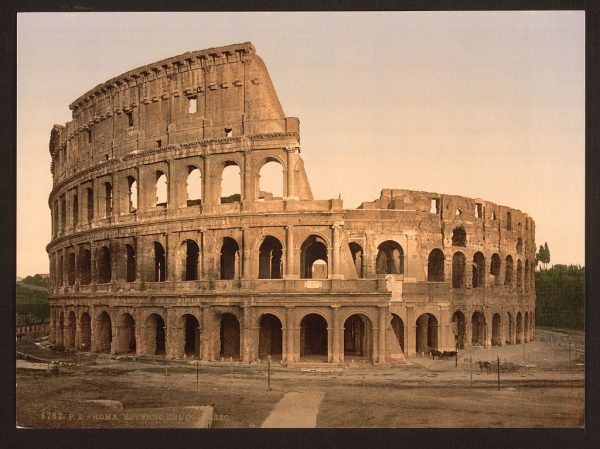
"For almost two hundred years, English gentlemen could not consider their education complete until they had taken the "Grand Tour" of Europe, usually culminating in Naples, "ragamuffin capital of the Italian south." Italy was usually the primary focus, such that Samuel Johnson remarked in 1776, perhaps with some irony, "a man who has not been to Italy is always conscious of an inferiority.""
"For the traveling artist and philosopher, "Italy" presented a civilization in ruins, and we can see in all Romantic writing the tremendous influence visions of Rome and Pompeii had on gentlemen poets like Byron. The Grand Tour, and journeys like it, persisted until the 1840s, when railroads "spelled the end of solitary aristocratic travel.""
"In 1817, Byron journeyed to Rome, where he wrote the Fourth Canto of Childe Harold's Pilgrimage: "Oh Rome! my country! city of the soul! The orphans of the heart must turn to thee, Lone mother of dead empires! And control In their shut breasts their petty misery.""
For nearly two centuries, English gentlemen considered their education incomplete without undertaking the Grand Tour of Europe, typically culminating in Naples and focusing primarily on Italy. Samuel Johnson remarked in 1776 that a man who had not visited Italy remained conscious of inferiority. Romantic poets including Byron, Shelley, and Wordsworth documented their European travels, with Byron journeying to Rome in 1817 and writing the Fourth Canto of Childe Harold's Pilgrimage there. Italy presented traveling artists and philosophers with a civilization in ruins, profoundly influencing Romantic literature. The Grand Tour tradition persisted until the 1840s, when railroads ended the era of solitary aristocratic travel.
Read at Open Culture
Unable to calculate read time
Collection
[
|
...
]