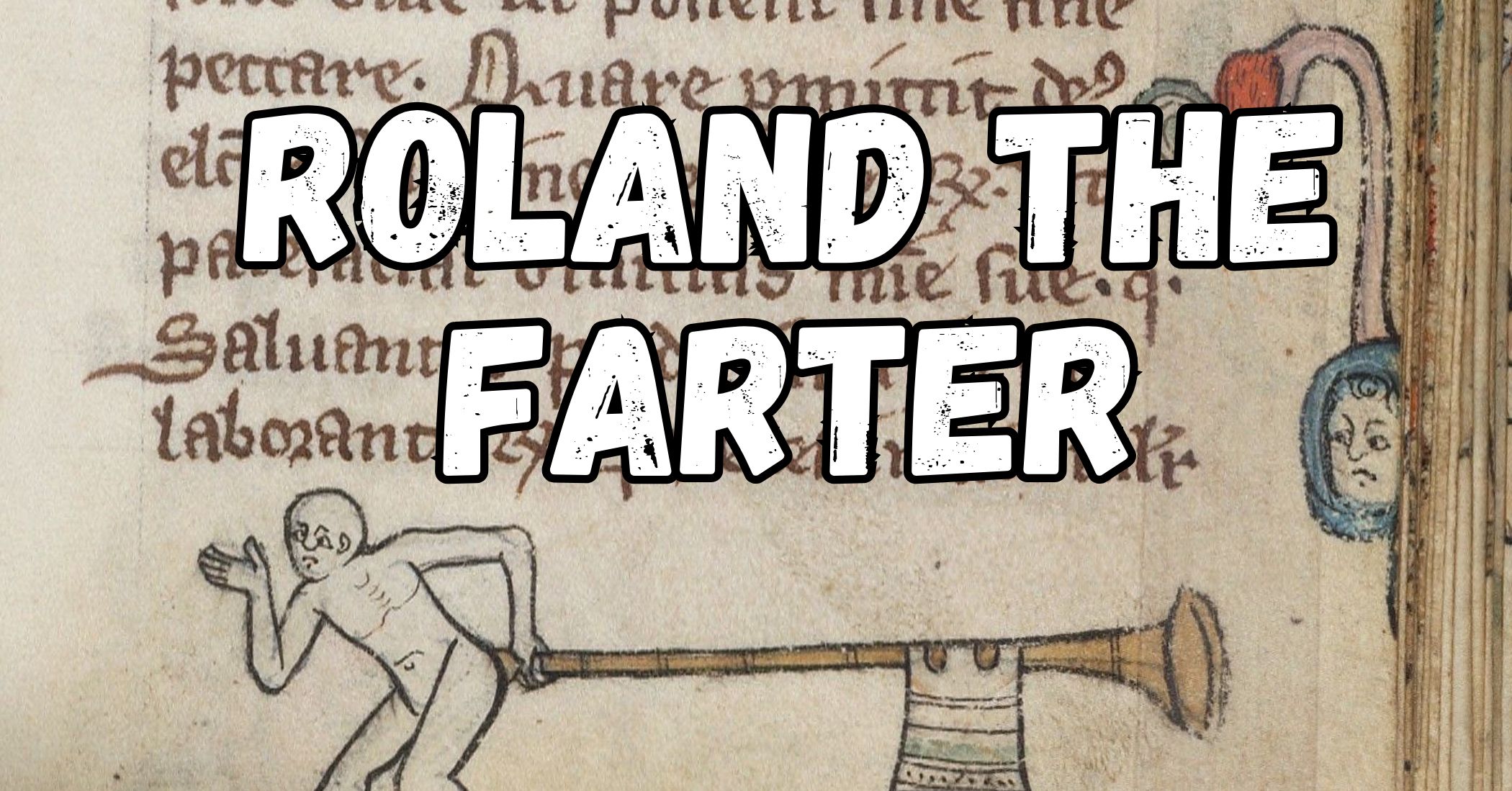
"He held land from the English Crown on one unforgettable condition: every Christmas, he had to perform "one jump, one whistle, and one fart" before the king. Roland the Farter's strange duty was no tavern joke-it was a recorded act of feudal service that shows how ceremony, humour, and power could share the same royal stage. Roland the Farter (also known as Roland le Petour) was a twelfth-century entertainer at the royal court of England."
"According to the Liber Feodorum ( Book of Fees), he held the manor of Hemingstone in Suffolk and 110 acres of land by serjeanty, in return for performing a single annual act before the king at Christmas: "one jump, one whistle, and one fart." Despite his absurd epithet, Roland is firmly attested in the Liber Feodorum, an official register of feudal tenures compiled under the Plantagenet kings. There, he appears not as a mythic fool, but as a landholder of substance, bound to the Crown by an act of serjeanty."
"His service was unique: each year, at the royal Christmas feast, Roland was to perform unum saltum et siffletum et unum bumbulum: a jump, a whistle, and a fart. Far from mere jest, this contractual act situates Roland within the legal and cultural fabric of twelfth-century England, when bodily humour could coexist with royal ceremony. Both Henry I and Henry II used royal feasts-especially Christmas celebrations-as important political and social events that reinforced the king's authority and fostered loyalty among the nobility."
Roland the Farter, also called Roland le Petour, was a twelfth-century entertainer who held the manor of Hemingstone in Suffolk and 110 acres by serjeanty from the Crown. The Liber Feodorum records his obligation to perform annually at the king's Christmas feast: unum saltum et siffletum et unum bumbulum — one jump, one whistle, and one fart. The service was performed simul et semel and constituted a formal feudal duty rather than casual amusement. Royal Christmas feasts under Henry I and Henry II blended ceremony and entertainment to reinforce authority and foster noble loyalty. The case shows how bodily humour could coexist with medieval legal and ceremonial structures.
#feudal-serjeanty #medieval-court-entertainment #liber-feodorum-book-of-fees #royal-christmas-feasts
Read at Medievalists.net
Unable to calculate read time
Collection
[
|
...
]