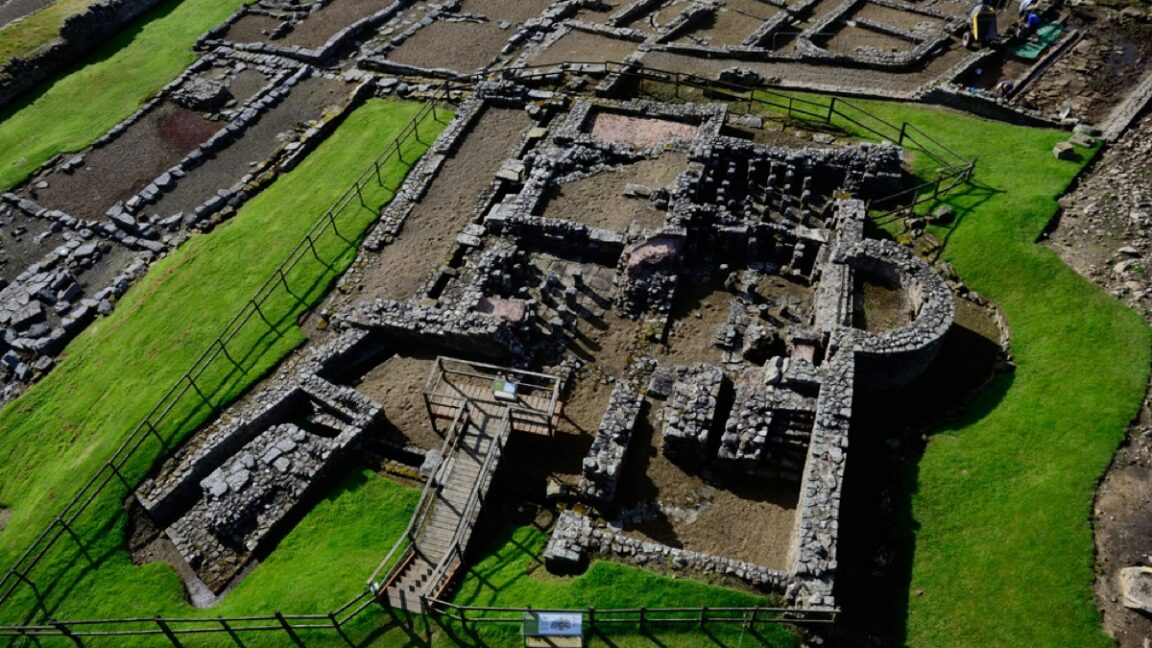
Analyses of intestinal-parasite remains in ancient feces reveal health burdens faced by past populations. Soil and residue studies have identified eggs of whipworm, beef/pork tapeworm, roundworm, and pinworm in archaeological contexts, including a 7th-century BCE villa near Jerusalem and a 5th-century CE Roman chamber pot in Sicily. Comparisons across hunter-gatherer and farming communities show dietary and settlement changes linked to agriculture. Sediment from sewer drains at the Roman fort at Vindolanda, south of Hadrian's Wall, provides further evidence that military inhabitants experienced parasitic infections that would have caused chronic gastrointestinal symptoms.
"It probably sucked to be a Roman soldier guarding Hadrian's Wall circa the third century CE. W.H. Auden imagined the likely harsh conditions in his poem " Roman Wall Blues," in which a soldier laments enduring wet wind and rain with "lice in my tunic and a cold in my nose." We can now add chronic nausea and bouts of diarrhea to his list of likely woes, thanks to parasitic infections, according to a new paper published in the journal Parasitology."
"As previously reported, archaeologists can learn a great deal by studying the remains of intestinal parasites in ancient feces. For instance, in 2022, we reported on an analysis of soil samples collected from a stone toilet found within the ruins of a swanky 7th-century BCE villa just outside Jerusalem. That analysis revealed the presence of parasitic eggs from four different species: whipworm, beef/pork tapeworm, roundworm, and pinworm. (It's the earliest record of roundworm and pinworm in ancient Israel.)"
Read at Ars Technica
Unable to calculate read time
Collection
[
|
...
]