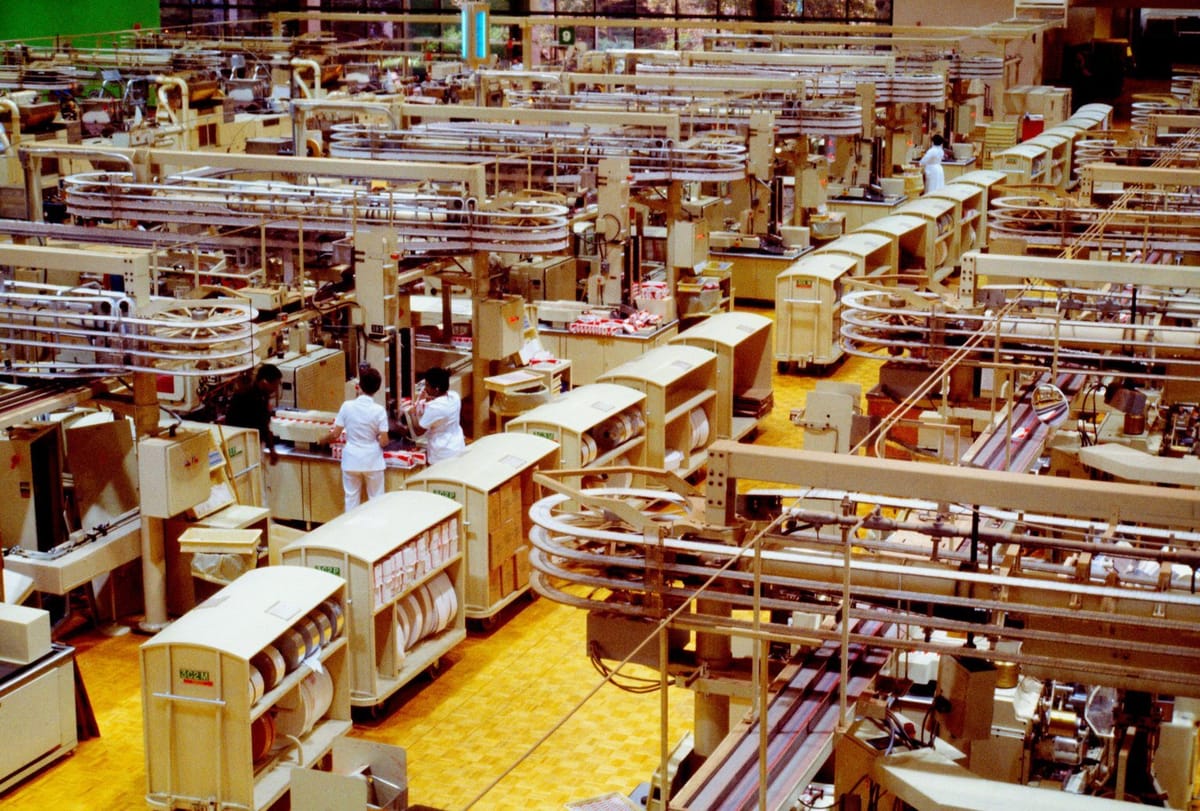
"I have a core memory of touring a Phillip Morris cigarette factory when I was a kid. My mom and I rode around the massive plant, thick with the sweet smell of tobacco, on a tram that would not have been out of place at Universal Studios. The factory produced millions and millions of cigarettes daily, combining filters, wrapping paper, and tobacco at unimaginable scale."
"I recently asked my mom why she thought the tour was a good idea, especially given that my folks weren't smokers, and had made it clear that I shouldn't be one either. She told me she had three young children at the time and was looking for some (free) things to do with us. Her thinking was that it was a "cool" thing to see, particularly given the importance of tobacco production to our local economy at the time."
"Factories attracted tourists almost as soon as there were large factories to visit. Even at the dawn of the industrial revolution in the late 18th century England, textile mills drew visitors from around the world. The mills and their machines were novel to pre-industrial people, and represented a new modernity. In his wonderful history of factories, , Joshua Freeman ( who the SOW reading group interviewed in 2021) recounts the amazement experienced by early tourists."
A childhood visit to a Phillip Morris cigarette factory created a vivid sensory memory of a tram ride through a massive plant filled with the sweet smell of tobacco and immense daily production combining filters, wrapping paper, and tobacco. Mainframe-like machines spread over an expansive parquet floor produced an architectural incongruity alongside industrial activity. A parent chose the free tour because of young children and the factory's local economic importance, offering an accessible lesson in large-scale manufacture. Factory machinery and processes impress through scale and precision, and factory tours have long evoked near-religious awe despite smoke and poor working conditions.
Read at Scope of Work
Unable to calculate read time
Collection
[
|
...
]