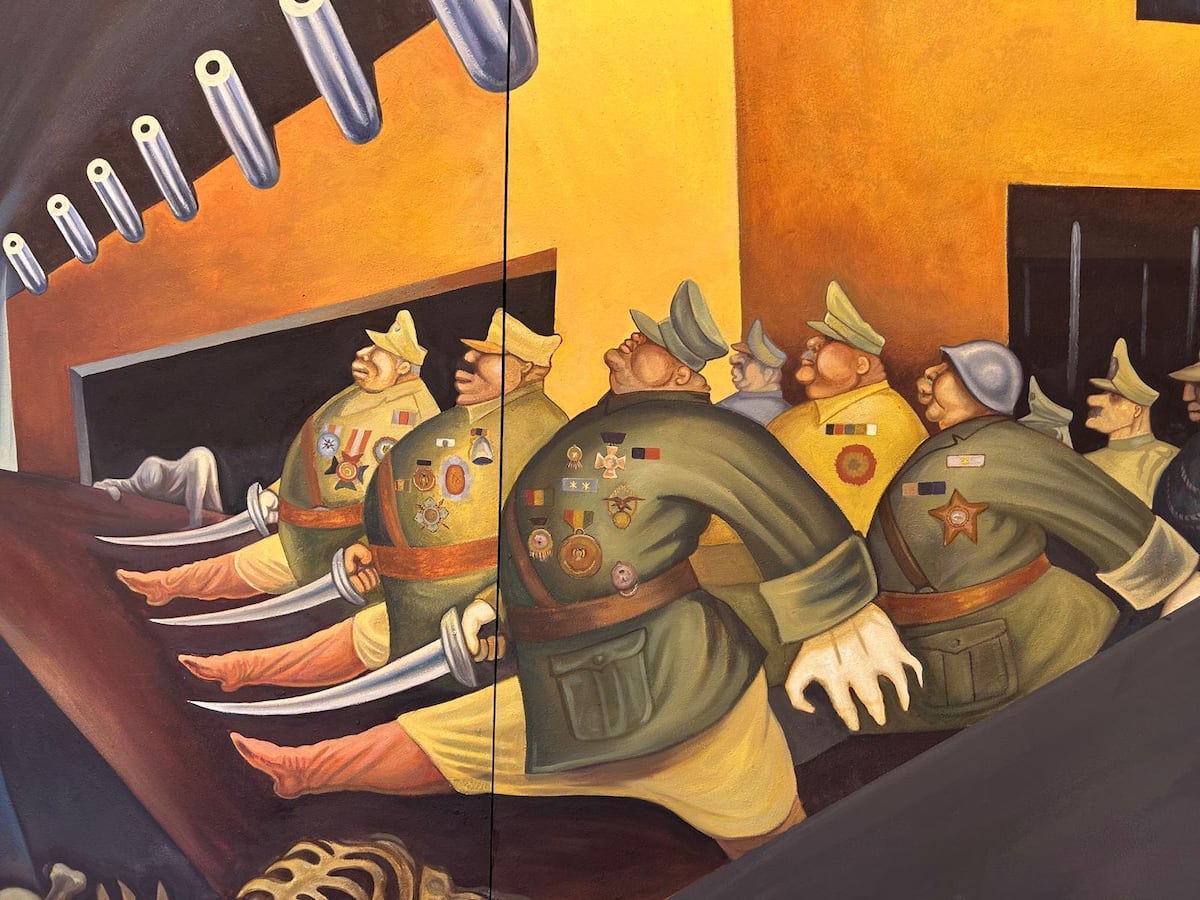
"The year was 1965. Military regimes dominated Latin America, and Bolivia was no exception. As one of the first measures of his de facto government, General Rene Barrientos ordered the takeover of mining camps, which were home to the largest militant forces of the leftist parties. One of the most important was the Milluni center in the highlands of La Paz, as it housed La Voz del Minero (The Miner's Voice), a radio station and communication hub for mobilizations."
"Soldiers stormed the camp and walked out with bodies, microphones, and radio control equipment. They did not realize, however, that the wall of the camp theater's auditorium was fake: a mud-brick barrier built by the miners after they were warned of the attack, protecting a mural that told the story of their exploitation. It is one of the 16 murals painted between 1953 and 1966 by visual artist Miguel Alandia Pantoja, a union leader and one of the foremost representatives of Bolivia's leftist intellectuals."
"Considered an enemy of the dictatorship, Barrientos ordered the systematic destruction of his work displayed in public buildings. Not all of the murals survived like the one at Milluni; many no longer exist. A belated consolation comes now with the reconstruction based on sketches and preparatory studies left by the artist of one mural that had been removed and demolished from the Government Palace in 1964."
By 1965 military regimes dominated Latin America and Bolivia experienced a de facto government under General Rene Barrientos. Barrientos ordered the takeover of mining camps, targeting militant leftist forces, including the Milluni center near La Paz which housed La Voz del Minero radio and mobilization hub. Soldiers seized bodies, microphones, and radio equipment but missed a fake wall protecting a mural depicting miners' exploitation. Miguel Alandia Pantoja painted sixteen murals between 1953 and 1966 and led unions. Barrientos ordered systematic destruction of his public work; many murals were lost. One mural removed from the Government Palace in 1964 has been reconstructed and installed in a new permanent gallery at the National Museum of Art of Bolivia.
Read at english.elpais.com
Unable to calculate read time
Collection
[
|
...
]