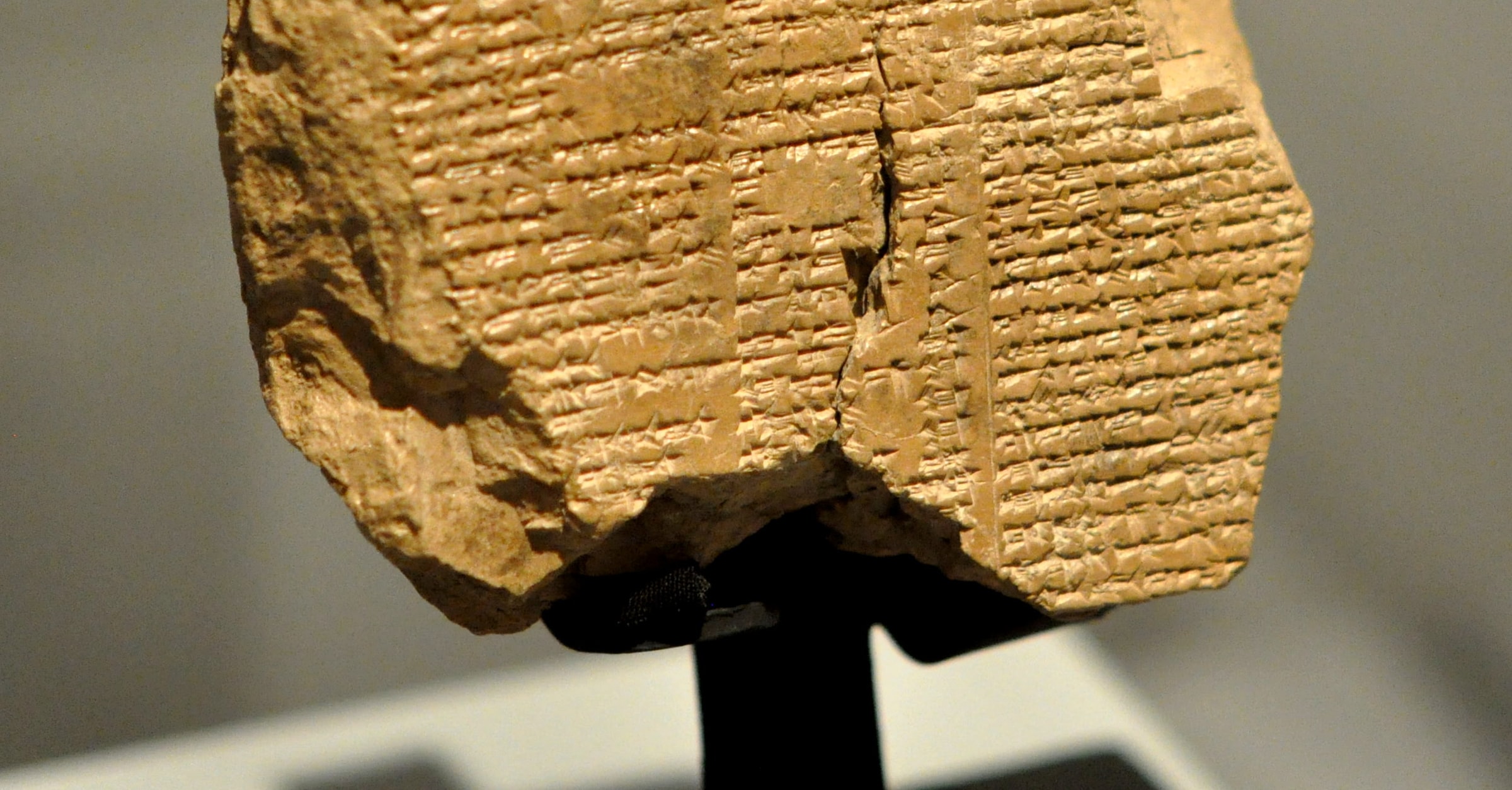
"Writing was created in response to the need to communicate over long distances in trade and, initially, was focused on the purely practical aspects of record-keeping. Scribes in ancient Mesopotamia recorded what commercial goods had been shipped to which destination, their quantity, purpose, and cost."
"In time, proto-cuneiform script developed into the 600 characters of cuneiform script, allowing for greater freedom of expression, and scribes were then responsible for creating inscriptions of the reigns and deeds of kings, among other works such as legal documents."
"Once the Sumerian scribes began writing, it seems, they could not stop and created works defined by modern-day scholars as poetry, wisdom literature, mythology, historical fiction, legends, incantations, hymns, prayers, meditations, didactic tales, and the earliest version of The Epic of Gilgamesh."
Writing in ancient Mesopotamia originated around 3600-3500 BCE as a practical tool for long-distance trade communication and record-keeping. Scribes documented commercial transactions, quantities, and costs using proto-cuneiform script. By 3200 BCE, the script evolved into 600-character cuneiform, enabling greater creative expression. Around 2600 BCE, Sumerian scribes began composing original imaginative works including poetry, wisdom literature, mythology, legends, hymns, prayers, and historical fiction. The Epic of Gilgamesh emerged during this period in its earliest form, later fully developed by Babylonian scribe Shin-Leqi-Unninni. After 2334 BCE, Akkadian replaced Sumerian as the living language, and scribes continued composing in Akkadian cuneiform, which subsequent civilizations adopted and adapted.
#mesopotamian-literature #cuneiform-writing-system #sumerian-scribes #epic-of-gilgamesh #ancient-writing-origins
Read at World History Encyclopedia
Unable to calculate read time
Collection
[
|
...
]