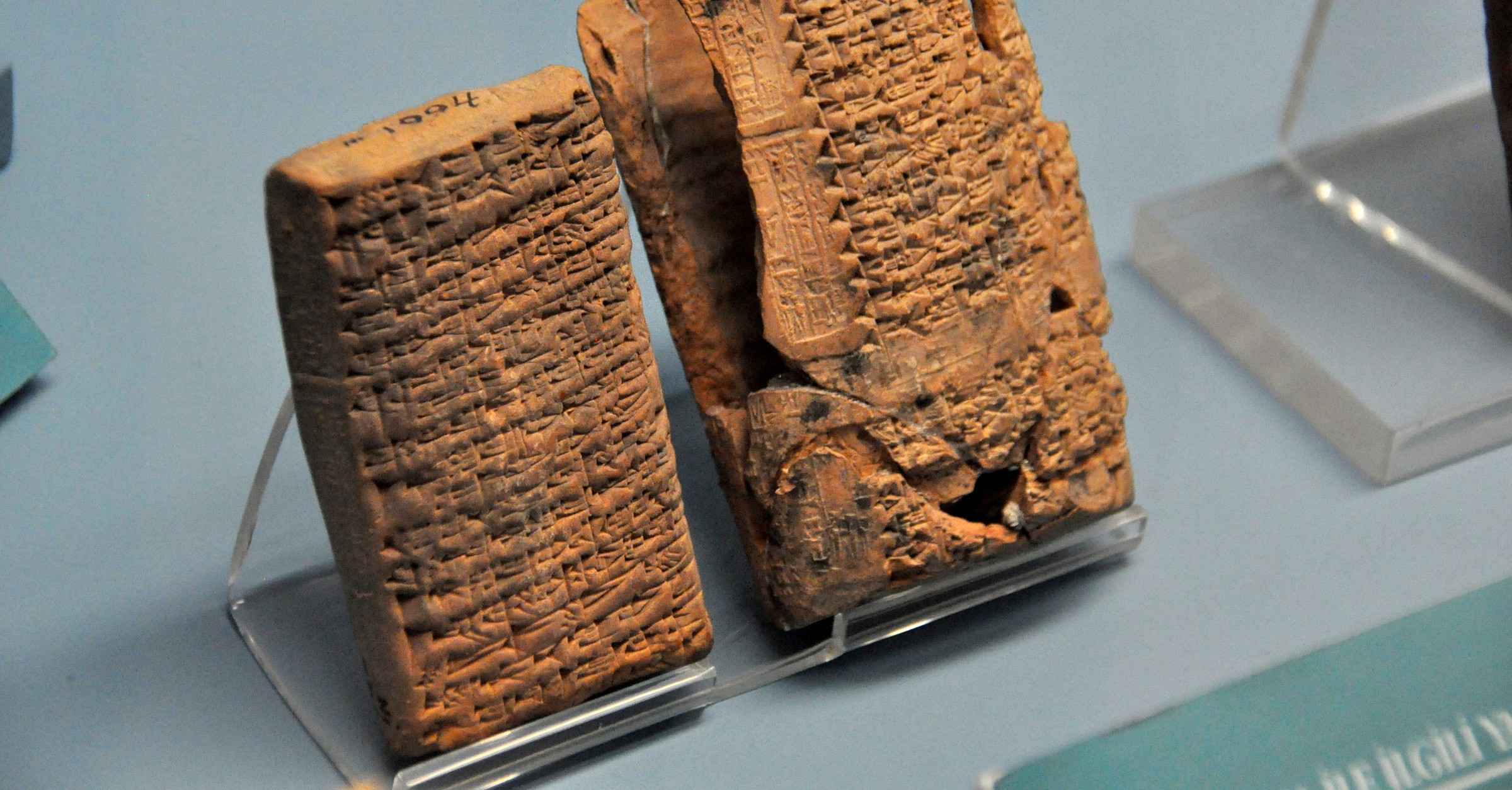
"Mesopotamian education was invented by the Sumerians following the creation of writing circa 3600/3500 BCE. The earliest schools were attached to temples, but later schools were established in separate buildings, in which the scribes of ancient Mesopotamia learned their craft as they created and preserved the first written works in history. The scribal school was known as the edubba ("House of Tablets") as students wrote their works in cuneiform script on clay tablets."
"Scribal houses were first discovered in the mid-19th century when European and American archaeologists engaged in extensive excavations throughout the region of the Near East, especially in Iraq. Based on information from tablets discovered in the ruins of the city of Nippur (primarily) and elsewhere, students entered school before the age of ten and graduated around twelve years later having mastered cuneiform script, Sumerian and Akkadian, and an array of subjects including agriculture, architectural design, astronomy, botany, engineering, history, literature, medicine, philosophy, religion, and zoology."
Sumerians invented writing around 3600/3500 BCE and created the first formal schools to preserve and teach the system. Early schools were temple-affiliated before separate edubba (House of Tablets) buildings emerged where students learned cuneiform on clay tablets. Archaeological finds, especially from Nippur and the Library of Ashurbanipal, show students entered school before age ten and trained for about twelve years. Curriculum encompassed language, agriculture, architecture, astronomy, botany, engineering, history, literature, medicine, philosophy, religion, and zoology. The edubba model persisted from the Early Dynastic period through the Neo-Assyrian era and influenced later regional educational systems.
Read at World History Encyclopedia
Unable to calculate read time
Collection
[
|
...
]