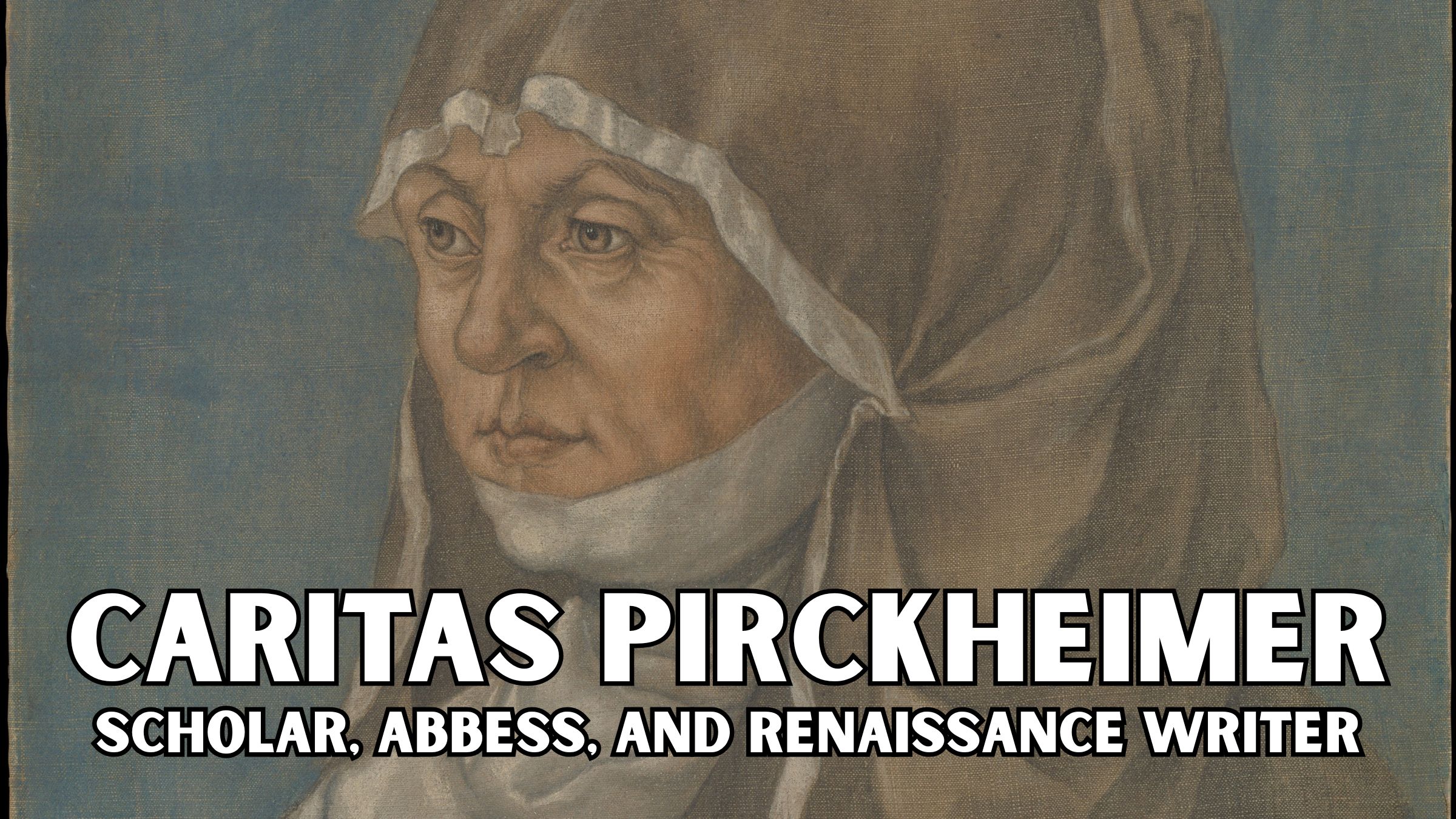
Caritas Pirckheimer (1467–1532) led her Franciscan convent in Nuremberg to resist the Protestant Reformation. She refused to surrender her convent and defended it against reformers and city officials after Nuremberg adopted the Reformation in 1524. Her efforts culminated in a victory in 1528 that preserved monastic life even within a Protestant city. A compilation of her letters and writings, known as the Denkwürdigkeiten, records the convent’s struggles and outcomes during 1524–1528. Her defense relied on years of literary experience, rhetorical skill, and cultivated political connections. Her humanist education and extensive family library supported her ability to write and argue effectively.
"When the Protestant Reformation swept through Nuremberg, one abbess refused to surrender her convent. Caritas Pirckheimer used scholarship, political connections, and years of literary experience to defend her community against reformers and city officials. Caritas Pirckheimer (1467-1532) is probably more familiar to historians of early modern women writers than to medievalists."
"In fact, she is best known for leading her Franciscan convent to stand up to Martin Luther and the Nuremberg city council, winning the right to preserve monastic life even in a Protestant city. A compilation of her letters and other writings known as the Denwürdigkeiten records her struggles to keep St. Klara's Nuremberg open from 1524, when Nuremberg adopted the Reformation, to the sisters' victory in 1528."
"It's also the product of the five decades of literary experience, rhetorical skill, cultivation of powerful patrons, and stellar reputation that Pirckheimer had built up before that pesky theology professor threw a tantrum over indulgences. And as a cloistered Franciscan abbess, she had done it all through her writing."
"Her great-grandfather, grandfather, father, brother, sister, uncle, and niece all had formal or informal humanist educations, and Johann Pirckheimer made sure his oldest daughter was no different. The family had accumulated an immense library of Latin classics over the years-Johann himself had been forced to copy out all of Virgil's works by his ambitious father."
Read at Medievalists.net
Unable to calculate read time
Collection
[
|
...
]