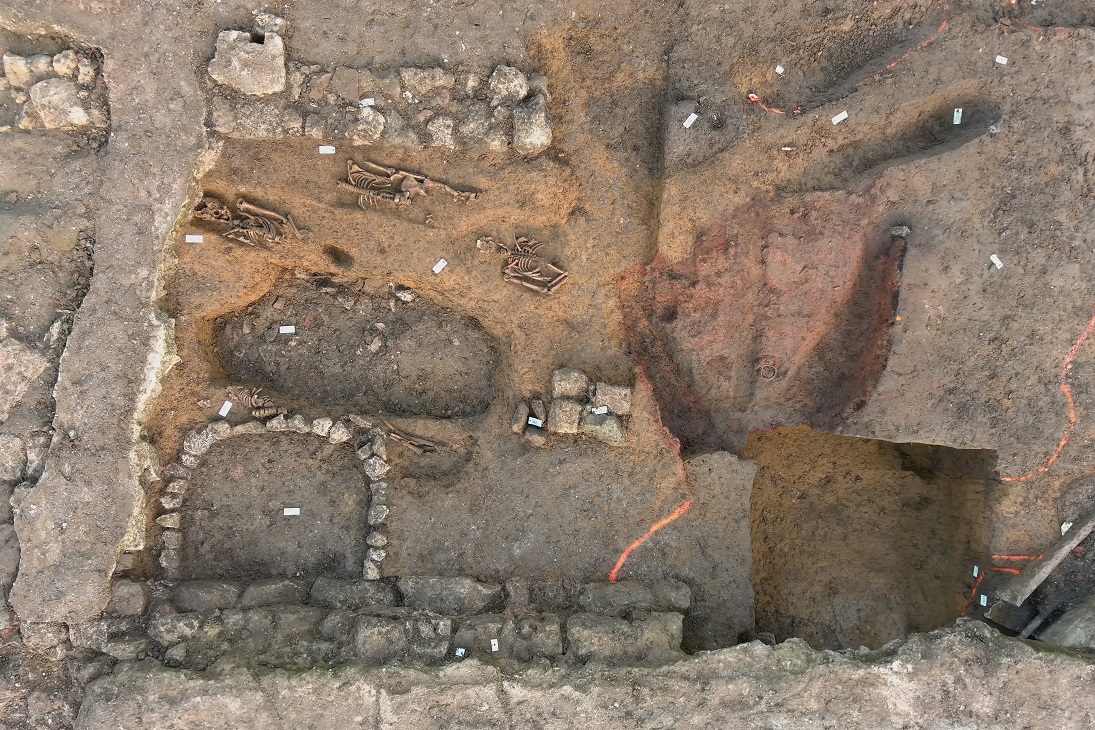
Excavations in Fosses, northern France, revealed a medieval village with a cemetery and domestic structures dating from the 9th to the 13th centuries. A necropolis with around 80 burials, some from the Carolingian period, was found adjacent to living spaces, raising questions about community organization. The site also featured ovens indicating a shift from household cooking to community baking, reflecting changes in food production and social structure. A significant pottery kiln discovery suggests pottery was vital to the local economy.
"The excavation has revealed several ovens that chart the development of food production in the village. A small oven from the Carolingian period appears to have been used for domestic cooking, located close to the settlement area."
"What makes the site particularly intriguing is its layout. The cemetery sits directly beside evidence of everyday life, including buildings supported by wooden posts and domestic installations such as silos, ovens, and even a weaving hut."
"Perhaps the most significant discovery is a large pottery kiln, along with evidence suggesting that pottery production played a central role in the local economy."
"By the 12th century, much larger ovens had been constructed. These would have been capable of baking bread for multiple families, or even the entire community, suggesting a shift toward more collective forms of organisation."
Read at Medievalists.net
Unable to calculate read time
Collection
[
|
...
]