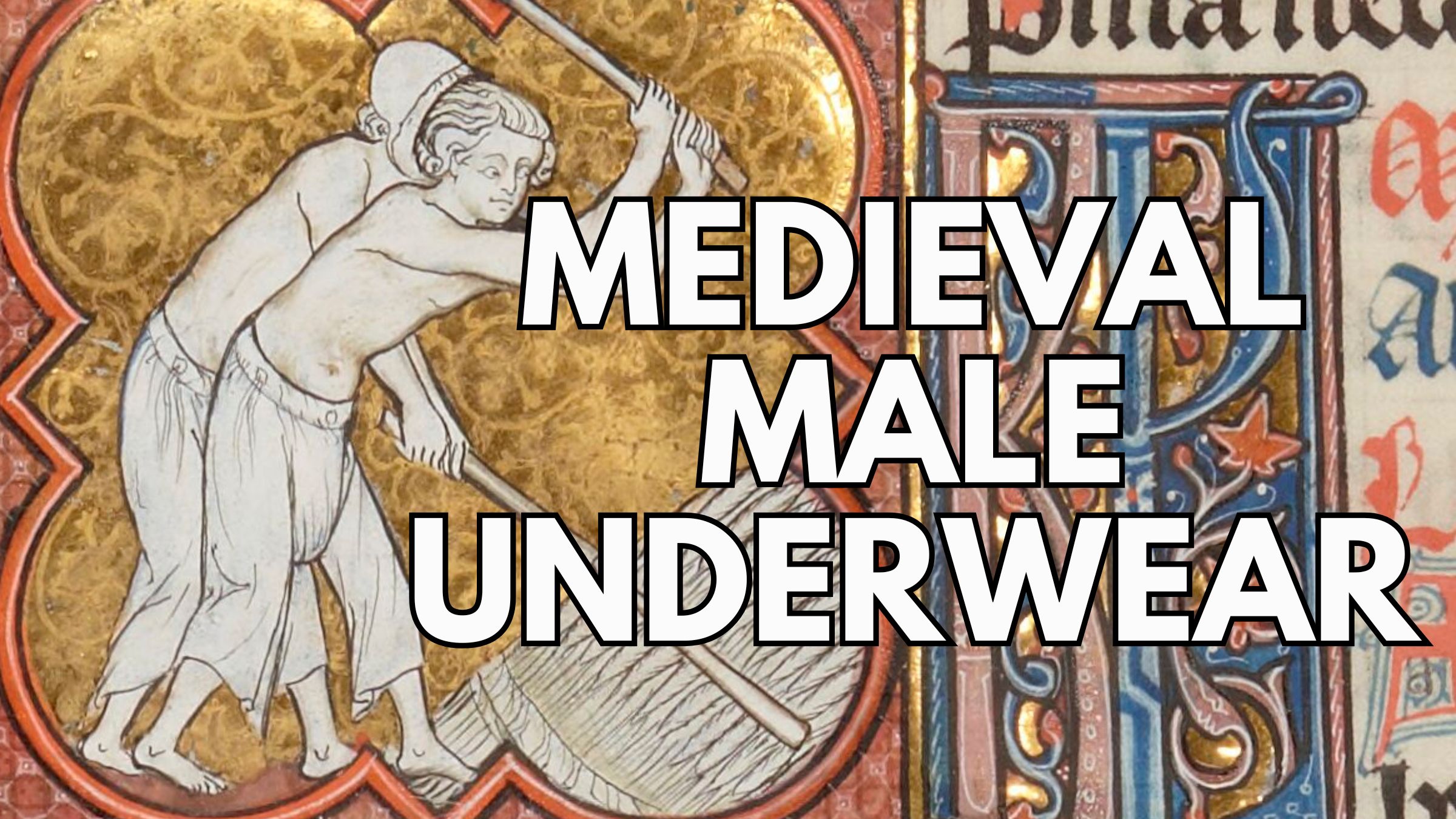
"Medieval underwear is supposed to be the ultimate non-subject: private, practical, and largely invisible. Yet medieval artists kept finding ways to show it-right at the moments when a body matters most. In manuscripts, panel paintings, and devotional imagery from Northern Europe, men's undergarments-usually called braies-appear when someone is working, humiliated, punished, exposed, or put on display for a moral lesson."
"Instead, they act as visual cues that help medieval images communicate ideas about masculinity, class, sanctity, shame, and the viewer's own act of looking. Tilghman's argument hinges on a simple idea: braies are never merely a background detail. As she puts it, "I examine the metonymic nature of visual representations of braies: underwear as a stand-in for the body and ideas about the body." In other words, when medieval artists reveal underwear, they are often revealing how a culture thought about male bodies."
Braies were men's undergarments worn around the hips, tied at the waist, ranging from loose linen drawers to more fitted styles across the twelfth to fifteenth centuries. Medieval visual culture repeatedly reveals braies at moments of work, humiliation, punishment, exposure, or moral display, using underwear as a stand-in for the body and ideas about masculinity, class, sanctity, and shame. Because physical garments rarely survive, manuscripts, panel paintings, and devotional imagery provide key evidence of social attitudes toward male bodies. Depictions shift over time, tracking broader fashion changes and signaling status and moral meaning.
Read at Medievalists.net
Unable to calculate read time
Collection
[
|
...
]