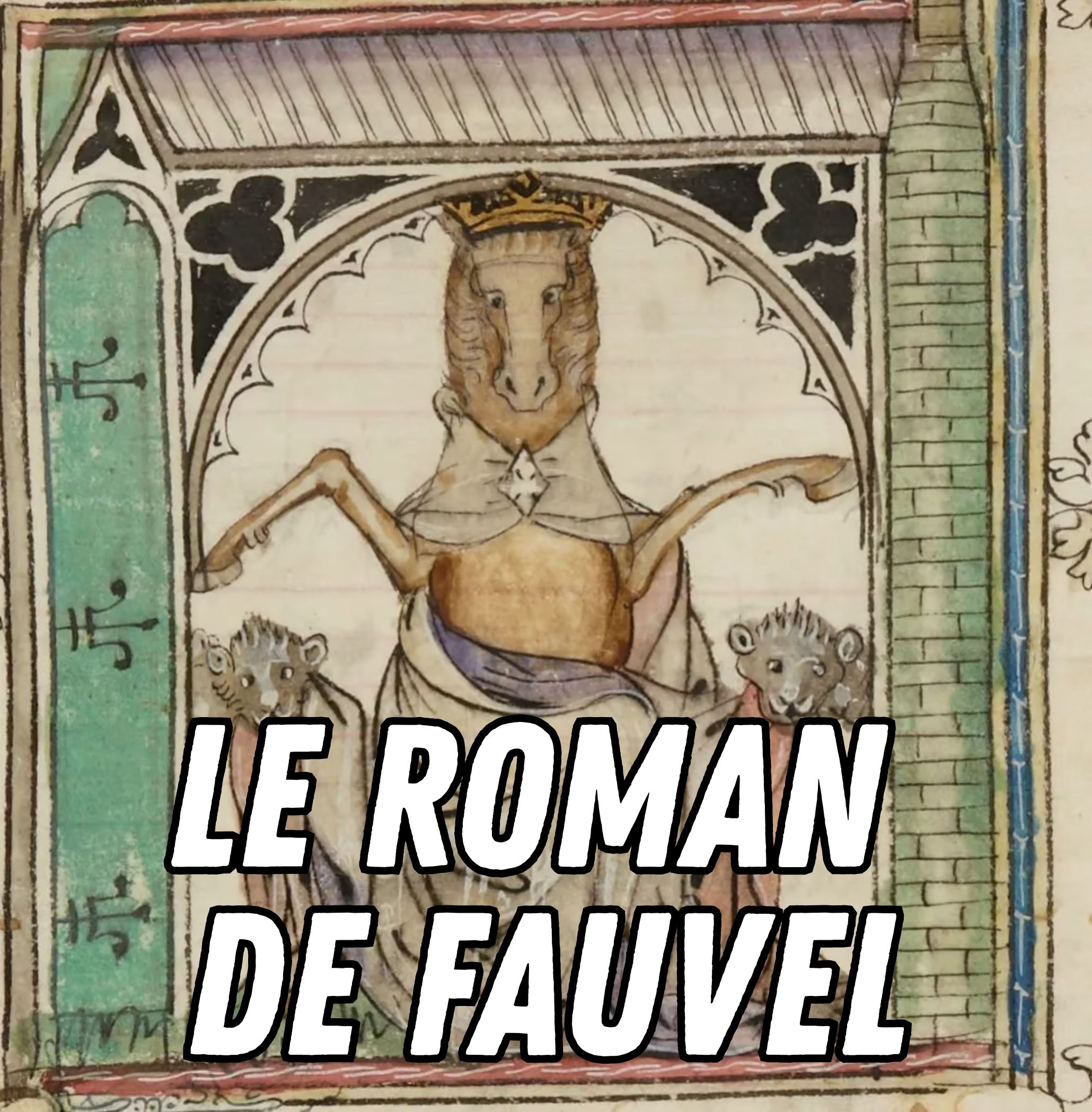
"A corrupt horse rises from a stable to the royal palace, winning the admiration of kings, clergy, and courtiers alike. Sonja Maurer-Dass tells us about Le Roman de Fauvel, one of the sharpest political satires of the Middle Ages, exposing the greed, ambition, and moral decay they saw in fourteenth-century France."
"In conjunction with his increasing power and influence, Fauvel gradually exhibits numerous vices. These vices are embedded within his name: "Fauvel" is an acrostic for Flatterie, Avarice, Vilainie, Variété (fickleness), Envie, and Lâcheté (cowardice). Fundamentally, Fauvel's monstrous character is an amalgamation of humanity's iniquities."
"Laced with allegorical texts that reflect the tumultuous political and ecclesiastical climate of France during the final years of Philip IV's reign, Le Roman de Fauvel educates its readers on the consequences of greed and insatiable ambition through both word and song. Specifically, these allegorical texts refer-often subliminally-to abuses of power exhibited by Philip IV's administrators, most notably his chamberlain Enguerrand de Marigny, who is widely believed to have inspired Fauvel's avaricious character."
"Originally credited to the fourteenth-century poet and royal chancery clerk Gervais du Bus-with music, images, and additional text later interpolated by Chaillou de Pesstain- Le Roman de Fauvel centres on its titular villain: a self-serving and rapacious horse named Fauvel who rises from his humble beginnings in a stable to an extremely influential and prominent position of political and religious authority."
A tawny horse named Fauvel rises from a stable to the royal palace, gaining admiration from kings, clergy, and courtiers. His growing influence brings vices that are encoded in his name: Flatterie, Avarice, Vilainie, Variété, Envie, and Lâcheté. Allegorical texts and songs connect his ascent to the political and ecclesiastical turmoil of fourteenth-century France. The work points to abuses of power associated with Philip IV’s administration, especially the chamberlain Enguerrand de Marigny, presented as a likely inspiration for Fauvel’s avaricious character. The narrative uses word and music to show consequences of greed and insatiable ambition.
Read at Medievalists.net
Unable to calculate read time
Collection
[
|
...
]